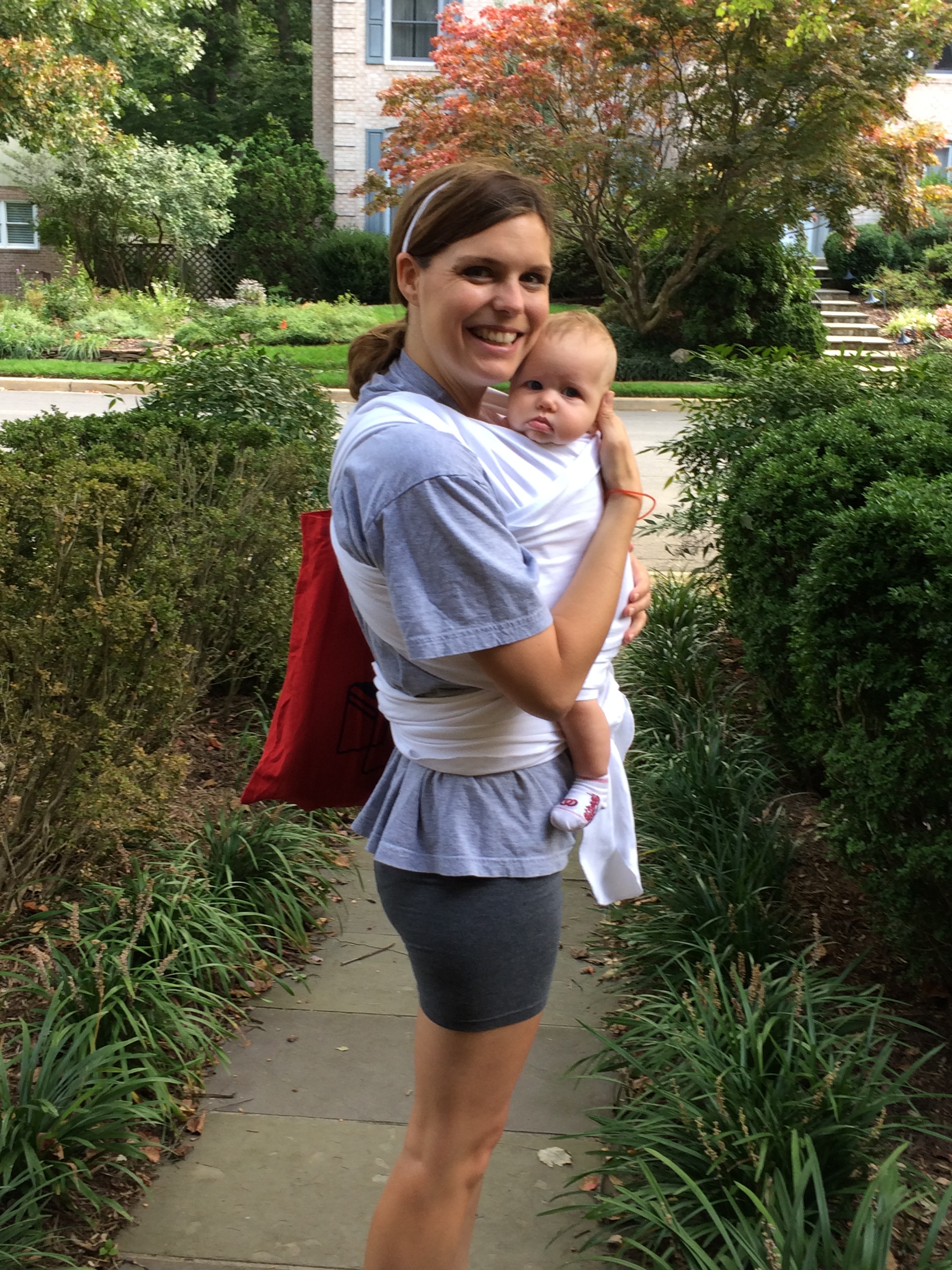
Policing Personal Lives Is Not The Point: Dos And Don’ts Feminism Must Die

Do you wear lipstick, or high heels, or short skirts? Have you, during the course of a heterosexual marriage, changed your last name? Regardless of whether you hold a job, do you find yourself taking care of your kids while other moms are “leaning in” to the demands of a boss in the paid workforce?

Honestly, who cares?

The nitty-gritty details of your personal life do not influence whether you can be a feminist, nor do they influence your ability to be a cause-advancing member of Team Gender Equality.

Still, the media continues to advance a false and worthless narrative of what we can call Dos and Don’ts Feminism, which posits that criticizing a woman’s personal life is a feminist act and further that one woman’s choices set an example that all other women must follow. Both practices are offensive and not feminist. Let’s look a little closer.

First, feminism is a movement that holds at its core the ideals of respect for the self-determination of individual women, as well as compassion for the lived experiences of women more generally. Accordingly, attacking, criticizing, and needling women for the way they live is not an expression of feminist ideals.

Further, the practice of criticizing women’s personal lives — for even thinking that women’s personal lives belong to the public domain — is rooted in a centuries-old pattern of sexism where men are supposed to get the public sphere, and can be disagreed with on the level of their ideas, and women are supposed to get the private sphere, and can be disagreed with on the level of who they are.

Second, one woman’s choices do not set an example that all other women must follow. In no legitimate feminism is there one ideal woman who we’re all supposed to be. I say no legitimate feminism because actually there are feminisms, not feminism (and any feminist who tries to assure you there is only feminism like what she says is probably fairly dictatorial, pretty insecure, and whether self-aware or not benefiting from some unhealthy dollops of unearned privilege, be they race, ethnicity, ability, religious status, gender conformity, sexual orientation, and/or marital status).

An outcome of feminism for women is agency, or the ability to direct the course of our own lives, and the proper placement of perspective with regard to women, that say, our bodies are actually about our bodies and not God’s will to be interpreted and enforced through (primarily male) theocrats. It’s not far by extension that a woman’s personal life is actually about that woman’s personal life and not about what potential should exist for all other women’s personal lives. In the context of a social movement that works for the ability of all people, and especially women, to truly express their own free will, it’s fine to draw inspiration from the lives of other women, but that does not mean that each woman must set an example for others. Men are not subjected to this, not this way.

Picking apart a woman’s personal life is not a feminist activity, nor does it reveal whether or not that woman can be a feminist. Feminist behavior lies in how we treat others, and how we work to ensure others are treated. Scrutinizing women’s personal lives is a waste of time, it’s not feminist, and let’s be real — it’s really mean. Dos and Don’ts Feminism can die now.
TrafficCop_preview

Feminism Doesn’t Need A Savior, But It Does Need Leaders

The media loves to search for the next Gloria Steinem, as if what feminism most needs today is an iconic leader for everyone to follow. But we don’t need a singular icon, we need the actions of multiple leaders. The solution is reflected in the words of a Hopi elder: “We are the ones we’ve been waiting for.”

On the other end of the spectrum, some argue that feminism is best served without any leaders at all. The reason for pause is understandable.

Ironically enough, some of the worst instincts of second wave feminism yielded into a small but noisy sect of hierarchal, top-down leaders who lost sight of the anti-dominance ideals that are at the core of the movement. Further, leadership circles tend to reflect privilege: white, able-bodied, gender-conforming, class privilege. Diversity is not just about who is at the table, and who sees that table and believes they are welcome to sit, but also which perspectives get centered. Finally, speaking for all women, as iconic leaders are wont to do, is a ridiculous urge. Whether it is an individual or a group of people, speaking for ‘all women’ is more harmful than helpful to the modern feminist cause. I’ve written about that before here.

All those disclaimers said — feminism needs more leaders. The great news is that we are all right here. You and me and everyone we know can and should step up to be the feminist leaders of today.

One of the most important places to take leadership is outside the feminist movement. Back when I had a hierarchal title within a hierarchal feminist organization, younger women used to say to me all the time: “I want to do exactly what you’ve done. Tell me how.” And my honest answer is: Don’t. Don’t limit yourself to taking leadership inside feminism, particularly in a movement job that probably isn’t going to pay you very well or provide much mobility (especially at the entry levels).

Feminism doesn’t need a queen or a savior. But looking more broadly, more feminism and more diversity in leadership is sorely needed. Disturbingly, the world is still largely run by white guys doing it by themselves.

So yes, organize and wave your feminist flag everywhere you can (including inside the movement). But go forth and be a feminist leader in government, in business, in your family, in your faith community if you choose to take part in one, and in non-profit organizations that aren’t focused solely on women.

Do not be afraid to take leadership ever. It is incredibly feminist to take leadership. Feminism needs more leaders, not fewer leaders. The modern feminist leadership is action-oriented rather than iconic or symbolic, collaborative, diverse, dynamic, and external, not internal, in focus.

I Waited Until The Polls Closed To Say This: It’s Insulting To Have Only Men Running On Women’s Issues

I waited until the polls closed to say this:

It’s insulting to have only men running on women’s issues.

I live in Virginia. I am a feminist. I am a Democrat. And, I am disgusted.

This is me and my daughter doing a September literature drop in Arlington for the Democratic slate. At the time, she was 15 weeks old:

canvassing

We walked for hours through the heat distributing copies of a newsletter featuring the photographs of nine men the Democratic party urged Arlingtonians to vote for. No women.

You don’t need me to tell you women’s issues are front and center in the Virginia election. Nearly every ad on television has been about abortion, and/or has featured women surrogates speaking for candidates on both sides. I have been receiving invitations to attend events with “the candidate’s wives.” As I type, the races have not been called and all local and national pollsters are talking about women voters. Because, duh, that is a major part of what this election is about.

The more I walked with my daughter, the madder I got. What kind of feminist mom am I?

Every day I work for policies that will support her future. It is important to me to include her in some of my work. I want her to understand how politics work. We have not just campaigned together, we have gone lobbying on Capitol Hill together. I want her to see public service as accessible. There is a woman suffrage poster in her nursery. I have been encouraging her to run for Governor of Virginia when she grows up.

By no means do I want to send a message to her that women’s issues are important, and they are best handled by men.

By public appearances at least, the feminist infrastructure in my state supports all the Democratic men without making public comments about how wrong it is that women weren’t included — not just as wives, not just as issues, not just as voters — but on the ticket.

It is unacceptable to run on women’s issues without women on the ticket. Men can and should run in support of women’s rights, but men also need to make room for women to share leadership with them. I am new to Virginia, having moved here in March. Perhaps some will say I am naive. I made a decision to not say anything about this until the polls had closed. I considered whether to say anything at all.

It’s true that I am a newcomer and don’t know the intricacies of the Arlington Democratic politics. It’s also true that I vehemently agree that this year’s Republican ticket was dangerous for women, and I was committed to electing Democrats.

But clearly, whatever excuses I’m about to get, the continuous presence of unchecked “women are important! let’s have men lead the way!” messages and deeds is pandering and it’s wrong.

I will not remain silent through a future election cycle. It should have been a woman running against Ken Cuccinelli. At a minimum, there should have been women running down the ticket.

If Democrats want to run campaigns on women’s issues, and I agree that they should, they must immediately begin to make room for women on the ticket. Women must run. And the party must support us in our capacity as not just constituents, but leaders.

In Response To The Allegation That Pointing Out White Male Dominance Is Racist And Sexist

Is it racist and sexist to point out that white men are dominant? Since launching the Tumblr white guys doing it by themselves, I’ve been called a “racist bitch” and told I’m sexist, too.

I welcome the opportunity to respond to these comments because while they lack decorum, this strain of thought is out there in less aggressive forms and it’s important to address it.

No one is a bad person for thinking that it’s racist or sexist to point out differences between advantaged groups and disadvantaged groups. Rather, they are tuning into decades of right-wing messaging gone mainstream: That equality has been achieved, that racism and sexism are wrongs of the past and not the present, and that the true victims of racism and sexism are white men who are less likely to get jobs and all the other things they might otherwise rightfully achieve on this planet were it not for misguided affirmative action efforts. None of these messages are true.

In a hypothetical world, it could be racist to exclude white people in order to prioritize people of color. It could be sexist to exclude men in order to prioritize women. We do not live in a hypothetical world.

We live in a real world where white men are so dominant that it’s easy to overlook how often they dominate to the point of excluding everyone else unless it is pointed out.

Pointing out white male dominance is not an attack on white men. It is an attack on the centuries-old practice of racism and sexism excluding everyone but white men from the levers of power, and the invisibility that allows that discrimination to continue.

The ability to be taken seriously as a leader, as a white man, is a privilege. It is not earned, although many white men work hard and do good things on top of this privilege. With this unearned privilege must come awareness and responsibility among hard-working white men to insist others are included in discussions affecting all of us. This is why white guys doing it by themselves exists.

What Do I Say To Someone With An Eating Disorder?

What do I say to my friend or family member with an eating disorder? How can I help? Is it possible for me to fix it?

As a survivor of anorexia and an advocate for body acceptance, I get asked these questions all the time. This makes me sick, since it reminds me that if I had a magic wand to make eating disorders go away forever I would wave until my arm fell off, but it also reminds me that my arm is still here and I keep getting asked for more people.

First things first: I am neither a medical professional nor a licensed therapist. I am merely someone who nearly died because of anorexia, spent even more time suffering a whole bunch, and fought her way through to the other side.

Please engage with professionals who can truly help your loved one. The National Eating Disorders Association has a helpline and a host of resources I urge you to check out.

What I have said to many others is based on my experience as a survivor who lost some friends along the way. I have less to suggest in terms of what to do or say, and more in terms of things to not do or say.

Do offer your unconditional love and support. What I most needed were people to love me, not fix me. Leave the treatment to the professionals and don’t try to be “the enforcer” of healthier habits. The “I’ll save you” path isn’t likely to go far, and it can also make it harder for the person to come to you later if they need help. They may not want to let you down when they are slipping. At least, this is the way I was.

Knowing that you will always be there and love them — no matter what — is a powerful weapon that may ultimately support a recovery process led by the person with the eating disorder and the professional team supporting them.

Don’t engage in “fat talk” — about them, or yourself. Your loved one doesn’t need to hear you tell them that you feel fat, or that you ate something “good” or “bad.” And while you don’t want to be dismissive if they bring up their body or eating or exercise with you (after all, it’s probably dominating their thoughts), you certainly don’t need to play the eating disorder-affirming game of good foods and bad foods, fat clothes and skinny clothes, hot bodies and ugly bodies.

Don’t comment on their appearance. “You look good,” or “you look healthy” were horrible swords thrown at me by well-meaning people. Sometimes I used these comments as reasons to be proud of horrible things I had done to myself. Other times I would use them as proof that I needed to punish myself further. You simply don’t need to comment on their appearance. Stay out of it. Comment on and compliment them for who they are, not what they look like or what they are eating.

Don’t participate in trigger activities. Your loved one may most want to suggest activities that serve their eating disorder, such as exercising, going for a long walk, trying on clothes at the mall, baking a batch of cookies (maybe only for others to eat, a common eating disorder behavior), or going to a buffet to eat. Not lecturing them about these activities would be good, but that doesn’t mean that you need to participate. Find other healthy things to do together.

Do support them getting professional help. If your loved one has an eating disorder, support them in getting professional help. No, you don’t have to be the enforcer, but you can support them by scheduling fun group activities at times when they are not going to therapy, not disparaging therapists or anti-depressants and similar drugs, and the like. Further, if they haven’t taken that first step yet, you can share with them names and telephone numbers of places where they can get help and assure them it’s strong, not weak, to reach out for support.

Good luck and I am so sorry for the experiences that have led you to read this.

White Guys Doing It By Themselves

Follow my new Tumblr: white guys doing it by themselves.

From the House GOP conference live-tweeting its get-together during the shutdown under the hashtag “Fairness For All” to the school board in North Carolina that banned The Invisible Man, white guys doing it by themselves is a tribute to white men totally comfortable telling everyone else how it’s gonna be.

Don’t worry, erintothemax.com is still my blog-blog, so stick around here, too!

A Body (Image) Changed: On Pregnancy, Breastfeeding And Eating Disorders

From a self-image standpoint, taking my maternity clothes out of my chest of drawers and putting my old clothes back in has been the hardest part of my pregnancy, childbirth and new mothering journey. This might have been the same if I hadn’t had anorexia, but I don’t know.

My body has changed. My old clothes don’t fit the way they used to. I am larger, rounder and my softer spots gather in different places. Do I have a pouf above a flat spot because I had a cesarean section, or is that the way my body processes any manner of birth? I don’t know.

To put away the maternity clothes ends the imprimatur of “a wild time” when my body was doing something rather than simply being something (me). I was mostly okay before. In response to overwhelming pressures pregnant women and mothers get to engage in body image negativity, I could clutch an ancillary detail and say: Fuck you, I’m pregnant. Or: Fuck you, I’m having a girl. Or: Fuck you, I had a baby. Or: Fuck you, I’m feeding a baby. But now it’s simply time to survive as a mother, a woman, a human being. In this paradigm my best choice is to look at that belly fat, those lines around my eyes, this body I’ve never had, not in this way, and say: Fuck yeah.

It’s fun.

Putting away the maternity clothes forced me to face the facts. My body doesn’t look different today because I’m pregnant, or because I just had a baby. My body looks different today because it is different. Accepting this, the difference of a new day with a body, versus a comparison to an ideal of what a person thinks her body once was or someday should be, is both difficult and joyous. For me, having this baby forced this issue.

What I wouldn’t have predicted is this: Breastfeeding is the second-best thing that has happened to my body image, just behind recovering from my eating disorders years ago. Yes, breastfeeding. Not getting through pregnancy. Not getting through childbirth. Breastfeeding.

To watch my daughter cry when she’s hungry and eat only until she is full. To think about how I treat my body directly impacting how well she will be able to feed. To, unlike pregnancy, see the results every day.

She is growing. She is healthy. She is happy. She is thriving. She is strong.

And, fuck yeah, so am I.

Unpaid Interns: An Apology

I regret having supervised unpaid interns while working at a previous employer, and would like to apologize. I’m truly sorry. Free labor is exploitative and exclusionary. I’m writing about it now in hopes that it will spark others to change.

During the course of more than three years at a progressive non-profit organization, I worked with dozens upon dozens upon dozens of unpaid interns. I selected and directly supervised about a fifth of the interns in the office. Supervising unpaid interns means that I was complicit in a modern employment system that is elitist, racist and treats workers in a horrifyingly bad way. Rather than name and further exploit the interns I supervised, who were all somewhere on the continuum between pretty great and really great, I would simply like to acknowledge that if you’re reading this, I can see your faces in my mind, I think you’re awesome, and I’m sorry.

No one should be expected to work for free, especially in order to, as the lore about unpaid internships goes, “make contacts and get a job someday.” While publications make sport of who can most lambaste the millennial generation for being lazy and self-absorbed, they rarely report on the growing expectation that our youngest workers should give away their labor for free. If you work on a regular schedule — not as a volunteer who controls your schedule and the projects you will and won’t do — and report to people who are getting paid, you should get paid, too. Period. It’s unacceptable to force workers starting their careers in a ho-hum economy to work for free, simply because they are young. It’s also unacceptable to replace paid workers, often older, with younger interns who are not (or barely) paid.

Those people in power who insist that unpaid interns are required for an organization to survive should get real. If your organization depends upon the artificial condition of employee-like unpaid laborers to survive, your organization needs to either get a new business plan or dissolve. From both moral and operational point of views, this holds true even for non-profit organizations not legally required to comply with unpaid internship rules the Department of Labor has created for for-profit organizations. From an unpaid intern point-of-view, you’re not any more or less not paid whether or not your employer is driven by profit. On the operations side, if you’re filling a niche that is no longer relevant or resists being filled according to your formula, change your business plan or quit and work with a similar organization doing a better job serving the needs of today. If an organization can’t survive enough to pay its workers, it’s on artificial life support — one that is extremely harmful to the people working there for free.

Everything bad about race, class and gender comes out for unpaid internships. Women are 77 percent more likely to hold an unpaid internship. High-income students are more likely to be involved in paid internships. Whites are more likely to be able to afford the privilege of putting an unpaid internship on a resume. Want to learn more? A recent study by Intern Bridge should be all you need to read, vomit and resolve to push for change.

Beyond those I worked with and/or directly supervised, I have known many unpaid interns in my day. Much, but not all, of the non-profit “equality” organizational landscape depends on the free labor of youth. I know how to recognize when people aren’t eating enough not because they are dieting, but because they have no money for food. I find it reprehensible that “free food” is a joke to fetch interns in Washington, D.C., where many interns go to briefings and parties because they are hungry in the poverty sense of the term. I think, specifically, that feminist organizations can do much better, and I resolve to be a forceful advocate for paid internships wherever my career may take me.

In the meantime, I am sorry to my wonderful unpaid interns past. Even if you were satisfied with our time together, and referrals or recommendations I may have given you since, you deserved to be fairly compensated for your work. If I could go back in time, I would fight for you to be paid. You earned it. What I can do now is help to call for change. I hope that others in supervisory roles will join me.