Leggings Are Pants

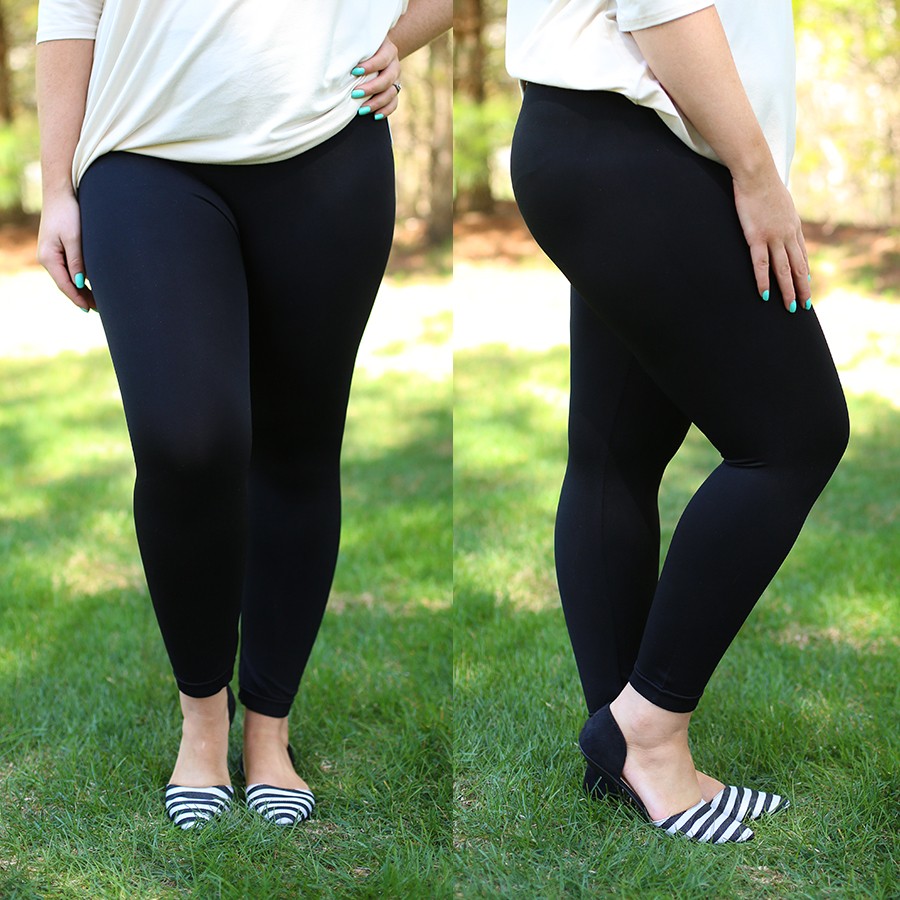
These are leggings.

Leggings

Leggings are pants.

Pants are made of fabric, and cover the lower abdominal area, crotch, and both legs.

Pants come in a variety of styles.

With pants, as with life, fit is everything.

Women, like men, are allowed to wear pants.

Some people say women’s bodies are “distracting.”

If only women and girls would hide their bodies, the thinking goes, men and boys could succeed.

That’s not right.

Women can have butts, and curves, and fat, and should be free to wear whatever is comfortable regardless of the shapes of our bodies.

Leggings are pants.

Praise be comfort, acceptance of women’s bodies, and women’s full and equal participation in society.


Are You Going To Have Another Kid?

So you found a girl with really deep thoughts

What’s so amazing about really deep thoughts

Boy you best pray that I bleed real soon

How’s that thought for you

– Tori Amos

My period began as annoyance, embarrassment, and pain. I was a late bloomer. After years of wondering what the hell was wrong with me, my period finally came at age 15, shortly after the last bell rang on the last day of middle school. Of course I was wearing white shorts. Of course there was a pool party the next day.

Over the years, my period has represented many things to me. Growing up. That thing I don’t want on Spring Break. Black underpants. A signal that I won and anorexia lost. A wedding day menace. Crying, ecstatic relief that I’m not pregnant. A discreet circle in a paper calendar.

A way out of the broken condom and the morning after pill I picked up from Planned Parenthood (forever devotion and thank you). An app on my phone. Erin, Unplugged: No birth control! Now with more cramps!

A week without it, a near-barf in bed, and a plus sign on a white stick. One daughter and several months of blood in maxi pads. 17 months of nursing and one delicious break.

People ask me if I’m going to have another kid.

This is the weirdest question. In my experience, people feel much more comfortable asking if you want to have a second kid versus asking if you want kids when you have none. Apparently we are open books once we have given birth (and remembering the undignified way I was splayed out in mortal pain, there’s something to that).

But the question is harder to answer now. I have seen the awe-inspiring, knock-you-on-your-knees love that comes with parenting. I am frankly addicted to babies. But I’ve also lived the endless exhaustion, the sleepless nights, the high-octane screams, and the daily responsibilities that fall on me with greater heft, even with an egalitarian husband who kicks ass.

I have a career I love, I have a daughter I love, and I have a husband I love. Our life is ridiculously fortunate. There are two dogs that can be more work than the kid, and a cat who has stuck with me through every phase of my adult life.

I love babies. I want more babies.

I love my life. I don’t want more babies.

I love my work. I don’t want anyone to know I have a conflict about babies and discriminate against me.

It is love that drives my conflict about my fertility, but more practically it is time. I am 35.

Every 28 days my period comes and I don’t know whether to be sad or throw a celebration. I go to the OB-GYN and ask her if her practice is willing to accommodate vaginal birth after caesarean and also how I can get an IUD inserted next week. I find myself angry that there is no forum to talk about these feelings, that there is so much silence about the ambivalence a woman can feel about her fertility.

Perhaps what I find most unsettling during the autumn of my childbearing years is the near-intolerance our culture exhibits toward a woman who isn’t 100 percent sure what she wants. After all, telling women what to do is practically the great American pastime, and watching our bodies and judging our sexuality is a sport with millions of male and female referees. If we’re not trying to tell women what to do, we hate-pity them instead. Oh it’s so sad she can’t figure it outHope she finds a way to deal with it.

It’s not just social bullshit; vocal ambivalence about fertility has economic consequences. It’s no accident that many driven young women (including me once) loudly declare that we are not going to have any children. No matter how earnestly this may be felt, and I do not discount someone who says it for a second, saying you don’t want kids comes with a significant professional bonus. Women who say they aren’t having any kids or any more kids are more attractive colleagues and potential hires no matter what those pesky laws on the books say.

Honesty about ambivalence is fraught with risk.

What if I were to start trying for more children, and tell people? Would others participate, and gossip, and evaluate my body and my sex life in telephone conversations with others? Would professional contacts write me off?

What if I were to close that door, or my body were to make that decision for me? Would you tell me I should have another, for the sake of my daughter? Would you celebrate my devotion to my work and my family, and those few shreds of time I have for myself?

Would you cry with me anyway when my period stops?

I don’t want to be judged. I don’t want advice, either. I will figure this out and continue living my best life, even in a world that can be hostile to women, hostile to mothers, and perhaps inclined to shit on me for being honest. I have a great family and a great life. I am trying to break stigma.

It is astonishing how much we talk to women about fertility, without giving us space to talk, and be messy and contradictory, just the way humans are.

You Are Eligible To Apply For An Internship

Less than two weeks ago, an organization I respect let me know I “matched new jobs.” The jobs included “summer internships.”

Screen Shot 2016-02-11 at 7.46.06 PM

Today I received another email. I “matched new jobs.” This time the jobs included “paid summer intern.”

Screen Shot 2016-02-11 at 7.45.08 PM

Let’s talk about this.

I’m quick to stick up for young feminists no matter who wants to give me shit for it and identify as the oldest possible millennial, but I’m 35. I’m a suburban mom. I have worked in a variety of professional positions, consulting roles, and management positions and have co-founded a new organization.

My quibble and reason for writing is not what anyone thinks of me. I’m in my work to make change, not to be loved. If you think I’m intern-level, okay. Susan B. Anthony nailed this:

“Cautious, careful people, always casting about to preserve their reputation and social standing, never can bring about a reform. Those who are really earnest must be willing to be anything and nothing in the world’s estimation, and publicly and privately, in season and out, avow their sympathy with the despised and persecuted ideas and their advocates, and bear the consequences.”

The problem is that automated recruiting software thinks that someone with my experience level — someone working in professional positions since 2002 — might be a good intern. Or maybe, after almost two weeks go by, a paid intern.

What is wrong with recruiting software? What is wrong with our economy? Where are the jobs?

I remember meeting up with a former unpaid intern I worked with who had subsequently graduated in the top third of her law school class and been offered a variety of additional unpaid internships in Washington women’s organizations. The unpaid internship is a despicable thing, but what bothered me at least as much was the sense that a smart, capable law school graduate is internship fodder.

None of this is to throw shade on older interns. It takes a great kind of chutzpah to embrace a fresh start and initiate a do-over as an adult, and looking back, I think the oldest people in my college classes must have been the coolest.

But something is dramatically wrong when our economy seeks to make interns of people qualified for jobs.

Let Snow Days Be Snow Days

Expecting workers to telecommute on snow days is discrimination against caregivers, pure and simple.

It’s not just offices that are closed on snow days. Schools are closed. Daycares are closed. Caregivers who come to the home either stay home themselves, or put themselves in danger. Parents and caregivers aren’t capable of pretending like it’s just another workday, but in our pajamas and from our kitchen tables. We have people depending on us.

From a sentimental/artistic/being a human standpoint, I believe everyone should get a snow day — caregiver or no. When nature dumps white to the point of municipal breakdown, we may as well look out the window and wonder, catch up on our reading or binge-watching, or have sex (just saying, the maternity wards are going to be crowded in D.C. in 9 months).

But those think pieces exist. What exists far less is an acknowledgement that when our basic institutions don’t open, parents and caregivers who work outside the home can’t just do our work inside the home like nothing ever happened. There are diapers to change, baths to give, meals to prepare, and they do and should take precedence. And yes, this primarily impacts women.

The same extends to students. My alma mater, Georgetown University, now has a concept called “instructional continuity” that means that when classes are cancelled, students are often on the hook for doing something for the class during the same time. What an assumption that professors and students don’t have people depending on them in their real lives!

I’ve always hated the “work/life” concept and thought it was a marketing gimmick to cover up for the fact that our society throws women and caregivers to the wolves, even makes us feel guilty for it and like we are somehow personally deficient. But that’s a book and not a blog post.

For now, for modernity’s sake, for humanity’s sake:

Let a snow day be a snow day.

No, It’s Not Cool To Lose Weight On The Stomach Flu

I had norovirus, the kind where you are this pathetic, shivering creature crouched on the ground beside the toilet at 3:47 a.m. In the process of this unwelcome “total body cleanse,” pounds fell off my body.

Okay, they didn’t fall. But providing accurate detail about what happened is too disgusting.

It’s at least as disgusting that it’s an option to say someone looks good after they’ve been sick, or that it’s cool to lose weight on illness.

Not that my post-eating disorder brain wasn’t willing to play this trick on me. Of course I stepped on the scale after that night from hell, and of course it was shocking how much weight I lost.

And the old gremlins flared up. Maybe it’s a good thing, I wondered.

But actually fuck no.

Losing weight by process of being miserable always sucks, whether via stomach flu, eating disorder, or this week’s ridiculous dieting fad.

The way to look radiant is to feel radiant, and the way to feel radiant is to possess outrageous courage in a world that tells women we must keep ourselves in check, in line. Losing weight is not an act of courage. Losing weight possesses no intrinsic value, but we do — and it’s a radical act to accept ourselves as we are.

I’ve probably gained all my norovirus weight back by now, and thank goodness. My body knows exactly which size it wants to be, and I’m proud to have flipped my old eating disorder the bird one more time.

Every day presents these little opportunities for resistance. Against our own demons, and/or against societal things that suck. We should be so grateful to take them all.

So You Want A Feminist Job

I often get asked: I want your job; how do I do that? Here is a compilation of advice and reflection I’ve given over the years.

“Being a feminist” is not a job. Being a feminist ___ is. 
Pick a function or at least a set of skills that sound interesting. Maybe you like writing? Or fundraising? Or are interested in lobbying? If there are employers out there hiring feminists because they are feminists, I’ve yet to meet them (though they do sound lovely). You are going to be infinitely more employable if you say you’re interested in accounting, marketing, something — and yes, feminist organizations hire for all of these things.

You can still be a feminist and work anywhere, not just with a non-profit or an NGO.
I have worked in: Advertising agencies, consulting firms, investment research firms, writing companies, financial service firms, media organizations, and explicitly feminist non-profits. Working for a feminist employer is not what makes a ‘real’ feminist, it’s your values that count. This world needs more feminist bankers, doctors, and retail store managers. And let’s be honest — the pay in feminist organizations has a tendency to suck. It’s okay (and feminist) to want and seek more money than a movement job can provide.

Do not, under any circumstances, work for free.
Volunteering on your own schedule and for tasks you choose is fine, but unpaid internships are not your friend. You should not work as an de facto employee or member of a team of paid employees without getting paid. There are other internships and jobs out there that can be stepping stones toward the job you really want, even inside the organization offering you an unpaid internship, and you deserve to be paid.

Further, do not work for free. Do not offer to work for free as a trial, or delay paychecks if an organization you love is struggling financially. I drained my savings to work for an organization that didn’t pay me for months, and owed me back pay for years. It was horrible and I’m ashamed of myself for doing it; don’t make this mistake.

There isn’t a cause on Earth worth a toxic work environment.
Do not, under any circumstance, confuse an employer or a single organization with a movement. There are a million ways you can do feminist work. If someone is abusing you, harassing you, or otherwise treating you like crap, put yourself first and find a way to leave as quickly as you can. No regrets!

Seek out the smaller organizations.
Some of the most interesting work in the women’s movement is happening within smaller organizations you may not have heard of. Sure, request your informational interviews with the more obvious feminist organizations, but be sure to ask each person you talk to what other organizations they admire. They’re likely to name some folks you haven’t heard of; track those organizations down. They are likely to both be doing more ground-breaking work and offer more meaningful work for someone at the entry-level.

If your dream is leadership in a legacy organization, don’t move to Washington or New York.
In my personal experience, starting at the entry level and working your way up in the national office of a large, big-name feminist organization is exactly how to ensure you never ascend beyond middle management — in the best case scenario. These legacy organizations tend to be quite hierarchical, and entry-level employees at headquarters are often paid poorly, respected less, and spit out like cherry pits. If you want to build up leadership experience and have meaningful tasks, go work in a state affiliate. That’s where many of the most impactful fights are, anyway.

But still, your dream is to be the president of ____. Oh, boy.
Love me some ambition, but if you can’t articulate why you want to lead a specific organization and/or what new thing you would want to accomplish in such-and-such role, you’re just star-fucking.

Do not enter public feminism with the illusion that people will like you.
Feminists are generally treated like shit — by the outside world, and other feminists. Very few people will applaud you for doing the hard work it takes to advance equality and justice. Most will be mean, patronizing, or stare down your shirt instead. For that matter, I meet many people who believe that feminism is like a Xanadu where women are nice to each other and sit around saying, “great idea” while eating potato chips dipped in chocolate. Not so. Movement work is hotly contested, messy, and filled with rivalries and difficult personalities. And most everything you strive for will be shot down, in the broader world and the feminist world. It’s okay to be motivated by praise from others or visible progress — it’s totally human — but if that’s critical for you, there may be better fields.

But actually, it can be awesome.
I wouldn’t trade my life for the world. Every day I get to work on issues I care deeply about, and I do believe my efforts make a difference. There are hard-fought tangible political or institutional wins, yes — and those are the best. But the barely visible personal is at least as gratifying and exciting.

It literally makes my whole life when people I know from high school or an old job tell me I helped them see an issue differently, or someone who I helped with an informational interview comes back years later and tells me they are doing awesome work. I am moved to tears by women who seize their courage, stand up for themselves, and tell me about it. I am challenged and inspired every day by feminists who have it more figured out than I ever will.

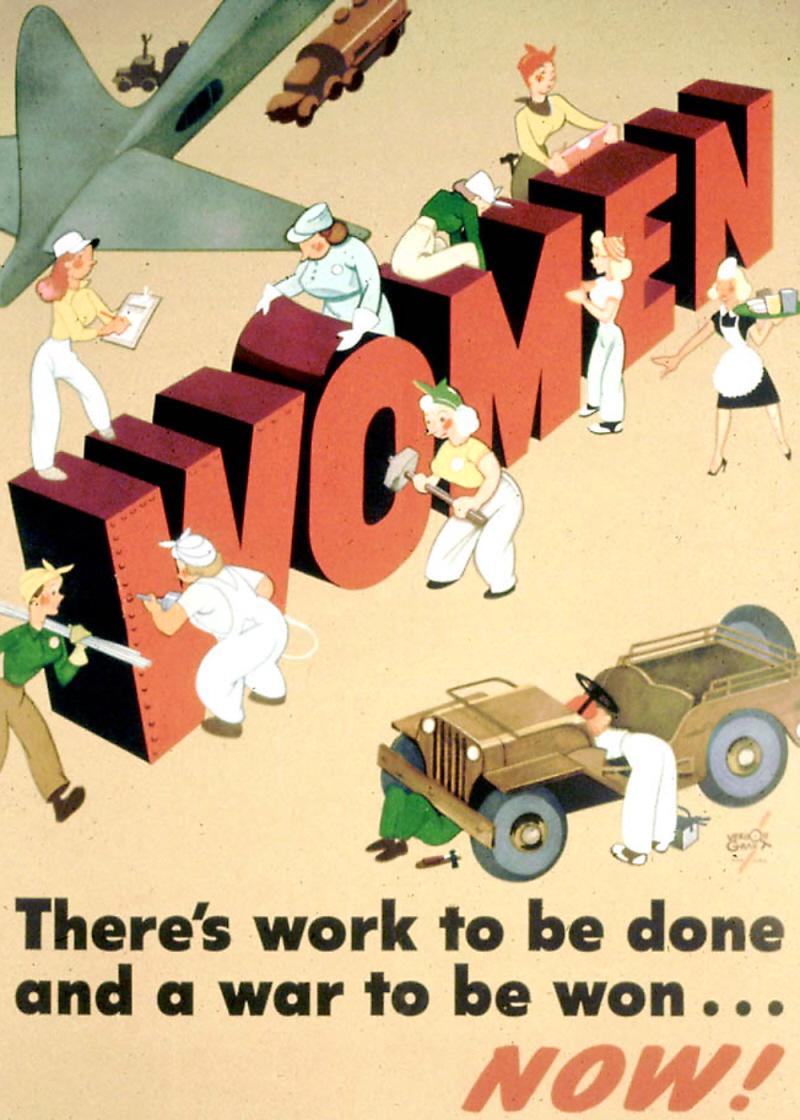
01-women-working-poster-us-wwii

Being A Young Feminist Can Turn A Girl Old

A therapist told me to try a women’s studies class, so I did that first semester of my freshman year. I still remember exactly what I was wearing that September morning in 1998, not because it was a cute outfit but because I was obsessed with my legs. The therapist had been treating me for an eating disorder that nearly killed me a few months before.

In this context, going to college was a luxury; hell, living was a luxury. I enrolled in Women’s Studies 101 to check a box. Instead a new world opened. I don’t say this hyperbolically — feminism helped save my life. I was able through relapses and hospitalizations and treatment to stabilize and beat down the anorexia. But what truly saved my life was making the connection that eating disorders are just one manifestation of a deeply sexist world that denigrates and trivializes women, weaponizes our bodies against us, and then tells us it’s all our fucking fault anyway.

With its radical messages of dignity, equality, and honesty, my feminism made it impossible for me to go back to the dark side. How the light went on! I dove headfirst into all the women writers. Kate Chopin, Sylvia Plath, Alexandra Kollontai, Shulamith Firestone, Valerie Solanis. Judith Butler. I told myself I wanted to be a women’s studies professor someday. Until I realized that a lot of this postmodern stuff was hard to read, and I could have an obscure argument in an obscure language with about three other people who maybe understood me, or I could try to work for justice out in the real world.

So this is the ironic thing. I had a series of proto-feminist moments (making GOTV calls for the woman who could have been Minnesota’s first woman senator when I was 11, writing about gender discrimination in the SAT for the school newspaper, the obsession with the Indigo Girls) well before I started taking women’s studies courses in college. But it wasn’t until I left the classroom and went into the feminist non-profit world that I became a “young feminist.” Even if by that time I was 21. Not 18. Or 11.

I’m 35 and I still get called “young feminist” in those contexts on occasion today, although that says far more about those contexts than my age. If 35 is young, it’s only to reflect our societal fears of identifying as old, and our societal inability to give our young people career opportunities with growth potential rather than a pile of student debt that’s damn near impossible for so many to repay. The weird thing is that the term young feminist exists at all.

This label, like anything that impacts a person’s identity, is complicated for me. Sometimes I love the term — you know, it is true that people will have different views of what equality will look like as they grow up in different generations. If all goes well, after all, what a previous generation of feminists fought for should be appallingly conservative to the next generation.

And yet sometimes I think the concept of a young feminist is total horse shit.  I identified as a feminist a few years before feminist non-profits taught me to identify as a young feminist. Just what was the point of segregating us?

I bristle every single time I hear someone say that young women need to be educated so they don’t take the freedoms they’ve gained for granted. First because not every woman has gained the freedoms we’re told feminism has won. But also and especially because it’s so insulting. Talking down to young women is anti-feminist. Presuming young women are not capable of identifying and articulating and fighting for what they need to live as full human beings is anti-feminist. Treating young women as sidekicks in a women’s movement is anti-feminist, particularly in a legislative context where older white men are obsessed with controlling and restricting younger women’s bodies, and demonizing those who dare to have sex and live their lives anyway.

And yet it happens all the time. Today was the latest entry with Rep. Debbie Wasserman Schultz (D-FL) expressing regret over the “complacency” of young women born after Roe v. Wade (1973, how young!). Blaming apathetic young women for the declining state of abortion access has been something of a cottage industry hovering over the pro-choice movement ever since I’ve been around, but in the last few years the situation has gotten markedly better, in large part due to those with less power having the ability to present alternative views on social media. To my knowledge there wasn’t a similar mechanism to democratize voices between activists and the leaders making the big bucks before then.

You know, we should push back every single time someone ‘on our side’ tells us young women are apathetic about feminism or abortion or any number of concerns that impact our lives. We should push back that young men are somehow not included in the group who should take equal responsibility to work toward progress. But frankly I’m getting old (a privilege for which I feel blessed, not shamed) and sometimes I wonder if we will ever find that moment where we won’t have to fight for the full recognition of young people in a women’s movement that has a tendency to treat them as helpmeets or hire them as unpaid interns.

There are approximately two gray hairs on my head now, and I swear, at least half of them came from a vocal minority of older feminists who have been patronizing or worse about my work.

Goodbye, Yoga: On Parenting And Perpetual Loss

My daughter’s yoga studio is closing, and I am sad. Before I became a mother I would have sneered at that — it is particularly easy to sneer at women doing trivial things (basically just about anything) and having feelings about them.

But as I’ve written about here, starting baby yoga classes when she was 10 months old was a self-esteem boost I desperately needed at a time when I was working half-time, and feeling a diminished sense of accomplishment. I needed to get out of the house. I needed to have something on my calendar, somewhere to be. I needed to say I did something. Yoga gave me that.

But it also taught me how to play with my kid. I was not entirely comfortable singing goofy to her in front of other people before this class. We would do imaginative things alone together, but I still felt like I needed to be “cool” in front of adults. It was these classes that started opening my eyes to the joy of giving no fucks about looking mature while parenting.

I watched my daughter shift from being the youngest, most afraid, infant in the class to the girl who ran over to pull the parachute out before it was time. She sings and dances her yoga songs around the house. She does a terrific down dog for a kid who is two years old. Watching her learn — and to wait her turn to walk on the train and get a stamp, or have her name sung and chanted, or ring the chime and pass it to another child — filled my heart with pride. These were things I couldn’t have taught her at home.

As time went on, our life circumstances changed. My daughter enrolled in school (day care) full-time, and I went on to start a new organization. When you love what you do, it’s easy to work all the time, as I do and basically always have save my one brief stint as a half-time, stay-at-home mom. Suddenly our late Wednesday afternoons took on a new import. Whereas we had first started because I needed something to do, now I was continuing because I needed to carve out 45 minutes every week (or even third week) to not do, to invest in moving and being silly with my daughter.

More time passed and the late Wednesday family class was cancelled; not enough interest. It was replaced with an adult playtime yoga class, with kids encouraged to play with toys during the session. I was skeptical. How could I justify leaving work early not to enrich her, but me? This, too, was a learning experience. I told myself to be open — I had a few paid up classes, after all. Perhaps there was something of value in the new regime.

I considered the discomfort I felt in investing in myself versus doing something explicitly for my daughter. I still consider it, and find myself learning every time.

But also I challenged myself to take to heart what I’ve been saying for years: That sometimes we need to let one thing end in order to create space for something new and wonderful to enter our lives. Actively creating space has worked well for me in the past. The glamorous notion of leaping from one fully formed thing to another can often mean that the next thing is not nearly as interesting as giving yourself the mental space to dream up a new paradigm, then create it. This is why I have left multiple jobs without the next one lined up. Applying this to my personal life and my parenting life was challenging.

But it bore fruit. The new class was also quite nice. We had just hit a stride. I was getting that great yoga high and she was loving the chance to play with new toys in the studio. She would bring me plastic fruits as I breathed and did warrior poses. Sometimes she would ask to sit on my knee during a pose. Other times she’d be off in the playroom chatting with the other kids while I did a headstand, my shirt over my ribs and my round belly flopping exposed in the air — and me feeling a mega-triumph over the eating disorder that no longer controls my life.

When I learned the studio was closing, I wanted to cry. We went to our last class Saturday, and this time my daughter was the biggest kid there. The teacher announced it was the last class she was teaching there, and she might have to cry.

One of the most difficult parts of parenting is realizing that just when you think you’ve got it figured out, just when you’ve found your sense of anchor and permanence in a challenge that doesn’t play by rules written anywhere, it’s all gone. Your kid has grown out of the stage and the world no longer offers the same antidotes for younger kids now living that stage. Brand new becomes memory with alarming speed. Not just the pride and the giggles, but also the fear and the difficulty.

I am telling myself to enjoy the space that is being created by the end of something I love. I am digging deeper and telling myself it’s okay to grieve and create space at the same time. We can hold many things.