“I’m Not Really Friends With Girls”

“I’m not really friends with girls.”

At a certain age, me and many of my girlfriends used to say this. Of course we were the biggest liars, since we were friends. Or at least I would have been crushed if they didn’t consider me their friend, too.

Woman-hating can be both reflexive and substantive for women. If you were the kind of girl I was, who wanted to leave home and read big books and achieve great things (in the embarrassing abstract, the way ambitious young people and sadly too many older people do) — well, it didn’t seem like conquering the mall and doing the feminine things would get me to greatness. Of course by 18 I had spent years working in malls for Limited Too, The Gap, and Abercrombie & Fitch. The main point is that in rejecting femininity and especially the camaraderie of other young women, I was a hypocrite, a self-loathing hypocrite.

Because I am feminine. I have always been feminine in my own way. I’ve just been taught to hate the feminine, to look at it condescendingly, and simultaneously use it as a yardstick for telling myself I’m not pretty enough or considerate enough or frankly, enough.

The way me and many of my more brainy girlfriends used to go to great lengths to declare we weren’t really friends with girls, because maybe it felt more substantive to be friends with the boys (which is bullshit, because masculinity can be just as shallow as femininity, and at times much more so) has parallels at different points in the lifecycle. We are taught to judge women who put effort into their appearance to halt the visible signs of aging just as we are taught to judge women who “let themselves go.” Plastic Surgery Gone Wrong is a thing, but so is Kirstie Alley in the tabloids. We are told to change the way we talk to be taken seriously. It goes on.

I am troubled by efforts to reject womanhood and in particular, women, as a way for women to set ourselves apart from the second-class expectations sexism drapes on our pretty little collarbones.

I don’t want to imagine how much my life would suck without the friendship of women. It is not the feminine that is flawed, but the rejection of it.

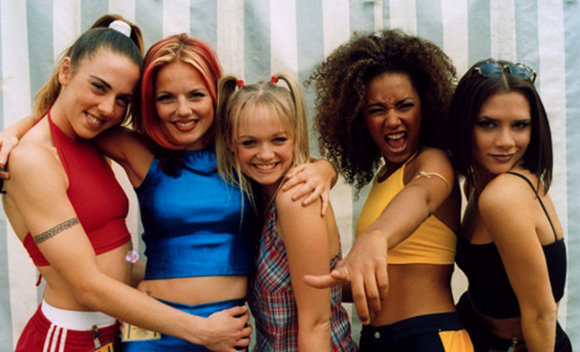
Spice Girls

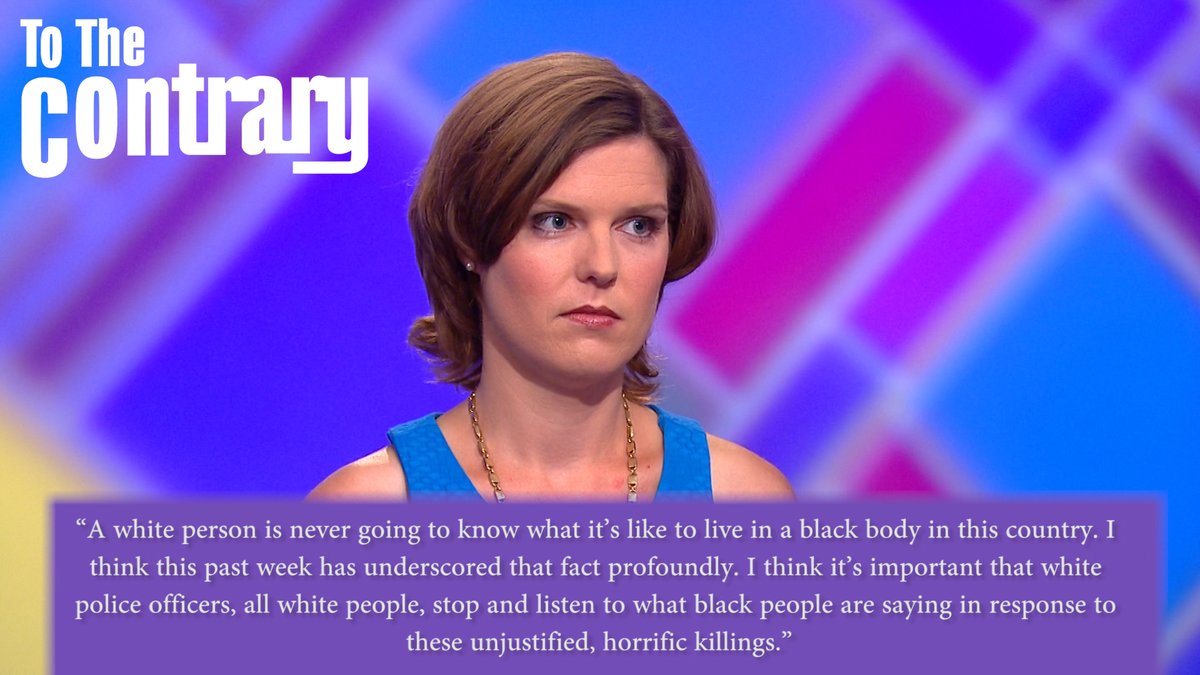
Video: July 2016 To The Contrary Appearance

I appeared as a panelist on this week’s To The Contrary, and discussed police violence against Black people, discrimination against women with disabilities, and transgender athletes competing at the Olympics.

You can watch a video of the show here:

A white person is never going to know what it is like to live in a Black body in this country.

My public response to one viewer who challenged my statements on the show in favor of transgender equality can be found here.

If You Want To Win, Try To Win

Y’all, I am so inspired by Monday’s win for abortion rights at SCOTUS. While I welcome any opportunity to wake up, hop on the Metro, and dance party on the Supreme Court sidewalk with a few hundred of my feminist besties for hours, it is so much better when chased by Whole Woman’s Health v. Hellerstedt.

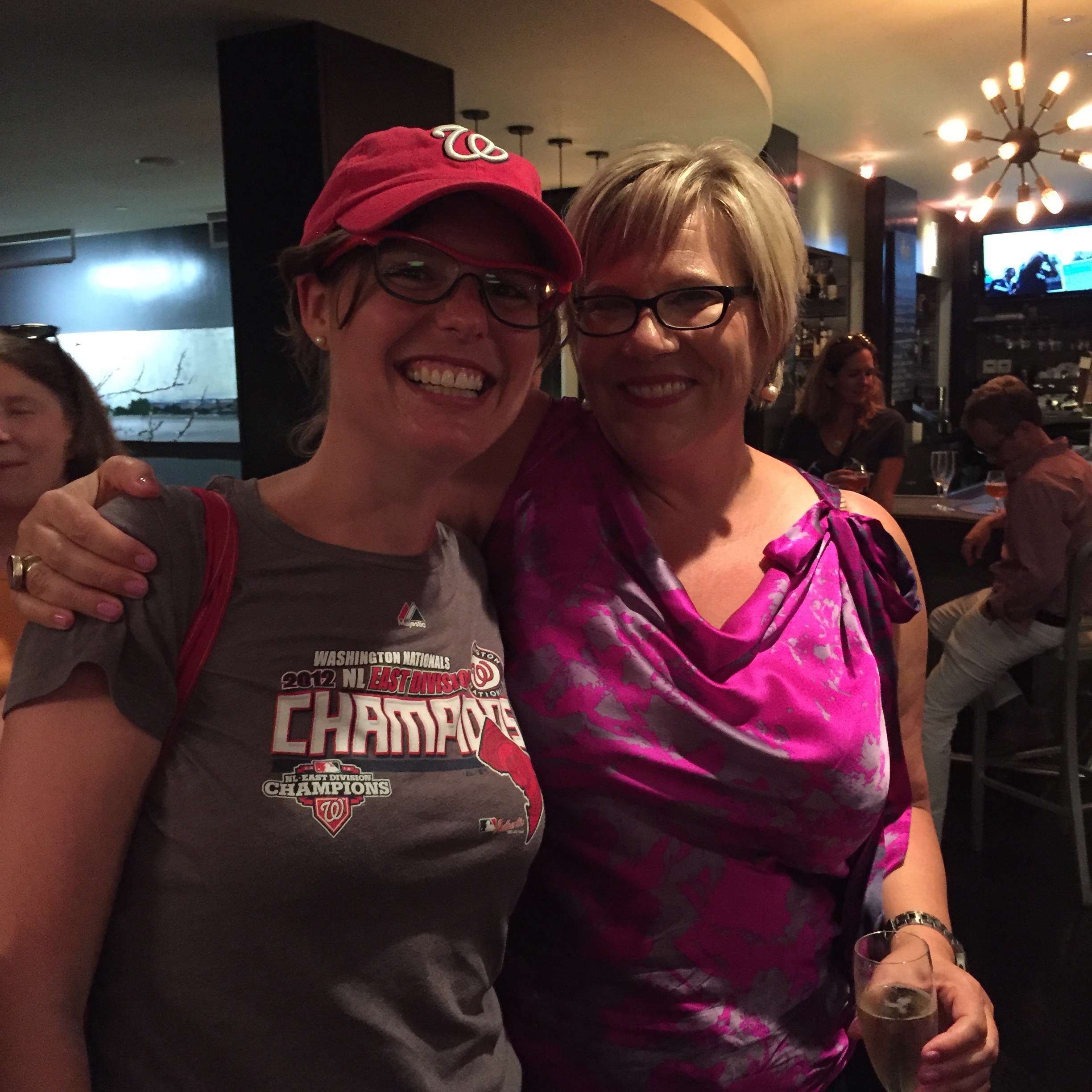
Erin and Amy Hagstrom Miller
Me and Amy Hagstrom Miller, Founder and CEO of Whole Woman’s Health, on the evening of her Supreme Court win. (My life is not usually this cool. If it were, I wouldn’t be sharing this picture so proudly.)


I’ve been reflecting on this decision and what it means to me, and it means many things. First, it feels great to win. Winning in a concrete, immediate, meaningful way happens rarely in the feminist space. Yes, we may be winning some long games, but those are gradual and not always perceptible at the moments they are being won. The concrete, immediate wins we are presented with are typically not substantive. The sad truth is these ‘wins’ are often losses disguised as compromises, engineered and subsequently celebrated by organizations with fundraising goals to meet this quarter.

A real win is the rare, best bird, and it feels good to feel good.

Also, in the decision itself: Lying is not a legal basis for restricting women’s rights and people’s rights. Facts matter, and people can’t just make shit up and expect to get away with it forever — even the pro-life movement, which has been doing it for decades.

But more than anything, my reflection comes in the bright light cast around this country by Whole Woman’s Health Founder and CEO Amy Hagstrom Miller, who decided to press her case against the Texas abortion clinic closure law even when conventional wisdom suggested that taking a big abortion case to the Supreme Court probably wasn’t a good idea for abortion rights advocates. She did so fearlessly and without shame, and while centering women and what it means to treat them well. She has taught me this:

If we want to win, we have to try to win. Even when trying to win means risking a loss. If we want to win, we must hold our heads up, and fight, and believe. 

For decades many leaders in the abortion rights movement and the feminist movement have hunkered between our shoulders, trying to hide in plain sight, hoping it would all get better if we just tried to say the right, inoffensive, message-tested thing at the super-strategic time that, coincidentally, almost never comes (because too many of our political allies are using our issues for votes and campaign commercials, and can’t be bothered to stand up for us at inconvenient times after election day!).

This matters for activists and organizers inside the women’s movement, but it matters to activists and organizers in every sector. And also at the individual level for people in general and women specifically, who are too often taught to put ourselves last.

We must dare to try, to try to win, and to try to win big. We must become comfortable with the prospect of loss. We must not be cowed by opponents who fight dirty, or people on our side who feel the need to speak in whispers. We must speak clearly, convincingly, and with love in our hearts. We must try to win. Otherwise we are hoping on games of chance.

P.S. It comes as no surprise this lesson comes from an independent abortion care provider. People who provide care and listen without judgment or unsolicited solutions tend to know most of all.

Body Hatred, Raising A Daughter, And Real Recovery From An Eating Disorder

Each Wednesday, my daughter and I put on our swimsuits and walk into the community pool until the water gets so deep I bend down and carry her. It is a long ramp into the deep end. Packed benches and risers span the perimeter and they are crowded with parents and siblings. It is quite a catwalk for those initiated into the lethal art of body comparison and body hatred.

My history with an eating disorder is one of the coolest and shittiest things about me. Cool because you recover from anorexia like I did, and no one can fuck with you. Overcoming my demons has given me a fearlessness and strength that stuns even me. Shitty because there is no intrinsic value in a bullying voice that tells you to stop eating and lose all the weight.

As it pertains to parenting a girl, it’s terrifying to know personally the reality of eating disorder culture taken to its logical extent — the acts of fainting, obsessing, and starving turning into a body that elicits jealousy, praise, and near-death experiences that blur into a loop of hospitals, treatment, and crying your damn eyes out because it hurts so much. It starts with pink onesies that ask if this diaper makes you look fat, and turns into magazine covers asking for twenty fucking years if Jennifer Aniston is pregnant because she is a woman and has a stomach. It is friends and family saying they are good or bad depending on what they ate or how they exercised. Eating disorder culture is everywhere, and it is unavoidable.

So as this swim class taught my daughter to swim, it taught me to wear a swimsuit in public without holding in my gut. It taught me to throw my towel over my shoulders instead of wrapping it cautiously around my waist or under my arms. It taught me to sit on the floor because the benches are too packed and let the rolls bunch over my bikini bottom. I want her to breathe, and walk, and sit like this. Being her role model helps keep me clean. The best way to teach her to love herself is to show her that I love her, and myself.

I consider myself fully recovered from my eating disorder. But the reality is, my actions don’t always match my thoughts. I eat regular meals, don’t restrict my food, and exercise only when I have time, which for someone who fits my work/life profile means not so much. I have a gut, two thighs, and a body that reflects this. My actions are good. My thoughts can be brutal.

Recently I have had a series of conversations with someone who is struggling with an eating disorder. She will often ask me how I moved past nasty eating disorder thoughts. This would be a different answer for anyone, since everyone’s thoughts and motivations are different, but I do think the one commonality is that we all need professional treatment to break free (this is my regularly scheduled reminder that I do not believe it’s possible to self-help your way out of an eating disorder, and if you are struggling I urge you to seek professional treatment).

But more important, it has helped me to realize that these thoughts may diminish in frequency and severity, but they actually do not go away. I’m not going to tell you what I think because I am not here to provide instructions for how to be an anorexic (you should live because it’s cool!), but let me tell you that I’ve been recovered like solid for close to 15 years and still have ridiculous thoughts every day about a new diet plan I should follow. What has changed is that they float in and out in seconds. I don’t listen to them. I don’t follow their instructions. Most of the time, I don’t even register what’s happening.

Until I did a few weeks ago. There I was in Pilates class, being physically strong when I started beating up on myself for the bulge above my elastic waist. It was in this moment of strength and sweat when it all registered. “Oh my gosh,” I thought in a high, indignant voice rising to my own defense. “That’s so meanWhy would you say that to yourself?” I did this the way a friend would chase away the worst bully. The release nearly made me cry, realizing that I had been holding this self-hatred in my muscles and I could be a good steward to myself and sweep the toxicity out with a non-self-blaming admonishment and a huge exhale.

Having been to hell and back, I can verify the basic building blocks of self-hatred have never gone away. The best I can do is acknowledge them, ignore them, and rise above them. It feels good when I demonstrate loving my body for my daughter, and it feels good when I insist upon it for myself. I’ll see you at the pool and I’ll be walking in real slow.

Some Friendships Just End

My mom’s first piece of marriage advice is to always have girlfriends. But that can be easier said than done. Among the baffling realizations that come with age is that some friendships end. Not just due to circumstance —  fights, breakups, new jobs, new lovers, changing personalities, moving away — some friendships just end.

I have grieved dying friendships and felt guilty about not caring at all. I have quietly wondered what I did wrong. I have hurt like hell at a snub, and purposefully snubbed because I was mad. I have sworn it was over, sometimes for years, and come back over tears (sometimes the best decision ever). I have welcomed some back in a tepid, networking-type way. I have realized that some friendships end permanently, others for a time, and still others might begin anew between two independently transformed people.

I wonder if my workplace friendships provide a better model forward. You really learn who your friends are when you leave a job, and it can be surprising to realize who remains one month, one year, and five years later. Perhaps this extends to friendships, too — you really learn which friendships were built to last when they can end respectfully, and come back anew on one random, delightful day. Further, most times when you leave a job it’s understood that change is ahead. It’s understood that career transitions make space for new things in your life. Perhaps we should celebrate our platonic relationship transitions because they create space for new friends, more family time, or please God more sleep.

But it would be most radical, and perhaps transformative, to accept an end as it is — neither a judgement on the past, nor a moment to make dramatic statements about oneself or another in the future. You can be friends forever, or not.


Rekindling The Flame: How Bernie Can Refuel And Help To Heal The Dudebro-Dominated Progressive Movement

Math is real. Bernie Sanders is going to lose the Democratic nomination for president. Yes, he is staying in the race and still collecting protest votes, and part of that process means pretending like he can win. But he can’t, and he knows it. We all do.

There have been aspects of his candidacy that are just on fire: The crowds, the youth, the focus on income inequality, the critique on conservative tilts within the Democratic Party, the visible changes in the campaign’s approach to racial justice in response to heckling from Black Lives Matter activists at Netroots Nation last summer. His vision is bold and that rocks. He has made more people believe government can be a force for good, and that’s an admirable and necessary lift after decades of right-wing demonization of public infrastructure and services.

But there are things about his candidacy that are crazy-making! The snide subset of online supporters who will try to gaslight you out of every possible critique one could have of his platform and campaign — like a nightmarish neighborhood White Castle that never closes, they are always there to make you feel sick by informing you the messiah already did that, and your concerns aren’t valid.

The relentless focus on Wall Street is ridonkulous. I have been joking for months that I need to print up some panties that say “THIS IS NOT WALL STREET,” because the very real assault on reproductive rights and the humanitarian crisis that has ensued is but one strong example of how not every urgent problem facing our society can be blamed on a banker. And these issues of inequality that can’t be blamed on Gordon Gekko are not a ‘distraction.’

After admiring Bernie for some time, I transitioned to full-fledged #BernOut a few weeks ago. The wagging finger while Hillary speaks; the comments about her ‘ambition’ and ‘qualifications’ that working women know all too well; the lack of support and visibility for critical races down the ticket. He has not been visibly cultivating relationships with women’s organizations, more often picking fights with them. Bernie has a gender blindspot and it’s big enough that you can drive several semis full of pushy, underpaid, and undervalued women behind him.

It is for these reasons I vom in the back of my throat a little every time I hear the suggestion that Bernie is the figurehead for the future of the progressive movement. I am tired of having white people with dicks lead the thing that gets to be called progressive, while women and people of color who try to break into the top leadership roles are painted as ‘big money’ or ‘establishment’ or ‘under-qualified.’

I am tired of seeing so many supremely qualified women and people of color doing substantive work for the white people with dicks, but never getting promoted to the public seat when the boss retires. There is always another white man who steps in to the wild applause of the good old boys, and hardworking women waiting for the turn that will never come within the party infrastructure.

There is always a 100 percent pro-choice rating for the new guy to brag about and pivot (and by the way, when 100 percent pro-choice rating means someone who never apologies for abortion and refuses to vote for any bill or budget that bans abortion funding, you let me know, and I’ll decide those words mean something other than ‘garden-variety, weak-kneed Democrat.’). The newspapers will quote economic justice advocates, who are almost always white men, who suggest that EMILY’s List and other efforts to elect women into office aren’t really progressive and kind of a relic of the past.

It’s been a few years since I was invited to an event with “the candidates’ wives” but almost all the candidates who make it past my local primaries are still white men. I’m done.

Frankly I cared and still care more about the Democratic primary for the open Senate seat in Maryland than I do the presidential. Last night Rep. Donna Edwards (D-MD) lost to Rep. Chris Van Hollen (D-MD). In her concession speech she said that Maryland is about to have “an all-male delegation in a so-called progressive state.” This is a problem all over the country.

And now that Bernie Sanders is going to lose, it’s time for him to look around and consider his second act. Howard Dean took his loss and gave us a Democratic majority at the federal level — and while that group was far from perfect, it enabled huge legislative accomplishments.

Bernie is not that guy. He is the guy that is about building not a majority, but a movement. (Which is no knock, it takes all kinds.) Once the electoral pressures subside it’s time for him to expand that movement.

Just imagine if Bernie continued going around the country after he drops out of the presidential race, this time embarking on a listening tour. If Bernie would take the time to listen to the lived experiences of people who suffer from identity-based discrimination, and bake it into his wonderfully feisty approach to income inequality — just imagine how much better the progressive movement could be.

I don’t just want Bernie to fight for the soul of the Democratic Party; I want him to fight for the soul of a progressive movement that continues to second-tier the concerns of women and people of color. Rightly or wrongly, he is a white man and he will be more listened to when he raises these concerns. After Bernie Sanders drops out he should take on identity-based discrimination with humility, listening tours, and his trademark passion.

How To Be A Better Writer

I get away with things because I write. An ability to write well is power — to lead social change, to challenge assumptions and disrupt the status quo, and to validate your own feelings when other people won’t.

Writing is important to the feminist project for several additional reasons. Historically, writing has provided an outlet for women and marginalized people who had talent but were not eligible for other public roles because discrimination — and to an extent that continues today.

Writing is a way to share experience and theory, imagine alternate realities, and learn from one another. I’ve been saying for years that I believe it’s a radical act each time a woman tells the truth about her own life. Often those radical acts feel more comfortable in written form.

Recently I attended a networking event where a young woman shared that she wasn’t sure what she wanted to do after college. I asked about her interests and she said she liked to write. I encouraged her to keep pushing herself in her writing ability — it would serve her well no matter where life took her.

In that spirit, I’m offering my tips for how to be a better writer:

Read. Read books, newspapers, magazines, blogs, lyrics, Tweets, manuals. Read promiscuously. Read outside your ideology. Challenge yourself — I read Ulysses at the gym, sob — and enjoy your teen lit without shame. Buy women authors, because feminism. Just read.

Write. The way to be a writer is to write. If you say that you want to be a writer, you’re either procrastinating or speculating. Anybody who sits the fuck down and writes is a writer. The way to become a better writer is to keep writing.

Give yourself permission to be yourself. This is at least as much life hack as writing tip, but don’t try to be other people/writers! Do not worry that you do not have their perspective! You have your perspective. It matters and you deserve to share it.

Identify your narrative arc.  It can be helpful to crystallize in your mind what drives your writing. Over a decade ago I realized that one of my chief aims as a writer is to expose uncomfortable truth. I believe acknowledging things we’re not supposed to talk about takes power from oppressive systems and redistributes it to individuals. Plus honesty feels great and helps me sleep. Not all of my work fits in the uncomfortable truth category, but I do find it helpful to remind myself why I do this work. In a few words, why are you doing yours?

Do not try to sound smart. If you’re writing to be understood by smart people, you’re lost on the side of a bad road. Make it excruciatingly easy for people to understand what you’re writing. Save the fancy words for standardized tests. (You’re still taking those? I’m sorry.) Do not assume people know the basics of your topic. Organize. Clear, concise, thorough — you win.   

Most descriptive language should go away. Adjectives and adverbs mostly dilute meaning. For that matter, be ruthless in cutting words from your drafts. Say what you mean, and say it with fewer words.

Find your weaknesses. One year I resolved to stop using the word “just,” which was all over my speaking and writing. Are you awkward with commas? Identify your crutches and work on them. Which brings me to my next point:

Invent challenges for yourself. I’ve done so many fun things over the years to keep my writing fresh. Poem-A-Day competitions with friends, National Novel Writing Month. Trying to write a screenplay (holy fail). But the best challenges I invented to directly attacked my weaknesses. For instance, I recognized that in my fiction, my characters sucked. So I took a whole month where I forced myself to write a new character every day. Some days it took the form of a poem, an article, a press release, a speech, a flip book, or more often a short story.

Dabble in other kinds of writing. I’ve taken spoken word poetry classes, fiction writing classes, and workshops on placing columns. Getting out of your lane strengthens your voice in your primary writing arena. It shakes up your thinking and it’s fun. 

Find editors who hate you. Actually please don’t seek out anyone who hates you. But the good editors are the ones who will challenge you to make revisions that make you roll your eyes in irritation. I have learned the most about writing from people who redlined me to tears.

Laugh at your old writing, and celebrate your resilience. I have successfully completed one novel, and that’s the only successful thing about it. It’s so bad I want to present myself to the jail a few miles away to show I’m sorry. I read grandiose things I used to write and cringe. I’ll probably read this post next week and do the same. Life is growth. Keep moving. Thank goodness.

Keep at it, and encourage others to do the same. I was in love with someone who showed me his writing. It was so bad! (To be clear, I’ve loved folks who showed me writing that was intimidatingly good, so please give yourself the benefit of the doubt in the event you’re an ex-lover perusing the blogs I am now writing, at age 35, late on a Friday night.) Yet he was so vulnerable. I didn’t know what to do, so I encouraged him on the few good parts of what he was doing. He actually got a lot better.

We should be so gentle with ourselves. Treat yourself like someone you love — encourage the areas that really work, and turn off the critic that focuses on the shit surrounding it. Coax the good stuff out and rely on what you learn from people who edit you to prune the rest.

Keep writing and you will get better.

Getting Old And Loving It

I turn 36 in a few weeks, and I’m excited.

Aging is cool. It’s the ultimate affirmation of having “made it.”

I have written about loving my first gray hair as a political act, because the whole you’re-old-you’re-done message sucks. It is a privilege to age. I’ve long thought women get prettier as we age; there is something sculptural about the way lines cut a face.

36 feels significant to me because this is literally twice the age at which I thought I might never have another birthday. Today, half my life ago, would have been about the first morning I would ever wake up in the middle of the night to flashlights making sure I wasn’t killing myself, going to the bathroom in front of someone so I couldn’t vomit, and taking a shower observed after my razor was retrieved from the locked cabinet in the back.

You see, both my 18th and 19th birthdays were spent in the hospital because I had been starving myself to death. I think about all the destructive things I did, and all the ways I tormented myself with what I thought was my fatness and unacceptability.

I’m not ashamed that this happened. I’m appalled that society does this to people every day, that gender roles suck as much as they do, that it’s hip to brag about how “good” or “bad” you were with your food or your exercise, that size 00 is a now a thing — like literally, now the size for women to strive for is less than nothing.

I’m significantly larger now than I was before that eating disorder started. And you know what? I am fucking alive and fighting.

As I get ready to go into my later thirties, I’m proud to be alive. I think about loving all of my “imperfections” — including my wrinkles, crows feet, gray hair, C-section scar, cellulite, varicose veins, shoulder scars, and especially the laugh lines.

I remember what it felt like to laugh and cry this hard, to get these lines on my face. The condition of my forehead is intimately related to the number of occasions I’ve had to raise an eyebrow at total bullshit. My stomach and thighs! After so many battles, I am soft, triumphant, and strong enough to run a steep hill.

Loving yourself and your body as it is is truly revolutionary. I’ve spent half of my life on the other side of rock bottom; long enough to learn that the kind of lady I want to be SCREAMS HER AGE, has a belly roll and acknowledges it, and encourages others to do the same.

Donald Trump Voters And My Daughter

Tonight, as I pushed a jogging stroller and my daughter held her butterfly wings and stuffed giraffe with the bell, we came across the neighborhood nightmare I hadn’t known existed:

Five Donald Trump signs on one lawn.

“MAKE AMERICA GREAT AGAIN!” they screamed.

I can hold her and rock her and sing to her, but I can’t shield my daughter from Donald Trump supporters.

They exist. They’re everywhere. The polls and votes are not an aberration, and getting snooty about it or exercising our right to denial won’t do anything: Bald hatred is apparently sort-of in.

More distressing was the house itself. This was the house with the woman who had caught me pushing this stroller a year ago. She wanted to chat. She clearly wanted a friend. She has two twin sons about the same age as my daughter.

And now her house is supporting a man who has called for building a national registry of Muslims, posing religious tests for who can enter the country, and building a wall along our southern border at Mexico’s expense. He profoundly disrespects women. He encourages violence.

So what am I supposed to do if we see each other at the playground? Should my daughter be allowed to play with her sons? How do I talk to my child about racism and sexism and violence, and the awful views that express themselves in society all the time?

I will admit to feeling a level of discomfort with a trend among some in the left of shutting down all opposing speech. While I’m all about taking care of oneself and what one needs to feel safe, it seems like there’s a qualitative difference between a justified non-tolerance for racism, sexism, and calls to violence, and creating bubbles where the only people we speak to are people who love everyone perfectly. That world is very small, and as an activist my goal has always been to create a bigger world.

I think about that tension as I consider what to do with my daughter and this family. There is a good chance the issue will never come up — after all, it’s probably been a year since we last bumped into each other. But these are real questions. There are, no question, other Trump supporters in our midst.

My non-negotiable is definitely labeling the problem. If someone says something racist in front of my daughter, I have already pledged to my husband, no matter how socially awkward it is, to say loudly, immediately: “That’s wrong, [he or she] is wrong, and what they’re saying hurts people.” It may lose us friends, but it’s important to me that we confront it in the moment, and that we do not allow anyone who wants to diffuse the tension to redefine that moment as different people seeing things different ways. Some things are just wrong and they hurt people.

But beyond a direct explication of views I just don’t know. More than anything, I want to help and support people — including my daughter, if this is the life she chooses — to change minds and demand accountability so that we treat our fellow humans and ourselves better, with dignity, equality, and justice. Will closing off the neighbor who now gives me the shivers do that? And what would it mean to label some people off limits — does Trump win if his way of thinking (even for different outcomes) wins? Maybe the best thing we can do to defeat bigotry is to invest in our kids openly, in ways that make us feel uncomfortable.