For My Readers: In Gratitude

On September 27, 2012, I woke up excited. It was so early in the morning it was still late at night. My dear sweet husband was out of town on business, and so I grabbed this laptop, took it into bed, and launched this blog.

I had personal blogs before, but it had been a few years. By that morning, I was winding down a leadership stint in an old-guard feminist organization. Ironically enough that experience meant I quieted about a number of issues within feminism about which I had previously been vocal; having a space at a microphone stand is not the same thing as fostering a functioning set of vocal chords. Finally, I felt, I was more free to help advance and shape a much-needed dialogue about the status of women in society, the importance of activism, and the evolution of modern feminism as I see fit. (Something I encourage others to do from their own perspectives.)

And so, with my hands shaking with excitement, this blog was born. I almost threw up in the bed. What was that about, I wondered? How bizarre. Some days later I would realize I was pregnant.

So this blog has a very special place in my heart. The existence of it, period, is something I associate with the importance of having (and using) our own voices. It also reminds me of this wonderful new daughter of mine and how, even with the way her presence has redirected my daily activities and existential moorings, it is so energizing to participate in a broader effort concerning the status of women and girls.

Most of all, I enjoy being part of a conversation with all of you. So as this year comes to a close, I just wanted to give a simple but heartfelt thank you to those of you who read my blog. It means a lot to me that you care about feminism, and I so appreciate your thoughtful comments. So thank you. Thank you so much for coming to this little corner of the web that, in ways I intended and ways I did not foresee, represents my labor of love.

Policing Personal Lives Is Not The Point: Dos And Don’ts Feminism Must Die

Do you wear lipstick, or high heels, or short skirts? Have you, during the course of a heterosexual marriage, changed your last name? Regardless of whether you hold a job, do you find yourself taking care of your kids while other moms are “leaning in” to the demands of a boss in the paid workforce?

Honestly, who cares?

The nitty-gritty details of your personal life do not influence whether you can be a feminist, nor do they influence your ability to be a cause-advancing member of Team Gender Equality.

Still, the media continues to advance a false and worthless narrative of what we can call Dos and Don’ts Feminism, which posits that criticizing a woman’s personal life is a feminist act and further that one woman’s choices set an example that all other women must follow. Both practices are offensive and not feminist. Let’s look a little closer.

First, feminism is a movement that holds at its core the ideals of respect for the self-determination of individual women, as well as compassion for the lived experiences of women more generally. Accordingly, attacking, criticizing, and needling women for the way they live is not an expression of feminist ideals.

Further, the practice of criticizing women’s personal lives — for even thinking that women’s personal lives belong to the public domain — is rooted in a centuries-old pattern of sexism where men are supposed to get the public sphere, and can be disagreed with on the level of their ideas, and women are supposed to get the private sphere, and can be disagreed with on the level of who they are.

Second, one woman’s choices do not set an example that all other women must follow. In no legitimate feminism is there one ideal woman who we’re all supposed to be. I say no legitimate feminism because actually there are feminisms, not feminism (and any feminist who tries to assure you there is only feminism like what she says is probably fairly dictatorial, pretty insecure, and whether self-aware or not benefiting from some unhealthy dollops of unearned privilege, be they race, ethnicity, ability, religious status, gender conformity, sexual orientation, and/or marital status).

An outcome of feminism for women is agency, or the ability to direct the course of our own lives, and the proper placement of perspective with regard to women, that say, our bodies are actually about our bodies and not God’s will to be interpreted and enforced through (primarily male) theocrats. It’s not far by extension that a woman’s personal life is actually about that woman’s personal life and not about what potential should exist for all other women’s personal lives. In the context of a social movement that works for the ability of all people, and especially women, to truly express their own free will, it’s fine to draw inspiration from the lives of other women, but that does not mean that each woman must set an example for others. Men are not subjected to this, not this way.

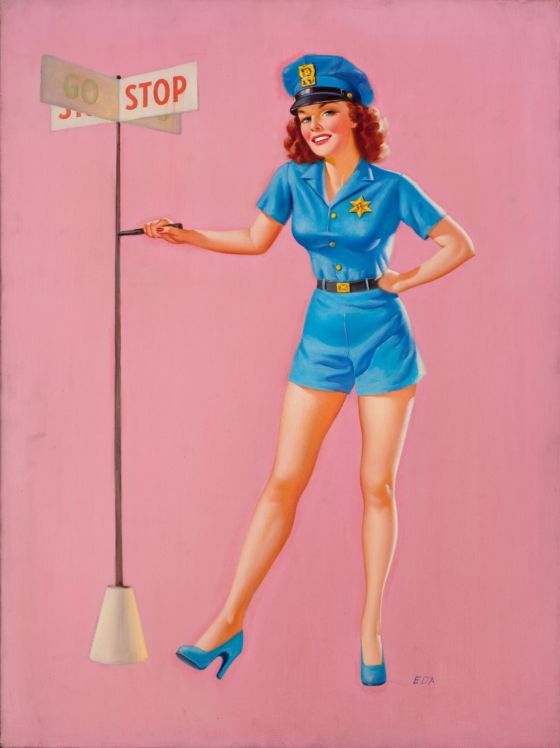
Picking apart a woman’s personal life is not a feminist activity, nor does it reveal whether or not that woman can be a feminist. Feminist behavior lies in how we treat others, and how we work to ensure others are treated. Scrutinizing women’s personal lives is a waste of time, it’s not feminist, and let’s be real — it’s really mean. Dos and Don’ts Feminism can die now.

TrafficCop_preview

Feminism Doesn’t Need A Savior, But It Does Need Leaders

The media loves to search for the next Gloria Steinem, as if what feminism most needs today is an iconic leader for everyone to follow. But we don’t need a singular icon, we need the actions of multiple leaders. The solution is reflected in the words of a Hopi elder: “We are the ones we’ve been waiting for.”

On the other end of the spectrum, some argue that feminism is best served without any leaders at all. The reason for pause is understandable.

Ironically enough, some of the worst instincts of second wave feminism yielded into a small but noisy sect of hierarchal, top-down leaders who lost sight of the anti-dominance ideals that are at the core of the movement. Further, leadership circles tend to reflect privilege: white, able-bodied, gender-conforming, class privilege. Diversity is not just about who is at the table, and who sees that table and believes they are welcome to sit, but also which perspectives get centered. Finally, speaking for all women, as iconic leaders are wont to do, is a ridiculous urge. Whether it is an individual or a group of people, speaking for ‘all women’ is more harmful than helpful to the modern feminist cause. I’ve written about that before here.

All those disclaimers said — feminism needs more leaders. The great news is that we are all right here. You and me and everyone we know can and should step up to be the feminist leaders of today.

One of the most important places to take leadership is outside the feminist movement. Back when I had a hierarchal title within a hierarchal feminist organization, younger women used to say to me all the time: “I want to do exactly what you’ve done. Tell me how.” And my honest answer is: Don’t. Don’t limit yourself to taking leadership inside feminism, particularly in a movement job that probably isn’t going to pay you very well or provide much mobility (especially at the entry levels).

Feminism doesn’t need a queen or a savior. But looking more broadly, more feminism and more diversity in leadership is sorely needed. Disturbingly, the world is still largely run by white guys doing it by themselves.

So yes, organize and wave your feminist flag everywhere you can (including inside the movement). But go forth and be a feminist leader in government, in business, in your family, in your faith community if you choose to take part in one, and in non-profit organizations that aren’t focused solely on women.

Do not be afraid to take leadership ever. It is incredibly feminist to take leadership. Feminism needs more leaders, not fewer leaders. The modern feminist leadership is action-oriented rather than iconic or symbolic, collaborative, diverse, dynamic, and external, not internal, in focus.

On Feminism And Accusations Of Censorship

There are certain joyless people in this world, generally belonging to a subset of angry white men whose fortunes depend, at least in part, upon furthering racism, sexism and homophobia, who would have you believe that feminists are politically correct harridans obsessed with censorship and shutting you the hell up. Since feminists stand for freedom and justice for all people, starting with women at the center, this charge tends to be inaccurate, untrue and, often, purposefully misleading in keeping with a larger right-wing strategy of claiming victimization on behalf of the dominant whenever the gals, gays and people of color get a little more visible.

Censorship is the institution, system or practice of censoring. Let’s consider the following discussion from the Concise Encyclopedia on the Merriam-Webster online dictionary:

Act of changing or suppressing speech or writing that is considered subversive of the common good. In the past, most governments believed it their duty to regulate the morals of their people; only with the rise in the status of the individual and individual rights did censorship come to seem objectionable. Censorship may be preemptive (preventing the publication or broadcast of undesirable information) or punitive (punishing those who publish or broadcast offending material). In Europe, both the Roman Catholic and Protestant churches practiced censorship, as did the absolute monarchies of the 17th and 18th centuries. Authoritarian governments such as those in China, Cuba, Saudi Arabia, and the former Soviet Union have employed pervasive censorship, which is generally opposed by underground movements engaged in the circulation of samizdat literature. In the U.S. in the 20th century, censorship focused largely on works of fiction deemed guilty of obscenity (e.g., James Joyce‘s Ulysses and D.H. Lawrence‘s Lady Chatterley’s Lover), though periodic acts of political censorship also occurred (e.g., the effort to purge school textbooks of possible left-wing content in the 1950s). In the late 20th century, some called for censorship of so-called hate speech, language deemed threatening (or sometimes merely offensive) to various subsections of the population. Censorship in the U.S. is usually opposed by the American Civil Liberties Union. In Germany after World War II it became a crime to deny the Holocaust or to publish pro-Nazi publications. See also Pentagon Papers.

In other words, censorship is practiced by governments or institutions for the purposes of control. It is associated most frequently with authoritarian states or religions. It is generally against freedom, which is, again, not where feminism and other civil and human rights movements calling for the emancipation, empowerment and inclusion of more people and more people’s perspectives in free public life are headed.

This stands in stark contrast to religious and/or sexual fundamentalist movements who regularly call for the restriction or silencing of medically and scientifically accurate information, or simultaneous presentation of know-nothing mockery and false equivalences having no basis in reality, as well as consensual sexual expression and artistic depictions thereof, within public schools, public libraries and public life for the purposes of maintaining a currently unequal and unjust balance of power that favors heterosexual white men with money and some allegedly, dubiously celibate men within religious orders that seem to spend increasing amounts of time and money to suppress free sexuality on others’ behalf and hide sexual proclivities or outright crimes on their own behalf. Here are a few quick examples of their censorships and/or justifications for them:

  • “Evolution is just a theory, but Creationism has been advancing within the scientific community.”
  • “Abortion is never necessary to save a woman’s life.”
  • “Schools shouldn’t teach about condoms because they make you more likely to get sexually transmitted infections.”
  • “If you’re raped, you’re less likely to get pregnant than with consensual sex, therefore if you’re pregnant you wanted it.”
  • The regularly reoccuring Global Gag Rule that has required international family planning entities that receive U.S. funds not use any separate funds to even say the word “abortion.”
  • The history of books, including James Joyce’s Ulysses, going to court within the United States.

There are a few regularly reoccurring accusations of censorship leveled against feminists that I’d like to address directly, and why the actions discussed are not censorship.

Applying pressure to a private business that has condoned, promoted or not taken a position against hate speech against women is not censorship, it’s activism. Our lives are increasingly defined by corporations and their policies. Telling an advertiser to stop objectifying women isn’t censorship, it’s applying consumer demand within the free market. Telling a business to stop sponsoring a show that calls women sluts for using basic birth control — nearly every woman in this country at some point in her life — isn’t censorship, it’s assisting them and other consumers in allocating their dollars wisely. Telling a user-dependent website to stop tolerating rape imagery isn’t censorship, it’s an uprising within the user community for the purpose of adjusting community standards to those that are safer for everyone. Private corporations are free to ignore the activism, and they are also free to do the right thing. When given sufficient nudge they often do, because women are important consumers.

Supporting policies that require the posting of disclaimers within settings where medical care might not be offered, despite presentations to the contrary, is not censorship, it’s the supplementation of additional (accurate) information in keeping with the Hippocratic Oath to do no harm. At the local level, feminists often take action to ensure that crisis pregnancy centers representing themselves as medical facilities make it clear that many or all staff are not medical professionals and that they are not dispensing medical advice. That is not censorship. No one is stopping them from lying and saying that abortion causes breast cancer, and other non-truths that have been debunked. Posting a sign when a pharmacist refuses to dispense contraception is not censorship. Requiring Catholic hospitals that don’t provide the full range of medical care to make that clear in materials is not censorship. In all cases they are left free to continue lying and suppressing — how is that censorship?

The “censorship” charge against feminists tends to be ridiculous, and we can expect it to keep on coming. It’s almost worth a laugh since those who yell it the loudest tend to be those who most rely on censorship to continue legacies of discrimination that the human spirit has long outgrown. In the meantime it’s important to remember that those leveling the charge are more often those who wish to leverage institutions to control and suppress others, while feminists are those who wish to expand institutional freedom to allow more people to live equitably and with justice for all.

Feminism Goes Mainstream: The Obligatory Lean In Review

I saved Lean In: Women, Work and the Will to Lead until these final moments before my maternity leave because I like to match books with times in my life to the extent practical, I was reading other things first, and I’m not as mainstream as the feminists who received advance copies that allowed them to review the book in a more timely fashion.

Within 10 pages of reading, I started getting misty-eyed with happiness. Sheryl Sandberg is not another generation’s replacement for Gloria Steinem — nor, for a variety of reasons, is it particularly relevant or useful in this modern feminist era to try to anoint a new one — but what she and coauthor Nell Scovell have created is a game-changer: Feminism has gone mainstream. Specifically several feminist ideas have gone mainstream. They are being read and talked about by people outside the women’s movement and outside the progressive movement. Lean In is sparking much-needed conversations, some of them uncomfortable, within settings where everyone otherwise politely agrees that women are equal while men hold most of the power, as if no disconnect exists between professed ideals and glaring reality. This is huge.

In the form of a memoir peppered with statistics and practical advice, Sandberg gives other women permission to say to themselves, I’m going to step up and believe in my professional ability. Not every woman has a fear of sitting at the main table, or negotiating a salary, or taking on a leadership role when they know they might want to have kids someday. Not every woman, many of them due to multiple discriminations that cannot be mitigated by a change in attitude, can even dream of having these problems. But for those who do, and there are a lot of them, Sandberg’s message is inspirational. We must believe in ourselves.

Self-esteem is an irreplaceable ingredient in any march toward justice. When you are taught to believe that women have not achieved equality and parity — that you are getting paid shit, that you got raped and your military commander dismissed the charges, that the president has taken multiple breaks from running the country to force you to show a driver’s license before you can buy a birth control pill — not because of systematic discrimination against women but rather because there’s something wrong with you, personally (oddly, all of us), believing in yourself is a radical act.

A great deal of internecine debate exists within the feminist community, I think partially from a fear that Lean In will be seen as a canon on modern feminism, which it is not. Sandberg is a business leader who wants to help other women overcome self-doubt and fill executive leadership roles. This is not a book that was written to advance feminist theory, and, unsurprisingly, it doesn’t. So many feminists have criticized this book that I don’t need to feel the need to recap all of their criticisms. A few: Systemic change requires institutional-level solutions (not negated by Sandberg’s book). This book is more relevant to upper class, heterosexual white women (yes, this is true, but Sandberg wasn’t trying to speak for all women; if anything Lean In suggests that women who don’t fit Sandberg’s profile, especially women of color, need to be supported by the feminist community in publishing mainstream-level books, and sign me up as someone willing to help).

My primary criticism of the book is that in a few places, Sandberg asserts that women in power will help bring other women up. That’s simply not true. How many years has it been since Sarah Palin stepped into the cement shoes of that outdated liberal feminist assumption and threw it into the river? A feminist agenda must include law and policy, which may be acknowledged by Sandberg herself as outside the scope of the book, but that doesn’t mean she gets a free pass to claim something that’s untrue. Women who lead often don’t bring other women up with them, and it’s routinely suggested that’s because it’s easier to admit a token woman who displays patriarchal behaviors, or women want to make sure other women don’t crowd them out of their uniquely successful position (what I call the ‘there’s only room for one smart girl in the room’ theory). In the first place, we shouldn’t promote women for the purposes of resolving sexism for other women. It’s not fair to let men currently in power off the hook like that. We should have women represented equally in leadership because we as a society have a moral obligation to do so.

Lean In is an easy, quick read designed to bring feminist ideas that women should believe in their potential to a mainstream audience. On those grounds, it has succeeded wildly. I’m happy to celebrate that from my maternity leave, whenever it begins. Many of the issues she wrote about are becoming realer to me than I could have imagined just one year ago.

“Every Artistic Intervention Is A Political Act” – Junot Diaz

Junot Diaz spoke at the Arlington Public Library last night. Even the overflow room was standing room only. It was worth every swollen ankle moment for my pregnant body.

For those of you who don’t know Diaz, he wrote The Brief Wondrous Life of Oscar Wao, one of my favorite recent novels. Junot Diaz deserves his Pulitzer Prize so bad it makes you want to cry with enthusiastic happiness, like on the level if Miss America were crowned on live television and responded with: “But I’m smart. When are you going to give a shit about that?”

Junot Diaz

While not surprising, it was still delightful to discover that he grew up reading feminist, women of color novelists. Throughout his talk he slammed white patriarchal supremacy, telling us that culture tries to make artists and writers and everyone as white, male and straight as it can, with a message that if you do this, you will be loved. He talked about having his students at MIT look through The New York Times bestseller list one year and identify that an author of color was in the bestseller list only one out of 52 weeks. He spoke defiantly against rampant discrimination directed toward the Latino community, including the pressure to not speak Spanish.

He also spoke a great deal about the unquestioned status of capitalism in our society, and how it appears to be infecting children to the point that they display the pressure to specialize early in life. I enjoyed his comments about capitalism and art, in particular his view that writers and artists shouldn’t expect their art to “do something” (such as make money, or make other people happy), because we must create for the future and not the now. In other words Junot Diaz is a flaming anti-racist, feminist, unabashedly progressive, rebel artist dude. Which makes me want to read more of his books.

He’s brilliant and chill at the same time. I loved his self-deprecating, though not self-apologizing, style. One of my favorite quotes from the evening arose from a question as to why he named the title of one book, Drown, differently in the English and Spanish versions. He chalked it up to being stupid and in his 20s. Summing it up, he said: “It’s like you always have these great ideas as an artist, and then you execute, and then it’s super ass.”

Is Adoption A Feminist Issue?

As a feminist and a woman with an adoptive father, I take high interest in adoption-focused commentary. Generally it comes from segments of the right wing without adoptive experiences within their own families. Generally it pisses me off.

Typically the focus is on love. Can love between adoptive and biological families be just as real? From my vantage point (I was raised with equal love from my biological mother and adoptive father), the answer is a strong yes. I find it downright insulting when people insinuate to me personally, or generally within the news media, that something emotional exists between biological parents and biological children that can’t be created in any other way.

I don’t deny that adoptive families can lead to complex emotions and realities. I have struggled to negotiate what not knowing a biological parent means to me. I have felt loss. I have felt shame. I have felt sorrow. I have gone through grief. It has been alienating at times. It is very personal. Every adoptive situation is. Where I’ve landed, at least for now, is a pretty cool place: I feel exceedingly blessed knowing that not two, but three, have actively considered themselves to be my parent. There are three family branches that seem to be equally proud of (and, as needed, exasperated with) me in ways that only families care, regardless of who has the genes and who has been a part of my day-to-day life.

I recently learned a dear friend is an adoptive mother. Her daughter will soon meet her birth mother for the first time. We had a wonderful conversation, riveted by one another’s perspective. For me, it was a relief to hear from the other side, ask questions and share thoughts without fear of somehow hurting those personally invested in how I feel about the facts of my life. I realized, listening to her, how similar adoptive childhood and parenthood can silently feel. It’s not easy, but in the end family is what we declare it to be.

A publication I tend to agree with, the Minnesota Women’s Press, has two features on adoption in the current issue. Feminist Lens On Adoption is written by a transnational adoptee who decided against adoption on feminist grounds after learning of her own infertility, and Love and Loss is written by an adopted mother of a transnational daughter. I am extremely upset with the presentation of these articles together without a third, positive viewpoint.

The first article brings up two great points from a feminist lens. First, transnational adoptees experience intensified ambiguity. Moreso, the notion of “a better life” often carries white supremacist overtones. Though all of my parents are white like me, I can’t begin to imagine how much more complicated my personal experience would feel if culture and color were thrown into the mix. I cannot speak for the transnational adoptee experience, just as they can’t really speak for same-culture experience. Though some issues are the same, others are very different.

Second, many transnational (and heterocultural) adoptions are forced by a lack of resources. It is absolutely shameful that parents who otherwise desire to raise their biological children feel forced to sell them for money, or give them up due to one-child policies, or give them to someone else who has the resources to raise a child. Harkening back to one of those feminist issues that just won’t seem to go away: Empowering care is a human right disgracefully neglected on national and international levels.

I followed up that article with Love and Loss, a column by the editor. The mother of a young transnational adoptive daughter, she wrote that she recently explained “It was the best thing that ever happened to Mommy and Daddy. But it might not be that way for you.” Those comments don’t bother me. But the following sentence really, really does: “Adoption is about loss.”

In my own experience, adoption is a gain, the biggest gain of my life, not a loss. It followed a loss, certainly, but I don’t know that we can globalize that to every adoption, especially those within the U.S. In many cases you have women who choose not to have abortions, willing throughout their pregnancies to give a very big gift to a couple they’ve chosen. I can’t understand how to frame that as loss. I feel pain for others who must be reading this article and feeling similarly written out of the publication.

Taken in tandem, these articles seem to take the issue of transnational adoption and globalize it to all adoption. Because there are strong feminist critiques of the transnational adoption space, there must be feminist critiques for all adoptions. (Though this conclusion is only drawn in the editor’s column.) Of course adoption is a feminist issue, but one that is complicated and must be viewed from the experiences and positions of different women without allowing one to speak for all. That’s what feminism is supposed to do.

This piece was originally published in 2008 on a previous personal blog that is no longer available online. Rather than make edits I will acknowledge the consternation I feel while considering how much I have or have not grown as a writer during these past five years. There are also views stated that I would broaden today. Regardless I am publishing this piece now, as I realize that I may wish to write more about adoption and feminism and identity  from my new, present-day lens as a pregnant woman.

Shulamith Firestone, Sheryl Sandberg And #femfuture (Oh My)

“Sisterhood is powerful. It kills. Mostly sisters.”  – Ti-Grace Atkinson

Ti-Grace Atkinson

Madness, rivalry, wobbling (and ultimately collapsing) on two legs alone — reading Susan Faludi on the life and death of radical feminist Shulamith Firestone is no trip to the Thomas Kinkade kiosk. One theme I’d like to unpack, which is oddly prescient, has to do with fighting feminists, a topic that gets a lot of attention and little resolution.

There’s actually a simple solution. Ready?

Don’t be an asshole.

No really, don’t be an asshole.

I consider myself to be a cultural feminist, by which I mean that practicing feminist values is an inextricable ingredient of my fight for political and social equality and justice for women and girls. By practicing feminist values, I refer to an orientation to elevate the softer voices in a room, to treat others with accommodation and inclusion and respect, not a “dos and don’ts feminism” that focuses on feminism as a means of correcting the behavior of feminists and/or women. Dos and don’ts feminism, I believe, suggests that we can choose our way out of systematic discrimination against women, if only by not wearing that slutty thing or taking his last name or, if you’ve been listening to the gun lobby, buying a gun. This, in my opinion, leads to judgement and stigma and is the antithesis of inclusive feminism.

A feminist framework of power must in my opinion be culturally feminist, built upon principles of inclusion — let’s empower everyone — rather than dominance, or an approach that says let’s have the loudest voice and shout the others down. At its core, being an asshole is a particularly disagreeable way of exerting dominance over others. And, disgustingly, it happens within the women’s movement all the time. Oftentimes this takes the form of attacking feminist women who in good faith try something new with the goal of helping women advance, like Sheryl Sandberg and the authors of #femfuture, a new report with ideas about how to make online feminism more sustainable.

Do Sheryl Sandberg or the authors of #femfuture perfectly represent my views? No, they don’t. I’m sure they don’t represent yours perfectly, either. And I’m also pretty damn sure that insisting they do or you’ll shout them down in a sea accusations about why they personally are “problematic” in lieu of offering additional perspectives about the problem they attempt to tackle is not productive. In a movement built upon inclusion, everything is a starting point. (I don’t mean to minimize some good concerns that inclusion could be increased — in both works it could, which would improve them very much — but am calling for feminists with additional perspectives to proactively add their voices to the topics at hand rather than declaring the intentions of the speakers to exclude them.)

Within the feminist community, please, let’s not let problematic be the enemy of progress. And let’s focus on the progress.

Faludi’s piece references Trashing: The Dark Side of Sisterhood, a piece by Jo Freeman that I have read and reread several times over the years.  One of the best conclusions is:

Isn’t it time we stopped looking for enemies within and began to attack the real enemy without?