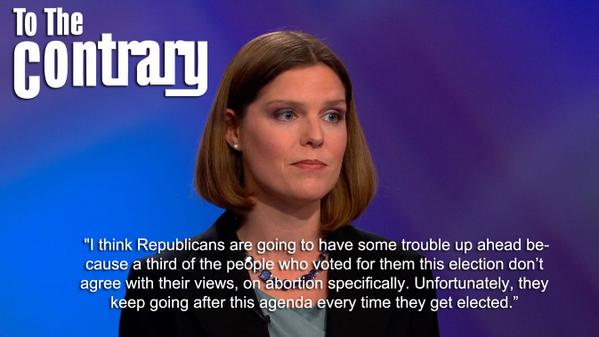
I appeared as a panelist on this week’s episode of To The Contrary, and discussed abortion clinic closures, working parents, and global women’s rights. You can watch a video of the show here:

I appeared as a panelist on this week’s episode of To The Contrary, and discussed abortion clinic closures, working parents, and global women’s rights. You can watch a video of the show here:
Recently, I had a letter to the editor published in The Washington Post: A pro-life feminist? There’s no such thing. In this letter I argue that “Feminism is an action agenda to secure the social, legal and political equality of women. Supporting policies and practices that help that agenda is what makes a person a feminist. The concept of a pro-life feminist is untenable because restrictions upon abortion deny women their agency as moral decision-makers and dignity as human beings.”
In response to this letter I received an email from someone who does consider herself a pro-life feminist. I would like to respond to her message seriously, and so I’m quoting her letter in full:
Dear Ms. Matson,
In your letter to the editor in the Washington Post today you stated that it is impossible for a person to be both pro-life and a feminist. Since I am both please allow me to explain my thinking. I believe that the unborn are human beings and therefore should not be deprived of life. (I don’t believe I need to make the case that slightly less than half of all unborn babies are female to support my self-labeled feminism.) I would ask that you not deny me my ‘agency as a moral decision maker’ and accept my definition of myself as a pro-life feminist. I contribute to organizations and schools which provide education for historically poorly served populations of girls and young women so that some day they may achieve financial security, be able to afford reliable family planning and enjoy motherhood free of fears about supporting their children. I consider it a feminist action to support the education of these young women and girls.
Thank you for this opportunity to express my thoughts.
I am grateful for this letter. While it does not disprove my argument, it does represent another point of view and I’d like to use it as an opportunity to dig deeper.
Before addressing this letter directly I feel it’s critical to raise the broader context in which this discussion is taking place. We live in an age when a primary form of outright opposition to feminism is a systemic and contradictory strategy to redefine feminism.
The first common iteration of an argument to support this strategy says feminism is worthless because equality has already been achieved and any woman who says otherwise is a weak and self-victimizing whiner.
The second argument keeps the basic idea that equality has been achieved but serves to support the status quo by, paradoxically, declaring feminism a good thing and then co-opting that definition to turn it into an identity for individuals, frequently ‘strong conservative women,’ who work against equality and justice for women as a class through support of things like corporate deregulation, assault weapons on demand, and religious fundamentalism masquerading as ‘institutional conscience’ (as opposed to the whining women who are working for laws, policies, and culture shifts that will empower women, such as raising the minimum wage, ratifying an Equal Rights Amendment, and ensuring access to health care — including reproductive health care — as a basic human right).
Briefly, these two claims are untrue and rest on wildly faulty premises. Equality has not been achieved. Feminism is a movement and not an identity. Opponents of equality and justice have a strong investment in painting feminism as an individual characteristic; it’s much easier to demonize feminists as man-hating harridans than it is to praise white male supremacy.
Yet a third common iteration of this strategy to undermine and redefine feminism accepts that equality has been achieved, or is at least theoretically achievable immediately, if only women would make smarter choices and stop being their own worst enemies. This is an area where in particular the anti-sexuality fundamentalists love to flutter their batons. Of course women are equal, they argue. They just can’t have sex unless they are prepared to have a baby or pay for their own contraception, because that’s the way the world just works. It’s about personal responsibility!
We live in an age where pregnancy is viewed as a consequence of something you did to yourself. While this personal responsibility frame may appear gender neutral, it is women as a class who are disadvantaged. Men are free to have their health care needs recognized as health care needs rather than something “extra.” Women, on the other hand, have the specific health care needs related to their sexuality and reproductive health consigned to questions of “morality,” or “difficult social issues,” or even the supernatural — mystifying the basic truths that pregnancy is produced by heterosexual sex and a baby is produced by a woman giving birth.
These attitudes feed into discrimination against the accessibility and coverage of reproductive health care that must be available to women as a necessary precondition of their social and legal equality. Let’s repeat that again, because it’s important: Women cannot be equal without access to and coverage of all forms of reproductive health care, whether or not they use them.
This view that pregnancy is something you did to yourself also feeds into a bunch of seemingly unrelated bullshit social narratives – that women as a class make less money or occupy fewer positions of power because they are individually “deciding” to have children, that women as a class are more subject to dependence on public assistance that must be made less available by government because otherwise women are too individually “licentious” or “slutty” and won’t keep their legs shut, and overwhelmingly that women as a class can rise above a world largely run by white men and white male dominance in their capacity as individual women by being good girls and making bomb-ass choices.
We can’t gloss too quickly over the fact that men are largely free to engage in heterosexual sex without these consequences. We should carefully pause on arguments that the unique reproductive capabilities of the female body come with unique responsibilities that must be borne by women, rather than accommodated by society as routine human needs in the form of health care.
In essence, the freedom of men to have sex without being consigned to a second class social, legal, and economic status, coupled with the freedom of men to have their bodies accepted as bodies and part of medicine rather than vessels of sin and consequences is the screaming, blinking reason why there is no such thing as a pro-life feminist. You can’t mystify a woman’s body and disrespect her decisions and be a feminist. Even if you are a woman yourself.
Back to the letter-writer, though. I want to be sure to respond to her distinct points:
I do respect her ability to self-define and especially make her own decisions, and, as I said in the original letter she was responding to, it is possible to never have an abortion yourself (or even swear you would never have an abortion yourself) and still be a feminist; the issue lies in your approach to other women.
Self-definition is not rooted in the control of others. Furthermore, feminism is not rooted in the control of women; coercion around the issue of pregnancy is pure and naked control of women. Ultimately, however, this is not an issue of self-definition.
Whether or not the letter-writer agrees, she is appropriating the label of feminism so long as she continues to believe that individual women should not be respected in their decisions around sexuality and pregnancy.
I am grateful the letter writer donates to education for women and girls, and retain hope that she may someday open her heart, mind, and even wallet to the inherent dignity and humanity of other women — even if they are sexual, and even if they may not make the same decisions she does.
Among other things, recovering from my eating disorder meant I could get pregnant. Me. Pregnant. It’s a stretch for many of us to imagine getting excited about growing a big belly, but add a history of eating disorders into the mix and it’s downright weird.
Eating disorder culture is an unhealthy, relentless focus on unrealistic standards of beauty and physical fitness, along with the presentation of hunger and food as pathologies, or demons, to be conquered. This culture of body hatred is inescapable, whether you have struggled with an eating disorder or not.
We are supposed to feel bad about our bodies, no matter what they look like.
We are supposed to judge our food and exercise choices as “good” or “bad.” It is considered totally normal to say “I was good today” in reference to starving, or to say “I’ve been so bad” to refer to the act of not exercising. This happens so much it is considered commonplace; but it’s shocking when you think about the fact that food and exercise are used as shorthand to convey our entire worth as persons.
Body hatred, negative self-image, and eating disorder culture are so relatable because they are everywhere. They are not the exclusive provinces of women, but it’s true that women are disproportionately impacted. The pressure to be less is profound; it is not just about bodies. It is about the devaluing of an entire gender. It is a pressure, placed strongly upon women, to take up less space in the world. To be seen and not heard. To be airbrushed into something that is non-human. These unattainable standards are labeled “perfect.”
And yet, how to explain the endless fetishization of pregnant women? The pressure to turn pregnancy into a spectator sport, complete with photographs that everyone you’ve ever met can comment upon online? The relentless messages about “getting your body back” after pregnancy is complete? The magazines, the stars, and the stories about how they lost (or didn’t lose) the baby weight?
Through the process of my pregnancy, and through my lens as an eating disorder survivor, I came to see pregnancy voyeur culture as an important component of eating disorder culture. The specifics may be different, but many of the pressures and root behaviors are the same.
Whether a woman is pregnant or not, her body and physical appearance is seen as appropriate for comment by strangers.
Whether a woman is pregnant or not, it is considered appropriate to discuss how much weight she has gained or lost, and these numbers are taken to signify something more than simply what she weighs. They are taken as a way for others to assess not just whether she is acceptable, but whether other women are acceptable.
Whether a woman is pregnant or not, the shape of her body is taken as an immediate assessment and announcement of her sexuality.
Whether a woman is pregnant or not, strangers feel they can touch her, from rubbing a belly to rubbing an arm.
Whether a woman is pregnant or not, her body is treated as a piece of public property. That body may be commented upon, or have laws placed upon it.
Pregnancy can be a profoundly alienating and centering experience. My pregnancy was both. It was shocking to me that my body could create my baby, and also that during the process of pregnancy I could feel totally new things. That foods I had loved no longer tasted good. That foods I hadn’t desired in years were sudden, urgent cravings. That aches could develop in areas of my body I had never considered.
It was also centering, in that I had to surrender to what my body would do. When it came time to give birth, I had no choice. I was operating on my body’s timetable. Not my mind’s.
When I realized I was going to have a girl, I thought hard about the body image struggles I had gone through in the past. I thought about the hospitalizations of my youth, and the days when, at rock bottom, I accepted that anorexia meant I was probably going to die. I thought about not wanting to pass that along to my daughter, and more specifically taking active steps to not model any body destructive behavior in front of her.
And so, as with my recovery, I ate. I ate and ate and ate. I grew. And this time, so did she.
—
This original essay first appeared in DISORDERED a zine on eating disorders feminism and anti-oppression…
I did a cheesecake photo shoot. I was a pinup girl. If you think that means I don’t get to be a feminist or work for women’s equality or reproductive rights, come and get me.
The freedom to have fun, be sexy on your own terms, and take up space in public discourse is worth fighting for.

My relationship with my appearance is complicated. I’ve had an eating disorder. I’ve had a baby and felt my body change. Generally, I don’t wear makeup and you’ll see me wearing heels just a few times a year. When I had a makeover earlier in my feminist career for the purpose of making people listen to me about feminism (no shit!), I cried.
But there are select awesome things that have long made me happily toss off my sneakers and glam it up. Those select awesome things are deco or noir or early sixties. (Let’s talk about hats!) I am picky, but every now and again I strike vintage gold.
There is one magical boucle coat I own; it’s teal with three-quarter sleeves. When I wear it to work, which invariably involves pushing for gender equality beyond the boundaries of what is considered polite, I have several times muttered to myself that I’m “taking it back for Grandma.”
Because, simply, Grandma looked great. And she deserved gender equality, too.

But wait. Isn’t fighting against the objectification of women what feminists are supposed to do? Don’t I have a responsibility not to play into that objectification by always looking as all-business as possible? There are some feminists who would say yes. But frankly, I think no.
Somewhere along the way the fight led by feminists to not be valued on the basis of your appearance in a world of impossible, sexualized standards — something that is toxic and fascist and deadly — became confused with a rigid idea that feminist women must not care about their appearance or (gasp) be sexy.
It is hateful when women are expected to be pretty or sexual, to be sure. But just as no woman is a threat to womanhood because she doesn’t care about her appearance (me on most days), so too she is harmless to the status of other women if she puts great effort into it.
As I covered in an earlier post titled Policing Personal Lives Is Not The Point: Dos and Don’ts Feminism Must Die, an emphasis on one woman’s choices for herself as a threat to all women’s opportunities is the essence of awful, sexist, and mean ridiculousness.
Whether expressed around beauty, fashion, or enjoying supposedly “light” (read: feminine) forms of entertainment, the bald truth is that the alleged stupidity of one woman is not what holds other women back.
Systemic discrimination on the basis of not just sex, but also race, class, ability, sexuality and gender identity, and other immoral hierarchies of dominance and privilege is what holds women back. Denying these oppressions exist does not allow you to escape them.
Change happens not because the arc of history wants it to, but because individuals have acknowledged uncomfortable truths and insisted on breaking convention.
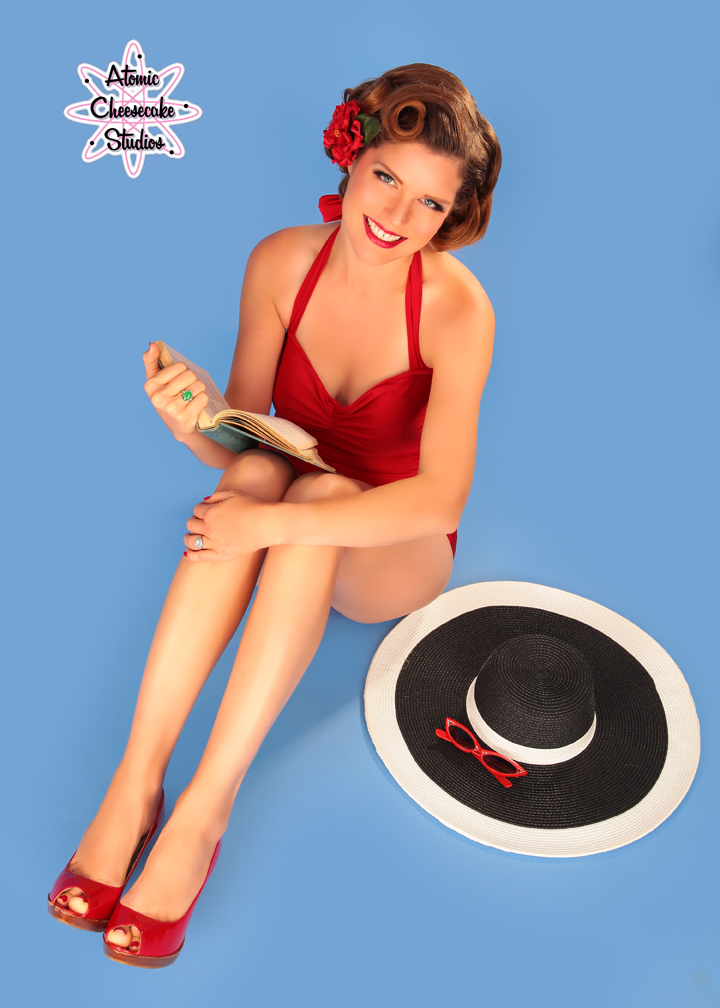
I insist upon being able to wear a fucking swimsuit and heels, and then continue to speak credibly about politics and in particular feminist politics. I know, some of you are cringing — Erin, don’t do this to yourself.
Actually, I’ve thought long and hard about whether to share these. And where I land is that if you think a woman showing her body is shameful, you are saying that her body is shameful. Excuse you!
My body is just fine, I’m not wearing anything particularly outrageous or showy in these photos, and, my gosh, I have legs. Please explain how hiding my legs means that my life will be perfect and women will be equal.
We know that sexism is at play in these assumptions because they simply aren’t there for men. Scott Brown posed nude for Cosmopolitan, and you know what he went on to do? Run for Senate. Not in one state, but two! But it’s not the same for women. Things will change, however, when women insist on taking up space even though we are not “perfect” – a purposefully impossible standard.
Krystal Ball, an MSNBC host who previously ran for Congress, is a hero for fighting back after right-wingers released racy photos of her in an attempt to tank her campaign in 2010 (emphasis mine):
The tactic of making female politicians into whores is nothing new. In fact, it happened to Meg Whitman, one of the world’s most accomplished business women, just last week. It’s part of this whole idea that female sexuality and serious work are incompatible. But I realized that photos like the ones of me, and ones much racier, would end up coming into the public sphere when women of my generation run for office. And I knew that there could be no other answer to the question than this: Society has to accept that women of my generation have sexual lives that are going to leak into the public sphere. Sooner or later, this is a reality that has to be faced, or many young women in my generation will not be able to run for office.
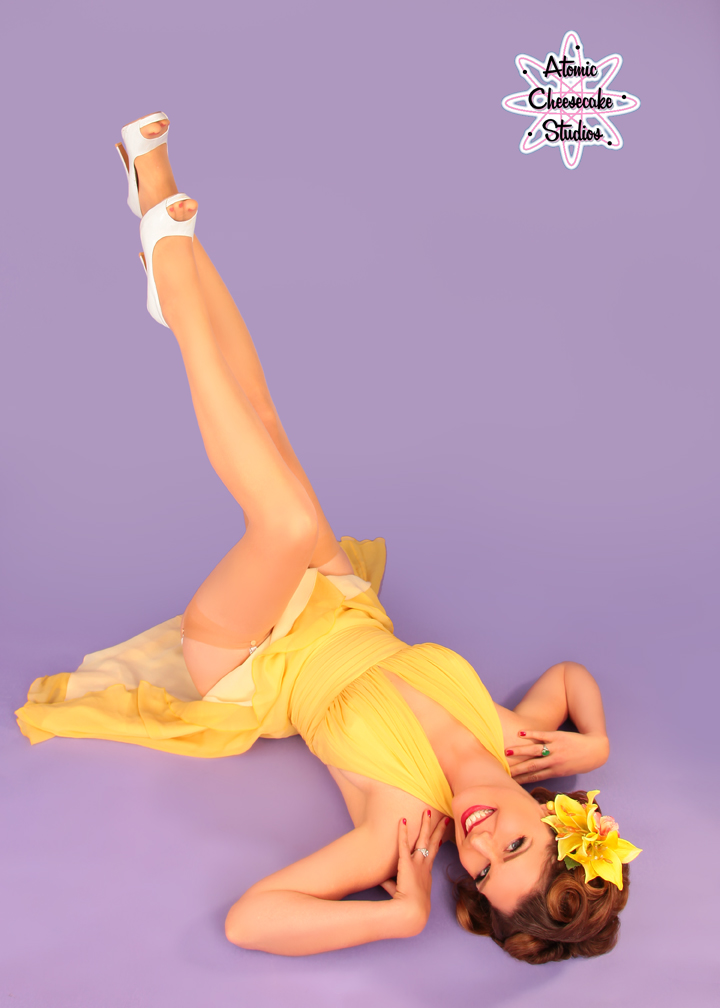
I am sharing these photos because I love them. I am not ashamed of them. I refuse to let a fear of someone else finding them and ridiculing me — a fact of life when photos are digital and hacking exists — hold me back from participating in public life.
I am sharing these photos because there are lots of young women in a generation beneath me sexting. We should not judge them; sexting seems to be a fairly routine part of sexual exploration for many young people, these days. It is also a fact that many of the young women who are sexting will find photos leaked or shared with others against their will later.
If we want a world with equality, we must insist that those young women who have sexted are not then told that their futures are foreclosed because their body has been made accessible to the Internet. We don’t do that to young men. Nor should we.
I work on incredibly important issues, and I am incredibly serious about them. I am also allowed to have fun.
And, on occasion, my dear, I do.
I appeared as a panelist on this week’s episode of To The Contrary, and discussed fraternities and rape on campus, gender inequality in the workplace, and feminism and motherhood. You can watch a video of the show here:
I appeared as a panelist on this week’s episode of To The Contrary, and discussed the 2014 election results, paid parental leave and advancing women in the workplace, and women as peacemakers. You can watch a video of the show here:
NARAL has a nifty new video out about why you should vote pro-choice, and I’m proud to be a part of it:
Be awesome or don’t bother, friends.
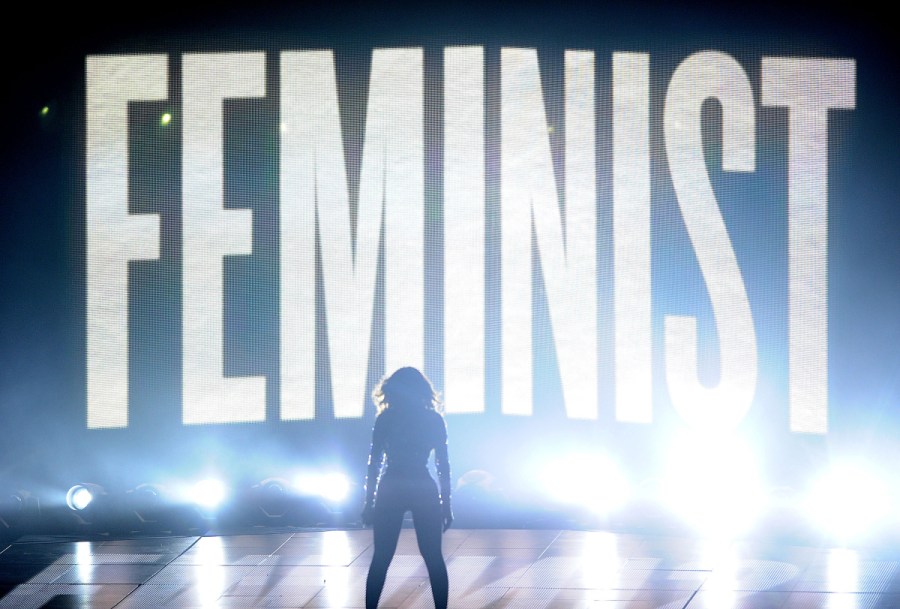
Celebrity feminism is a good thing.
Recently, actress Emma Watson gave one hell of a speech at the United Nations urging equality for women and girls:
Beyonce turned her performance at the MTV Video Music Awards into an opportunity to showcase her political beliefs:

And Taylor Swift’s latest hit, “Shake It Off,” urges women to ignore the sexist things that are said about them:
Let me be honest, I have gotten misty when that song comes on the radio and I realize my daughter, who is a toddler, is sitting in the backseat.
As a feminist activist, I have watched with some dismay how celebrity feminists are torn down on social media, seemingly as sport, within my community. The resentments seem to fall in these general categories:
All of these criticisms are a bit out there.
Another frequent criticism:
This is a fine criticism, but we should note applies to non-celebrity feminists at least as often. In any case, ultimately these gaps present opportunities for growth — as individuals and a movement — especially when folks are willing to work toward change in good faith.
We need as many women and men working for gender equality as possible, so if celebrities want to join the movement — great. We should also celebrate that feminism is making appearances in pop culture. The primary audience for these gestures is not those who care most about feminism but rather mass culture itself. When a popular actress or singer sticks her neck out there, some of the little girls and grown women watching and listening may get the idea to do so themselves.
I appeared as a panelist on this week’s episode of To The Contrary, and discussed the war on women, consent on campus, and fighting breast cancer. You can watch a video of the show here:
Recently, I organized a letter that 232 Georgetown alums signed after campus police removed a small group of students representing H*yas for Choice from a public sidewalk. You can read a copy of that letter here.
Today the administration sent me the following response:
Dear Erin:
Thank you for sharing your concerns regarding the recent incident with H*yas for Choice. We are responding on behalf of the University to the petition you presented on September 29, 2014.
As you know, on September 22, 2014, a Georgetown Department of Public Safety (DPS) officer asked a group of students representing H*yas for Choice to relocate from the public sidewalk at 37th and O Streets to a location on campus. The students relocated to a location on Copley lawn. The officer should not have asked the students to move, this was a mistake and should not have occurred. Upon realizing the mistake, the DPS officer informed the students that they were free to move back to the original location at 37th and O Streets if they so chose.
In response, Georgetown University Police Chief Jay Gruber, reached out to the students to offer an apology for the mistake the next day. He has also scheduled additional training for all DPS command staff and officers on the Georgetown University Speech and Expression policy in an effort to prevent this from happening again. In addition, students have raised this incident with our Speech and Expression Committee and the Committee is planning to respond appropriately.
Georgetown University is committed to our Speech and Expression policy, which guarantees the right to all members of our community to express themselves freely and to foster the free exchange of ideas and opinions. We share Chief Gruber’s regret in how our DPS officer responded in this case and please know that we will work to prevent it from happening in the future.
Sincerely,

