I Waited Until The Polls Closed To Say This: It’s Insulting To Have Only Men Running On Women’s Issues

I waited until the polls closed to say this:

It’s insulting to have only men running on women’s issues.

I live in Virginia. I am a feminist. I am a Democrat. And, I am disgusted.

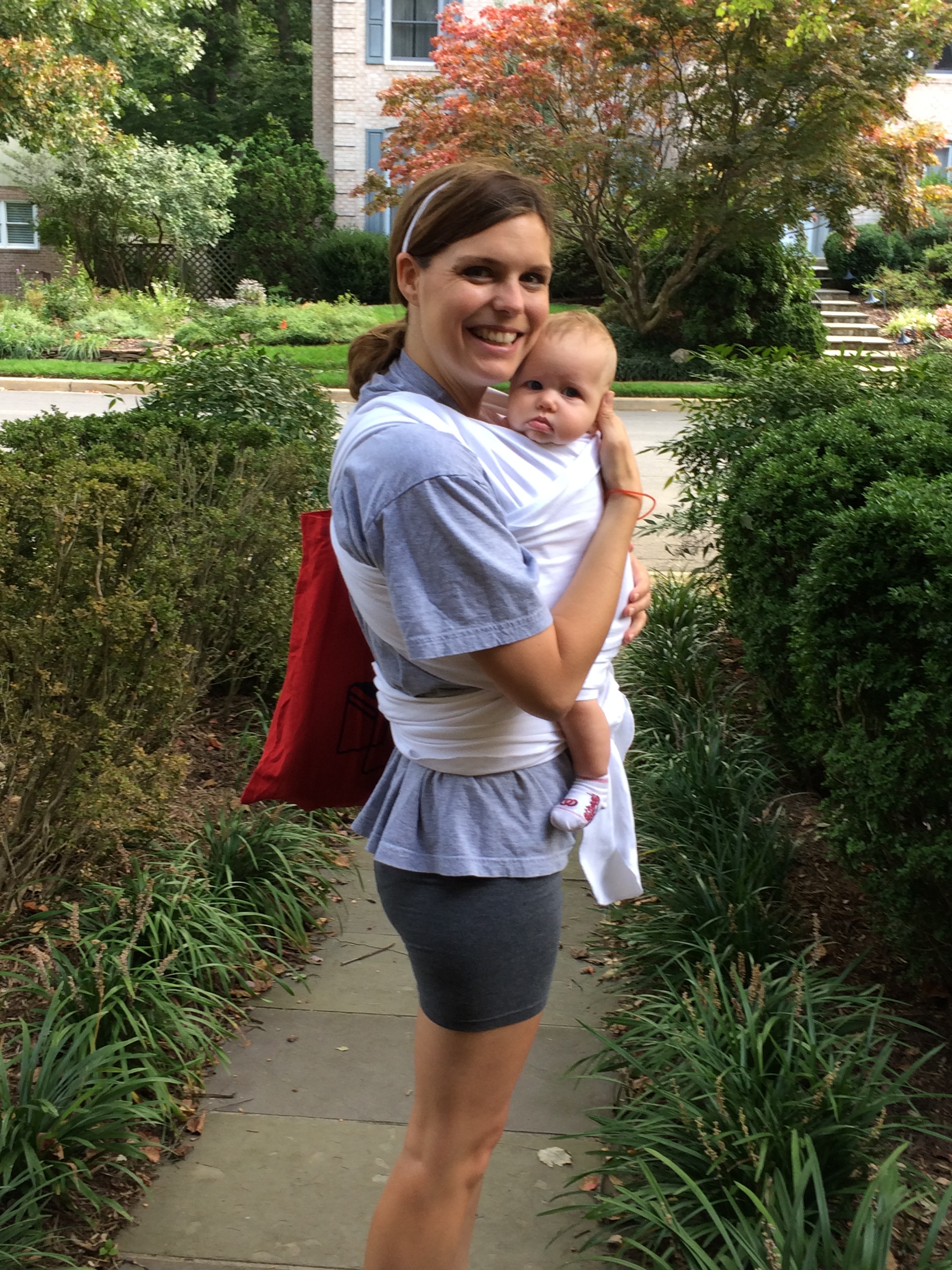
This is me and my daughter doing a September literature drop in Arlington for the Democratic slate. At the time, she was 15 weeks old:

canvassing

We walked for hours through the heat distributing copies of a newsletter featuring the photographs of nine men the Democratic party urged Arlingtonians to vote for. No women.

You don’t need me to tell you women’s issues are front and center in the Virginia election. Nearly every ad on television has been about abortion, and/or has featured women surrogates speaking for candidates on both sides. I have been receiving invitations to attend events with “the candidate’s wives.” As I type, the races have not been called and all local and national pollsters are talking about women voters. Because, duh, that is a major part of what this election is about.

The more I walked with my daughter, the madder I got. What kind of feminist mom am I?

Every day I work for policies that will support her future. It is important to me to include her in some of my work. I want her to understand how politics work. We have not just campaigned together, we have gone lobbying on Capitol Hill together. I want her to see public service as accessible. There is a woman suffrage poster in her nursery. I have been encouraging her to run for Governor of Virginia when she grows up.

By no means do I want to send a message to her that women’s issues are important, and they are best handled by men.

By public appearances at least, the feminist infrastructure in my state supports all the Democratic men without making public comments about how wrong it is that women weren’t included — not just as wives, not just as issues, not just as voters — but on the ticket.

It is unacceptable to run on women’s issues without women on the ticket. Men can and should run in support of women’s rights, but men also need to make room for women to share leadership with them. I am new to Virginia, having moved here in March. Perhaps some will say I am naive. I made a decision to not say anything about this until the polls had closed. I considered whether to say anything at all.

It’s true that I am a newcomer and don’t know the intricacies of the Arlington Democratic politics. It’s also true that I vehemently agree that this year’s Republican ticket was dangerous for women, and I was committed to electing Democrats.

But clearly, whatever excuses I’m about to get, the continuous presence of unchecked “women are important! let’s have men lead the way!” messages and deeds is pandering and it’s wrong.

I will not remain silent through a future election cycle. It should have been a woman running against Ken Cuccinelli. At a minimum, there should have been women running down the ticket.

If Democrats want to run campaigns on women’s issues, and I agree that they should, they must immediately begin to make room for women on the ticket. Women must run. And the party must support us in our capacity as not just constituents, but leaders.

In Response To The Allegation That Pointing Out White Male Dominance Is Racist And Sexist

Is it racist and sexist to point out that white men are dominant? Since launching the Tumblr white guys doing it by themselves, I’ve been called a “racist bitch” and told I’m sexist, too.

I welcome the opportunity to respond to these comments because while they lack decorum, this strain of thought is out there in less aggressive forms and it’s important to address it.

No one is a bad person for thinking that it’s racist or sexist to point out differences between advantaged groups and disadvantaged groups. Rather, they are tuning into decades of right-wing messaging gone mainstream: That equality has been achieved, that racism and sexism are wrongs of the past and not the present, and that the true victims of racism and sexism are white men who are less likely to get jobs and all the other things they might otherwise rightfully achieve on this planet were it not for misguided affirmative action efforts. None of these messages are true.

In a hypothetical world, it could be racist to exclude white people in order to prioritize people of color. It could be sexist to exclude men in order to prioritize women. We do not live in a hypothetical world.

We live in a real world where white men are so dominant that it’s easy to overlook how often they dominate to the point of excluding everyone else unless it is pointed out.

Pointing out white male dominance is not an attack on white men. It is an attack on the centuries-old practice of racism and sexism excluding everyone but white men from the levers of power, and the invisibility that allows that discrimination to continue.

The ability to be taken seriously as a leader, as a white man, is a privilege. It is not earned, although many white men work hard and do good things on top of this privilege. With this unearned privilege must come awareness and responsibility among hard-working white men to insist others are included in discussions affecting all of us. This is why white guys doing it by themselves exists.

What Do I Say To Someone With An Eating Disorder?

What do I say to my friend or family member with an eating disorder? How can I help? Is it possible for me to fix it?

As a survivor of anorexia and an advocate for body acceptance, I get asked these questions all the time. This makes me sick, since it reminds me that if I had a magic wand to make eating disorders go away forever I would wave until my arm fell off, but it also reminds me that my arm is still here and I keep getting asked for more people.

First things first: I am neither a medical professional nor a licensed therapist. I am merely someone who nearly died because of anorexia, spent even more time suffering a whole bunch, and fought her way through to the other side.

Please engage with professionals who can truly help your loved one. The National Eating Disorders Association has a helpline and a host of resources I urge you to check out.

What I have said to many others is based on my experience as a survivor who lost some friends along the way. I have less to suggest in terms of what to do or say, and more in terms of things to not do or say.

Do offer your unconditional love and support. What I most needed were people to love me, not fix me. Leave the treatment to the professionals and don’t try to be “the enforcer” of healthier habits. The “I’ll save you” path isn’t likely to go far, and it can also make it harder for the person to come to you later if they need help. They may not want to let you down when they are slipping. At least, this is the way I was.

Knowing that you will always be there and love them — no matter what — is a powerful weapon that may ultimately support a recovery process led by the person with the eating disorder and the professional team supporting them.

Don’t engage in “fat talk” — about them, or yourself. Your loved one doesn’t need to hear you tell them that you feel fat, or that you ate something “good” or “bad.” And while you don’t want to be dismissive if they bring up their body or eating or exercise with you (after all, it’s probably dominating their thoughts), you certainly don’t need to play the eating disorder-affirming game of good foods and bad foods, fat clothes and skinny clothes, hot bodies and ugly bodies.

Don’t comment on their appearance. “You look good,” or “you look healthy” were horrible swords thrown at me by well-meaning people. Sometimes I used these comments as reasons to be proud of horrible things I had done to myself. Other times I would use them as proof that I needed to punish myself further. You simply don’t need to comment on their appearance. Stay out of it. Comment on and compliment them for who they are, not what they look like or what they are eating.

Don’t participate in trigger activities. Your loved one may most want to suggest activities that serve their eating disorder, such as exercising, going for a long walk, trying on clothes at the mall, baking a batch of cookies (maybe only for others to eat, a common eating disorder behavior), or going to a buffet to eat. Not lecturing them about these activities would be good, but that doesn’t mean that you need to participate. Find other healthy things to do together.

Do support them getting professional help. If your loved one has an eating disorder, support them in getting professional help. No, you don’t have to be the enforcer, but you can support them by scheduling fun group activities at times when they are not going to therapy, not disparaging therapists or anti-depressants and similar drugs, and the like. Further, if they haven’t taken that first step yet, you can share with them names and telephone numbers of places where they can get help and assure them it’s strong, not weak, to reach out for support.

Good luck and I am so sorry for the experiences that have led you to read this.

White Guys Doing It By Themselves

Follow my new Tumblr: white guys doing it by themselves.

From the House GOP conference live-tweeting its get-together during the shutdown under the hashtag “Fairness For All” to the school board in North Carolina that banned The Invisible Man, white guys doing it by themselves is a tribute to white men totally comfortable telling everyone else how it’s gonna be.

Don’t worry, erintothemax.com is still my blog-blog, so stick around here, too!

Working With Police: How To Get A Permit For Your Demonstration

The modern women’s movement, as connected by the Internet, is damn good at identifying the need for physical, in-person demonstrations and getting people to show up for them.

As a general matter, however, there is less confidence in getting permits, working with police and the logistical side of getting boots in the streets. This process is often represented as more mystical or scary than it needs to be. Here’s a suggested process and some tips for making sure your demonstration, protest or visibility event is all up on the legal side of the law. These tips apply to demonstrations where nobody plans to get arrested. The good news is that, when organizers agree on this approach, it’s fairly easy to ensure no one does.

Don’t be rigid in your plans from the outset, saying something like “we are going to take over this corner at 3 p.m.” Leave yourself open and flexible as you research your options (more about this in a moment). You will want to choose a location that, ideally, is symbolically logical for the message you are sending and has high visibility, such as street or foot traffic. However, these are not hard and fast rules. You may be better off, for example, doing a visibility event at a well-travelled corner that has no overlap at all with your message. Or inside a public space, if your primary means of planned visibility is a video to be shared online later. As a general matter, if you are planning a street-style demonstration that doesn’t overlap with a scheduled event or appearance that you are responding to, it’s a good idea to plan for having it start no later than about 11 a.m., so that you can get members of the media to have video footage in plenty time for evening newscasts.

What does this have to do with getting a permit for a lawful demonstration? Everything. Because you can’t be rigid about where you want to be and when. You are going to be a little bit at the mercy of your local jurisdiction in terms of what makes the most sense.

First, go to the local police department’s website and look up demonstration rules. Some jurisdictions will require you to submit permits well in advance, whereas others may have “courtesy” permits that are not required. If you are planning a demonstration in Washington, D.C., or anywhere where the land in the surrounding area you’re considering is federally or state managed property, you may need to check into the rules with, for example, the Capitol Police, the Supreme Court Police, or the National Park Police. If you are planning a demonstration on or near a university campus, check to see if they have their own police permitting process and rules. Often they do. When in doubt about the area of jurisdiction, just call your local police department and ask for help. It doesn’t need to be scary. You can just let them know that you’re hoping to do a legal, First Amendment demonstration to exercise your free speech, you’re not planning to be disruptive and would like some help identifying where you can stand and putting together a permit for that demonstration.

You will likely be asked questions about the number of people you estimate will attend. Try to give a good ballpark figure, and one that gives you flexibility if more people show up than you had intended. Of course you don’t want to overshoot too high, and make the police nervous that they need increased presence on their end. You will also likely be asked questions about what kind of equipment you plan to bring. While jurisdictions vary widely, one of the easiest ways to get approval and stay out of law enforcement’s crosshairs is to say you intend to use signs without sticks on them, which means they must be carried by hand, and that you will only offer literature to those who request it. If you are planning a vigil, some jurisdictions have restrictions upon flame, which you can easily get around by specifying that you will use battery-operated votives. If you are planning to have a bunch of people on the sidewalk, it’s easier to get approval and keep it simple if you agree that everyone will keep walking. Sound amplification may restrict where you can go, and frankly, often the visual matters more than the speeches, although this is not always the case. The point is to be both flexible and creative. You can do almost anything you want to do if you are open to working within the confines of the local rules.

In filling out the permit, they will ask you for your name and contact information. The impact of what you offer is easy to skip over, so be prepared for this in advance. Remember that you are likely filling out a publicly searchable record, including by your opponents, so choose the contact information you would like to share accordingly. It’s also a good idea to state from the outset, in an attachment, the name and contact information of another person who is authorized to speak to the permit application. It can be difficult to get this done after the fact.

A note about “special police,” especially campus police, mall security and other private contractors in that orbit. They are often more difficult to work with than local, state or federal police. You are left to make up your own joke about mall security, but the point is that these folks are less apt to be forgiving or to want to work in partnership with you. If you are scared of folks getting arrested, you might wish to explore moving your demonstration to a sidewalk just outside the jurisdiction of the private police. This is not to say it can’t be done, and your writer is smiling at the memory of one particular rent-a-cop who refused to shake her hand.

Which brings me to my last point, my extra-special personal point that has helped me over and over again. Once you have your permit in place, make an extra copy of it so you and the other person authorized to speak to it each have one on demonstration day. Make sure lead organizers at your demonstration know that you and that person are authorized to speak to the permit and/or law enforcement as any issues arise (knowing this in advance is key). Then, on event day, have the two of you go up to the police when you first arrive and let them know you’re there. Give them your names, let them know how long you intend to stay, where you plan to walk around, and any other relevant details. Tell them nobody wants to get arrested and that if they have concerns, to just let you know and you’ll communicate back with your group. It’s folky, but it works.

There are other good styles of organizing demonstrations, including ones I have practiced with success, but this process for securing permits and working with police is one that really works for most people who just want to host a successful demonstration without anyone getting arrested.

A Body (Image) Changed: On Pregnancy, Breastfeeding And Eating Disorders

From a self-image standpoint, taking my maternity clothes out of my chest of drawers and putting my old clothes back in has been the hardest part of my pregnancy, childbirth and new mothering journey. This might have been the same if I hadn’t had anorexia, but I don’t know.

My body has changed. My old clothes don’t fit the way they used to. I am larger, rounder and my softer spots gather in different places. Do I have a pouf above a flat spot because I had a cesarean section, or is that the way my body processes any manner of birth? I don’t know.

To put away the maternity clothes ends the imprimatur of “a wild time” when my body was doing something rather than simply being something (me). I was mostly okay before. In response to overwhelming pressures pregnant women and mothers get to engage in body image negativity, I could clutch an ancillary detail and say: Fuck you, I’m pregnant. Or: Fuck you, I’m having a girl. Or: Fuck you, I had a baby. Or: Fuck you, I’m feeding a baby. But now it’s simply time to survive as a mother, a woman, a human being. In this paradigm my best choice is to look at that belly fat, those lines around my eyes, this body I’ve never had, not in this way, and say: Fuck yeah.

It’s fun.

Putting away the maternity clothes forced me to face the facts. My body doesn’t look different today because I’m pregnant, or because I just had a baby. My body looks different today because it is different. Accepting this, the difference of a new day with a body, versus a comparison to an ideal of what a person thinks her body once was or someday should be, is both difficult and joyous. For me, having this baby forced this issue.

What I wouldn’t have predicted is this: Breastfeeding is the second-best thing that has happened to my body image, just behind recovering from my eating disorders years ago. Yes, breastfeeding. Not getting through pregnancy. Not getting through childbirth. Breastfeeding.

To watch my daughter cry when she’s hungry and eat only until she is full. To think about how I treat my body directly impacting how well she will be able to feed. To, unlike pregnancy, see the results every day.

She is growing. She is healthy. She is happy. She is thriving. She is strong.

And, fuck yeah, so am I.

Unpaid Interns: An Apology

I regret having supervised unpaid interns while working at a previous employer, and would like to apologize. I’m truly sorry. Free labor is exploitative and exclusionary. I’m writing about it now in hopes that it will spark others to change.

During the course of more than three years at a progressive non-profit organization, I worked with dozens upon dozens upon dozens of unpaid interns. I selected and directly supervised about a fifth of the interns in the office. Supervising unpaid interns means that I was complicit in a modern employment system that is elitist, racist and treats workers in a horrifyingly bad way. Rather than name and further exploit the interns I supervised, who were all somewhere on the continuum between pretty great and really great, I would simply like to acknowledge that if you’re reading this, I can see your faces in my mind, I think you’re awesome, and I’m sorry.

No one should be expected to work for free, especially in order to, as the lore about unpaid internships goes, “make contacts and get a job someday.” While publications make sport of who can most lambaste the millennial generation for being lazy and self-absorbed, they rarely report on the growing expectation that our youngest workers should give away their labor for free. If you work on a regular schedule — not as a volunteer who controls your schedule and the projects you will and won’t do — and report to people who are getting paid, you should get paid, too. Period. It’s unacceptable to force workers starting their careers in a ho-hum economy to work for free, simply because they are young. It’s also unacceptable to replace paid workers, often older, with younger interns who are not (or barely) paid.

Those people in power who insist that unpaid interns are required for an organization to survive should get real. If your organization depends upon the artificial condition of employee-like unpaid laborers to survive, your organization needs to either get a new business plan or dissolve. From both moral and operational point of views, this holds true even for non-profit organizations not legally required to comply with unpaid internship rules the Department of Labor has created for for-profit organizations. From an unpaid intern point-of-view, you’re not any more or less not paid whether or not your employer is driven by profit. On the operations side, if you’re filling a niche that is no longer relevant or resists being filled according to your formula, change your business plan or quit and work with a similar organization doing a better job serving the needs of today. If an organization can’t survive enough to pay its workers, it’s on artificial life support — one that is extremely harmful to the people working there for free.

Everything bad about race, class and gender comes out for unpaid internships. Women are 77 percent more likely to hold an unpaid internship. High-income students are more likely to be involved in paid internships. Whites are more likely to be able to afford the privilege of putting an unpaid internship on a resume. Want to learn more? A recent study by Intern Bridge should be all you need to read, vomit and resolve to push for change.

Beyond those I worked with and/or directly supervised, I have known many unpaid interns in my day. Much, but not all, of the non-profit “equality” organizational landscape depends on the free labor of youth. I know how to recognize when people aren’t eating enough not because they are dieting, but because they have no money for food. I find it reprehensible that “free food” is a joke to fetch interns in Washington, D.C., where many interns go to briefings and parties because they are hungry in the poverty sense of the term. I think, specifically, that feminist organizations can do much better, and I resolve to be a forceful advocate for paid internships wherever my career may take me.

In the meantime, I am sorry to my wonderful unpaid interns past. Even if you were satisfied with our time together, and referrals or recommendations I may have given you since, you deserved to be fairly compensated for your work. If I could go back in time, I would fight for you to be paid. You earned it. What I can do now is help to call for change. I hope that others in supervisory roles will join me.

In Praise Of Slowing Down

It feels funny, from my maternity leave, to write in praise of slowing down. I am occupied. My left forearm, at times, is numb from rocking my baby in the cool, silent dark. During the day we walk outside and observe the slime mold in the mulch. We practice cooing and tracing our eyes around the room. We have one play mat with a hanging stuffed elephant, giraffe, bird and monkey, and it is so stimulating when I lay her down beneath them! We sing songs and look up and learn one new word from the dictionary every day. The world is small and new.

Within the confines of the adult world our activities are not particularly cognitive. I used to spend most of my leisure time reading books that kick my ass. Now I have a baby who depends on crying and screaming to communicate that she is tired and needs my help to calm down. In this space we have discovered silence, quiet, deep breaths, relaxed muscles and gliding on the balls of my own two feet. If the crying escalates I will whisper to her, “We’ll get through this. We always do. Every single time.” We are together and there is nothing else.

During the course of my life, I have found the most happiness in radical presence: immersing myself in the actions of love; running and other physical activities in nature; being totally and completely taken over by ideas and stories. While all of these activities could mean work (caring, physical labor, mental labor), they are typically devalued. During my life I have run in circles with a generation of women for whom “breathing out” is as much of an issue as “leaning in.” We haven’t been trying to have it all so much as prove that we can do it all. From racing from one extracurricular activity to another and then homework into working after hours to please a boss who is under (or not) paying us, and sticking to exercise, and a commitment to the arts, and social time, and the constant streams of unpaid volunteer work, and being in touch online with everyone and all the time, the world is actually so large and frantic as to make noticing the slime mold impossible. Which, I have learned, actually moves around — and quite quickly, if you keep tabs on it.

Anecdotally, men I know seem less likely to suffer from the need to “breathe out.” I don’t think this is because women are stupid. I think it is because we are undervalued within a culture that is held up as a meritocracy. It is unfortunate all this hard work has not translated into fair acknowledgement, much less happier lives.

Innately, my little girl has excellent focus. When she is crying, she is crying. When she is looking, she is looking. When she smiles, it takes effort, and it makes my whole day. I am so fortunate to learn from her.