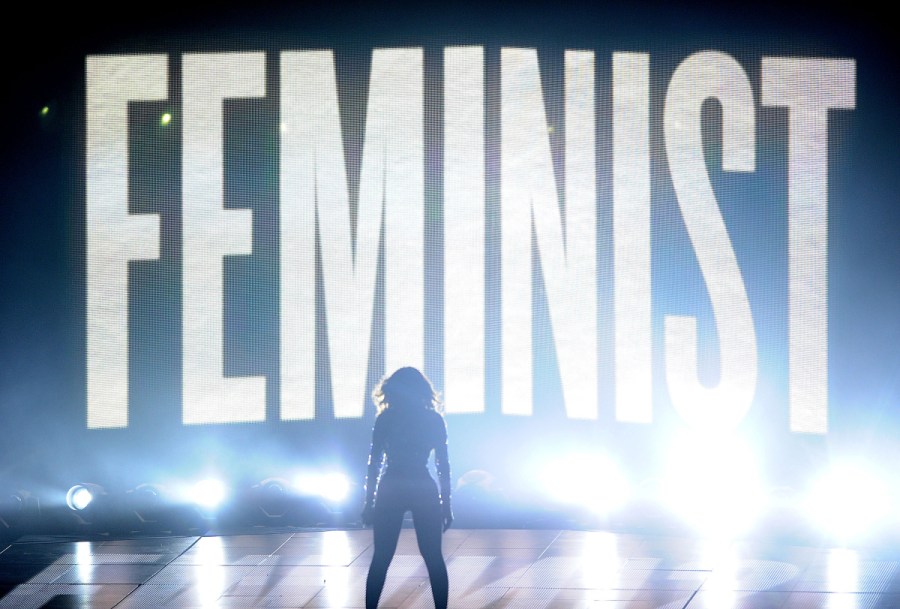
On Nostalgia In Feminism

It is dangerous to present progress for women as an achievement of the past, but hey, it happens all the time. Today’s women’s movement is rife with nostalgia.

My argument is not that sharing stories is bad, nor that people with wisdom and experience to share are useless; in fact, education about the women’s movement throughout history and tapping into the talent of feminists of all generations is a vital part of moving forward.

But there is a line where the pursuit of an action agenda turns into a reflection on the past as an end in itself. Too often, that line is crossed.

Here’s just one tangible example (good grief, there are many): A few years ago, I attended a meeting of advocates working toward the ratification of the United Nations Convention on the Elimination of all forms of Discrimination Against Women (CEDAW). The woman opening the meeting said — I see the faces of all the people who’ve been talking about this with me since the ’80s. Who is new to this issue?

This statement wasn’t welcoming, undermined the knowledge of people who may have worked on the issue for years or even decades after the ’80s, and failed to place the emphasis where it belonged — the accountability of current elected officials holding the power and obligation to ratify the women’s treaty today.

The results of nostalgia-dominated feminism are manifest: newcomers are silenced,  others choose not to come back, and above all swapping memories takes the place of working together to set and achieve goals. This environment creates a vacuum where a movement is supposed to be. What is understood to be feminist action turns into a largely fear-based electoral push to “protect” the gains of the past by electing Democrats and defeating the guys who say rape isn’t so bad because then you get a baby. 

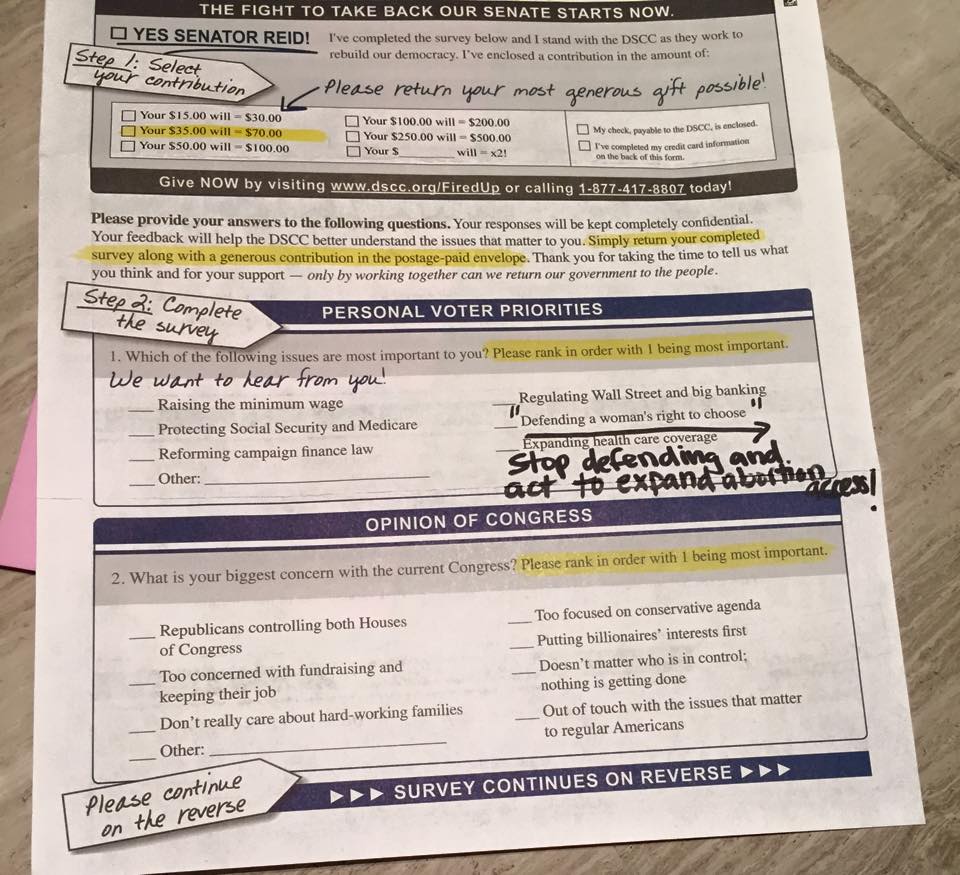
Recently Senate Minority Leader Harry Reid sent me a letter that pretty much says it all:
10959634_10205033255444989_3793331742362947558_n

(You bet I wrote back to him!)

The voter priorities suggestions are instructive. We can — and should — raise the minimum wage, reform campaign finance law, regulate Wall Street and big banking, and expand health care coverage. These are all positive goals, and activist goals at that. (Beyond the abortion whopper, WHICH WE’LL GET TO NEXT, notice that the only other negative statement of priority refers to “protecting” Social Security and Medicare. Figures. Expansions to these programs would disproportionately benefit women, since women tend to live longer and have fewer savings.)

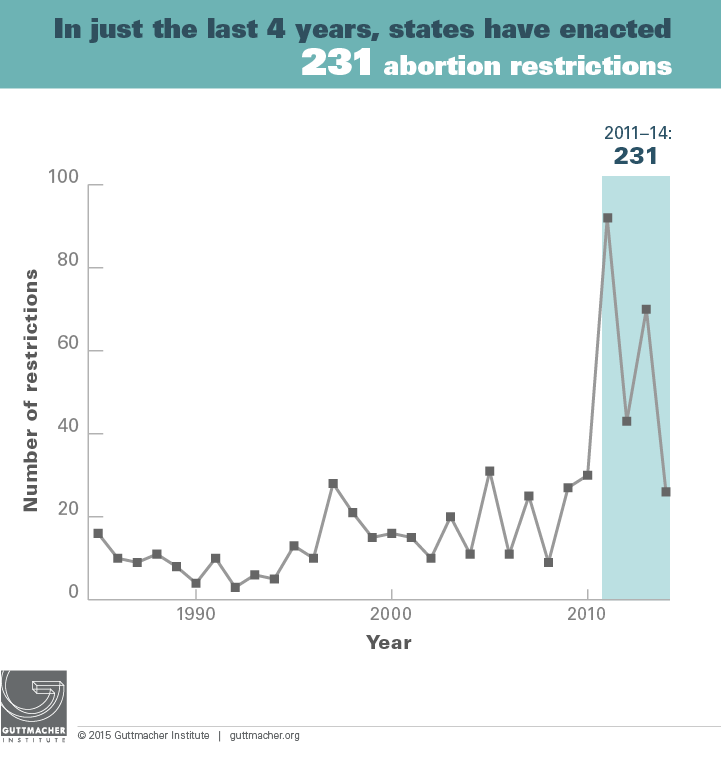
But “defending a woman’s right to choose” is laughable because people are faced with a reproductive health care crisis today in large part due to very new laws that restrict the human rights and dignity of women.
last-four-years-231-restrictions

Abortion clinics are closing, y’all. Terrorist group Operation Rescue claims that three out of four abortion clinics that were open in 1991 are no longer open today — and that 73 clinics closed last year.

So when Harry Reid sends out a mailer in early 2015 saying we need to “defend” a woman’s right to choose, I frankly wonder what the Jupiter he is talking about. How much is left to defend? The financial and logistical barriers to abortion created and approved by elected officials of all parties means this country is filled with women who can’t “choose” their way out of a one-way street.

And while the abortion crisis is grave, and our elected officials who claim to care should stop reminiscing about a court decision from four decades ago and start working to expand abortion access, abortion is just one of so many things needed to ensure the full participation of women as equals in society.

Hanging our hats on the achievements of the past isn’t going to cut it; proactive action is the sauce. The United States needs paid parental leave like whoa. More than 5 million people don’t have health insurance because 22 states have failed to expand Medicaid. The new report from the Department of Justice makes it clear — it’s time to fire the Ferguson police department and start over. How about an Equal Rights Amendment? We could go on. 

I am talking about external, observable realities that can be seen by those outside the women’s movement, but the Democratic Party’s ‘throwback feminism without big, bold goals’ is absolutely related to what happens within explicitly feminist quarters.

Just earlier this week I attended a woman-focused gathering where a contingent of the room directed much of the conversation around their stories from the 1970s and ’80s. The stories were interesting, to be sure; but what I frankly don’t know is whether the women doing that hard work in the 1970s and ’80s spent as much of their time being told what happened in the ’30s and ’40s. My suspicion is that they spent much of their time focused on deconstructing the realities of their present and demanding a better future — which is how we will win now.

An over-reliance on the past is dangerous because much of second-wave feminism has become, ironically enough, a conservative position — within the movement and beyond. There aren’t many people who will look you in the face and tell you women’s shouldn’t be equal, and this holds true even for most of the people who push the most anti-woman policies.

Nostalgia is also dangerous because however important the gains of the past were, they were incomplete. Women have never achieved parity in this country, and the gains of the women’s movement have always centered around the needs of white women with money at their disposal. Hanging our hats on the progress of the past is a pathetic agenda for the present.

Finally, needs evolve over time, and that’s a good thing. Twenty years ago the Vagina Monologues was revolutionary; today many young people find that language limiting and exclusionary toward transgender people. (I wrote about this issue at length over at RH Reality Check.)

At the same time, we do need more history.

Women’s lives have been systematically excluded from history curricula, and everyone (boys and girls) should be taught about them in schools. March is Women’s History Month; that’s cool, but it would be nice to have all year.

In particular a deep examination of the strategies and tactics that produced gains could prove extremely beneficial to those working for change. For example, my friend Zoe Nicholson’s examination of Alice Paul’s life and strategies is electrifying, and I think about it often in the context of my organizing work today — read about Miss Alice Paul here.

The line between nostalgia/sentimentalism and drawing upon history to kick ass for the future is often difficult to draw. But it seems that, as always, women as a whole stand to benefit from making painful attempts to grow toward more accountability, and the inclusion of new perspectives, within the women’s movement.

 

Long-Term, What Should We Take Away From L’Affaire Arquette?

For a second, it seemed like Patricia Arquette might be the new hero of the feminist movement.

After using her Oscar acceptance speech to call for equal rights for women, later that evening she expanded on her remarks backstage. “It’s time for all … the gay people and people of color that we’ve all fought for to fight for us now,” she said.

Look, the initial acceptance speech was not perfect — not all women give birth, citizenship is a privilege that many people don’t get to have, and “we” have not all fought for “everybody’s equal rights” that are currently being exercised and enjoyed — but it was an exciting moment for feminism anyway. The wage gap and equality for women should be mainstream issues.

That Arquette used her Oscar acceptance speech to call for political and social equality for women does not negate the harm of what she said backstage. By drawing lines around who is considered a woman (ostensibly, not gay, of color, or both) and insinuating that LGBT people and people of color (again, not mutually exclusive groups) owe something to those women who are white and straight and getting paid unfairly, Arquette set feminism back.

There are feminists and others who vehemently disagree with me on this; they think I am being too hard on Arquette or that I am demanding perfection of women who step out for feminism. Briefly, I understand it is difficult for celebrities to step out as feminists, and as, I have written before, I believe Celebrity Feminism Is A Good Thing. Nor do I think women and in particular feminists all need to be perfect. I’m not perfect and I’m not going to let that stop me from trying to advance equality for women and girls. These issues are not what’s at stake.

As a broader movement, feminism has a massive white privilege problem and exclusion problem. This is nothing new (racism has always been present in the women’s movement, with racist suffragists posing strong historical examples, and likewise Betty Friedan warned of the “lavender menace,” or the ridiculous idea that lesbians pose a threat to the women’s movement, in the 1960s), but Arquette tapped into it and reinforced it in a very public way.

If you think I am being “divisive” and ignoring that Arquette “meant well” and at this point wish to hit me over the head with a frying pan, I urge you to read Imani Gandy’s The Road to Structural Erasure Is Paved With Well-Intentioned White Ladies. (Seriously, though, if you hit her over the head with a frying pan I’m coming to get you.)

So now that all this has happened, what should we take away from this moment?

Here are my primary three suggestions:

1. Embrace fearlessness, rather than unity, as the rally cry for feminism. 

Women are not all the same and, as I’ve written before, it’s not helpful to speak for all women. Many of the people standing on Arquette’s side in this affair believe that women need to “stand together,” or strive for “unity.” The problem with this logic is that inevitably “unity” means quieting the softer voices in the room, or the people with less power. Calls for unity can be oppressive because, by drawing upon and reinforcing existing power dynamics, they can come to operate as calls to resist the inclusion of marginalized people.

Feminism is at its strongest when we embrace the reality that not all women are the same, and that women experience different oppressions on the basis of a wide range of identities and privileges. 

Imagine how strong the women’s movements could be if we embraced fearlessness rather than unity as the rally cry for our feminisms.

Let’s fearlessly examine how racism impacts life in America. Let’s fearlessly engage in difficult conversations with others. Let’s fearlessly remain open to changing our own views, and learning from others committed to human rights and social justice but with different perspectives. Let’s fearlessly speak up for the rights of all people — starting with but not exclusive to women. Let’s fearlessly embrace different people sharing diverse explanations of what conditions are required to thrive.

2. Criticism does not mean someone should go away, but Arquette should apologize.

It would be great if Arquette would apologize publicly for what she said, and such an apology would not be an admission of weakness but rather a representation of strength. The most feminist thing Arquette could do would be make an apology and commit publicly to growth. (While she has subsequently tweeted about the way the wage gap disproportionately impacts people of color, that is not a genuine “I’m sorry for what I said, and I will work to be more inclusive in my feminism in the future.”

As I wrote previously in Getting To Sorry: Why Apologies Matter When Someone Says Something Bigoted:

Feminism, as a practice, is not about gotcha and declaring some people good and other people bad. It is about eliminating bigotry from our lives — something all of us will have to work at — and moving forward in new ways that honor the full potential and human rights of everyone. So getting to sorry is a big deal, because it is that first step toward honoring people and making change.”

To be super clear, Arquette should not leave feminism, and her harmful words should not be used as an excuse for why others should not enter feminism. Should Arquette choose to handle the controversy with an apology, a little vulnerability, and an open commitment to expanding her practice of feminism to make it more intersectional, she could in fact give feminism a great gift.

Because lots of people will step in it. No one person can escape the thinking that underlies systems of oppression, even people who are committed to ending them in whole or in part. Social change agents will not succeed if they are not willing to change themselves.

3. Feminism must also mean listening to and elevating the experiences of women of color. 

Please stop reading my blog right now and read Jasmine Burnett on Navigating a ‘Crooked Room’: Reflections From Black Women on Their Experiences in Progressive Spaces. It is a disturbing, important, vital piece.

What To Make Of A Woman Apologizing For Herself

I have died a little, several times, hearing a smart woman apologize for sharing her opinion. Throw me six feet under so long as you’ll send a hot vampire who cares about feminism.

It’s not just “I’m sorry, but,” at the beginning of a sentence. These apologies also show up mid-conversation stream as “I’m rambling, and I’m not making any sense” even though no one has said so. They often masquerade as hierarchal concerns, such as “I’m just an intern, but,” or “I’m new here, but,” or “I’m young, but.”

I do and have done all these things, too, so don’t think I’m judging you if you relate as a speaker. The fact is that our culture clearly communicates that women will be better liked and more likely to get ahead if we downplay our abilities but have confidence in ourselves. That’s contradictory by design, because in this framework no one can win. You’re supposed to like yourself but not too much. However that works.

It is somewhat fashionable, in some circles, to tell women to stop apologizing for ourselves so that we can get ahead. There are many problems with this approach.

It’s an utterly false premise that we can self-help our way out of gender discrimination. That’s not to say that we can’t resolve gender discrimination, because through cultural and political action we as women (and men and girls and boys) absolutely can. But picking apart women’s personal lives and offering to-do lists for personal success is neither a recipe for equality and justice, nor a feminist practice in general.

Moreover, telling an apologizing woman that she has nothing to apologize for actually creates an almost real reason for an apology! Because what we need to examine is not the psyche of the woman who uses this common gendered speech mechanism, but rather where it fits into an overall pattern of expected behavior.

Women tend to be expected to build consensus, take the needs of others into account. and work to make those around them feel comfortable. These behaviors aren’t necessarily bad, and can actually be strong leadership qualities when chosen and practiced in context, but it’s confining and discriminatory as a general matter to expect women to be oriented toward and accountable to the group.

Perhaps what we most need to question is the assumption that it’s okay to tell women what to do.

Finally, the biggest problem with telling women not to apologize for ourselves is that it doesn’t examine the root cause of why a woman feels she needs to apologize for herself at a particular moment in her life.

It may well be the case that she is surrounded by people who discount her opinion. In that case, the real problem is not a pattern of speech but that those people surrounding her are horrible and not in any way conducive to growth and development. People who discount you are horrible bosses, lovers, partners, friends, and members of your network, and the solution is to find a way to remove them from your life, even if that takes time and planning (apology optional).

No one can make you feel inferior without your consent, true, but the proper piece of consent to remove is their influence rather than your coping behaviors.

This essay was inspired by my tendency to challenge those younger women who through conversation show me a tendency to preface their brilliant ideas and opinions with apologies for their lack of experience. I have multiple times told them that by virtue of being in a meeting or in a room, they belong, and I still believe that. We are never “just interns” or “just new,” we are human beings.

But the overall situation is more complex.

How To Be An Amazing Feminist If You Are A Man

Men who are feminists. Feminists who are men.

From UN Women’s HeForShe campaign to President Obama calling only on women at one (note: one) press conference to Aziz Ansari going all feminist on David Letterman, mass culture is ready to declare everyday Valentine’s Day for those men who believe in the inherent dignity and equality of women and are willing to work for it.

This is great because feminism needs men to succeed.

But, let’s be honest, there is a dainty line between mansplaining and men advocating for feminism, and sometimes it appears our allied brethren appear to have no idea they are using their male privilege in the very spaces where good women are trying to be rid of it. Further there are good men who want to be good feminists but have questions about how to do so.

The first rule is that any man who wants to be feminist must take it upon himself to learn about the ins and outs of gender-based oppression, and how that negatively impacts women as well as men. A less polite way to say this would be that it’s not a woman’s job to educate you, and it’s certainly not a feminist’s job to drop everything she’s doing to let you know what’s up. The middle-ground would be to say that the phrase “men’s work” sucks and is offensive, but the one thing that can legitimately be added to this category is the responsibility of men to care about and learn about sexism without asking women to serve them education on a platter.

One of the primary truths of any social movement is that those most directly affected should be at the center of leadership, organizing, and power. So if you are a man who is a feminist (yay and thank you), please be mindful that the best people to run feminist spaces and speak to feminist issues are women. This is not asking men to sit back, nor is it asking men to be silent. Au contraire.

Men have a responsibility to take leadership in those spaces where women are not present or have not yet reached a critical mass. Instead of trying to be the darling of the feminist movement, use your male privilege in the spaces where women are not present or underrepresented to insist that more women are brought into leadership teams, or to advocate for the promotion of women. (Hint: Adding one white woman to the otherwise dude-bro panel isn’t going to cut it.) Look at issues like domestic violence and rape and the underrepresentation of women in politics and focus on what men should do differently, not what women should do differently. If the media notices you, great — use that power to draw attention to less-acknowledged women feminist thinkers, writers, and activists who should also be interviewed and given speaking platforms.

Being a true member of a movement means having opinions of your own, and articulating them, but if you find yourself disagreeing with women on how to advance gender equality — seriously, check yourself. Slow down and listen, then listen some more. (For that matter, describing vaginal discharge or how menstruation works is nearly always creepy from cisgender men — things I have seen from self-described feminists who are men — you can leave that to women, okay?) The bottom line is that men who are amazing feminists are amazing listeners and amazingly present. They listen to women and they support the leadership of women in feminist movements. They volunteer as activists and fundraisers and participants without insisting on hogging the limelight or floor.

And here’s a big no-no to get out of the way! Straight cisgender men who use the women’s movement to find a date are frankly disgusting. It’s okay to be a man, a feminist, and someone who likes to get laid. It is not okay to be a man who uses his feminist gatherings as a dating service. Having been on the other side of this multiple times, I can tell you it is, categorically, the worst. There are few things more dispiriting than discovering that the man who appears to value your specific ideas about women’s liberation is actually hoping for a blow job.

Just one of the lovely things (there are so many) the queer liberation movement has brought to feminism is the blurring and complicating of gender identity. This is a good thing; nothing in this post is meant to assert that transgender men or transgender women don’t belong at women’s colleges or within feminist spaces, for example — what makes women’s spaces special is not the insistence on a certain set of anatomy but rather freedom from those who most directly benefit from patriarchal supremacy. Further, men who do not benefit from heterosexual privilege and/or white privilege will relate differently to feminist concepts than men who do.

This is meant to be a dialogue rather than an edict, so please share in the comments what you think makes men amazing feminists. Men and women are welcome and encouraged to contribute!

In Response To A Reader Who Calls Herself A Pro-Life Feminist

Recently, I had a letter to the editor published in The Washington Post: A pro-life feminist? There’s no such thing. In this letter I argue that “Feminism is an action agenda to secure the social, legal and political equality of women. Supporting policies and practices that help that agenda is what makes a person a feminist. The concept of a pro-life feminist is untenable because restrictions upon abortion deny women their agency as moral decision-makers and dignity as human beings.”

In response to this letter I received an email from someone who does consider herself a pro-life feminist. I would like to respond to her message seriously, and so I’m quoting her letter in full:

Dear Ms. Matson,

In your letter to the editor in the Washington Post today you stated that it is impossible for a person to be both pro-life and a feminist. Since I am both please allow me to explain my thinking. I believe that the unborn are human beings and therefore should not be deprived of life. (I don’t believe I need to make the case that slightly less than half of all unborn babies are female to support my self-labeled feminism.) I would ask that you not deny me my ‘agency as a moral decision maker’ and accept my definition of myself as a pro-life feminist. I contribute to organizations and schools which provide education for historically poorly served populations of girls and young women so that some day they may achieve financial security, be able to afford reliable family planning and enjoy motherhood free of fears about supporting their children. I consider it a feminist action to support the education of these young women and girls.

Thank you for this opportunity to express my thoughts.

I am grateful for this letter. While it does not disprove my argument, it does represent another point of view and I’d like to use it as an opportunity to dig deeper.

Before addressing this letter directly I feel it’s critical to raise the broader context in which this discussion is taking place. We live in an age when a primary form of outright opposition to feminism is a systemic and contradictory strategy to redefine feminism.

The first common iteration of an argument to support this strategy says feminism is worthless because equality has already been achieved and any woman who says otherwise is a weak and self-victimizing whiner.

The second argument keeps the basic idea that equality has been achieved but serves to support the status quo by, paradoxically, declaring feminism a good thing and then co-opting that definition to turn it into an identity for individuals, frequently ‘strong conservative women,’ who work against equality and justice for women as a class through support of things like corporate deregulation, assault weapons on demand, and religious fundamentalism masquerading as ‘institutional conscience’ (as opposed to the whining women who are working for laws, policies, and culture shifts that will empower women, such as raising the minimum wage, ratifying an Equal Rights Amendment, and ensuring access to health care — including reproductive health care — as a basic human right).

Briefly, these two claims are untrue and rest on wildly faulty premises. Equality has not been achieved. Feminism is a movement and not an identity. Opponents of equality and justice have a strong investment in painting feminism as an individual characteristic; it’s much easier to demonize feminists as man-hating harridans than it is to praise white male supremacy.

Yet a third common iteration of this strategy to undermine and redefine feminism accepts that equality has been achieved, or is at least theoretically achievable immediately, if only women would make smarter choices and stop being their own worst enemies. This is an area where in particular the anti-sexuality fundamentalists love to flutter their batons. Of course women are equal, they argue. They just can’t have sex unless they are prepared to have a baby or pay for their own contraception, because that’s the way the world just works. It’s about personal responsibility!

We live in an age where pregnancy is viewed as a consequence of something you did to yourself. While this personal responsibility frame may appear gender neutral, it is women as a class who are disadvantaged. Men are free to have their health care needs recognized as health care needs rather than something “extra.” Women, on the other hand, have the specific health care needs related to their sexuality and reproductive health consigned to questions of “morality,” or “difficult social issues,” or even the supernatural — mystifying the basic truths that pregnancy is produced by heterosexual sex and a baby is produced by a woman giving birth.

These attitudes feed into discrimination against the accessibility and coverage of reproductive health care that must be available to women as a necessary precondition of their social and legal equality. Let’s repeat that again, because it’s important: Women cannot be equal without access to and coverage of all forms of reproductive health care, whether or not they use them. 

This view that pregnancy is something you did to yourself also feeds into a bunch of seemingly unrelated bullshit social narratives – that women as a class make less money or occupy fewer positions of power because they are individually “deciding” to have children, that women as a class are more subject to dependence on public assistance that must be made less available by government because otherwise women are too individually “licentious” or “slutty” and won’t keep their legs shut, and overwhelmingly that women as a class can rise above a world largely run by white men and white male dominance in their capacity as individual women by being good girls and making bomb-ass choices.

We can’t gloss too quickly over the fact that men are largely free to engage in heterosexual sex without these consequences. We should carefully pause on arguments that the unique reproductive capabilities of the female body come with unique responsibilities that must be borne by women, rather than accommodated by society as routine human needs in the form of health care.

In essence, the freedom of men to have sex without being consigned to a second class social, legal, and economic status, coupled with the freedom of men to have their bodies accepted as bodies and part of medicine rather than vessels of sin and consequences is the screaming, blinking reason why there is no such thing as a pro-life feminist. You can’t mystify a woman’s body and disrespect her decisions and be a feminist. Even if you are a woman  yourself.

Back to the letter-writer, though. I want to be sure to respond to her distinct points:

I do respect her ability to self-define and especially make her own decisions, and, as I said in the original letter she was responding to, it is possible to never have an abortion yourself (or even swear you would never have an abortion yourself) and still be a feminist; the issue lies in your approach to other women.

Self-definition is not rooted in the control of others. Furthermore, feminism is not rooted in the control of women; coercion around the issue of pregnancy is pure and naked control of women. Ultimately, however, this is not an issue of self-definition.

Whether or not the letter-writer agrees, she is appropriating the label of feminism so long as she continues to believe that individual women should not be respected in their decisions around sexuality and pregnancy.

I am grateful the letter writer donates to education for women and girls, and retain hope that she may someday open her heart, mind, and even wallet to the inherent dignity and humanity of other women — even if they are sexual, and even if they may not make the same decisions she does.

My Pinup Photo Shoot (I Still Get To Be A Feminist)

I did a cheesecake photo shoot. I was a pinup girl. If you think that means I don’t get to be a feminist or work for women’s equality or reproductive rights, come and get me.

The freedom to have fun, be sexy on your own terms, and take up space in public discourse is worth fighting for.

Hollywood noir
The Hollywood Noir Shot

My relationship with my appearance is complicated. I’ve had an eating disorder. I’ve had a baby and felt my body change. Generally, I don’t wear makeup and you’ll see me wearing heels just a few times a year. When I had a makeover earlier in my feminist career for the purpose of making people listen to me about feminism (no shit!), I cried.

But there are select awesome things that have long made me happily toss off my sneakers and glam it up. Those select awesome things are deco or noir or early sixties. (Let’s talk about hats!) I am picky, but every now and again I strike vintage gold.

There is one magical boucle coat I own; it’s teal with three-quarter sleeves. When I wear it to work, which invariably involves pushing for gender equality beyond the boundaries of what is considered polite, I have several times muttered to myself that I’m “taking it back for Grandma.”

Because, simply, Grandma looked great. And she deserved gender equality, too.

The Joan Crawford Housecoat Shot

But wait. Isn’t fighting against the objectification of women what feminists are supposed to do? Don’t I have a responsibility not to play into that objectification by always looking as all-business as possible? There are some feminists who would say yes. But frankly, I think no.

Somewhere along the way the fight led by feminists to not be valued on the basis of your appearance in a world of impossible, sexualized standards — something that is toxic and fascist and deadly — became confused with a rigid idea that feminist women must not care about their appearance or (gasp) be sexy.

It is hateful when women are expected to be pretty or sexual, to be sure. But just as no woman is a threat to womanhood because she doesn’t care about her appearance (me on most days), so too she is harmless to the status of other women if she puts great effort into it.

As I covered in an earlier post titled Policing Personal Lives Is Not The Point: Dos and Don’ts Feminism Must Die, an emphasis on one woman’s choices for herself as a threat to all women’s opportunities is the essence of awful, sexist, and mean ridiculousness.

Whether expressed around beauty, fashion, or enjoying supposedly “light” (read: feminine) forms of entertainment, the bald truth is that the alleged stupidity of one woman is not what holds other women back.

Systemic discrimination on the basis of not just sex, but also race, class, ability, sexuality and gender identity, and other immoral hierarchies of dominance and privilege is what holds women back. Denying these oppressions exist does not allow you to escape them.

Change happens not because the arc of history wants it to, but because individuals have acknowledged uncomfortable truths and insisted on breaking convention.

The Bookworm On The Beach Shot

I insist upon being able to wear a fucking swimsuit and heels, and then continue to speak credibly about politics and in particular feminist politics. I know, some of you are cringing — Erin, don’t do this to yourself.

Actually, I’ve thought long and hard about whether to share these. And where I land is that if you think a woman showing her body is shameful, you are saying that her body is shameful. Excuse you!

My body is just fine, I’m not wearing anything particularly outrageous or showy in these photos, and, my gosh, I have legs. Please explain how hiding my legs means that my life will be perfect and women will be equal.

We know that sexism is at play in these assumptions because they simply aren’t there for men. Scott Brown posed nude for Cosmopolitan, and you know what he went on to do? Run for Senate. Not in one state, but two! But it’s not the same for women. Things will change, however, when women insist on taking up space even though we are not “perfect” – a purposefully impossible standard.

Krystal Ball, an MSNBC host who previously ran for Congress, is a hero for fighting back after right-wingers released racy photos of her in an attempt to tank her campaign in 2010 (emphasis mine):

The tactic of making female politicians into whores is nothing new. In fact, it happened to Meg Whitman, one of the world’s most accomplished business women, just last week. It’s part of this whole idea that female sexuality and serious work are incompatible. But I realized that photos like the ones of me, and ones much racier, would end up coming into the public sphere when women of my generation run for office. And I knew that there could be no other answer to the question than this: Society has to accept that women of my generation have sexual lives that are going to leak into the public sphere. Sooner or later, this is a reality that has to be faced, or many young women in my generation will not be able to run for office.

The Classic Pinup Shot

I am sharing these photos because I love them. I am not ashamed of them. I refuse to let a fear of someone else finding them and ridiculing me — a fact of life when photos are digital and hacking exists — hold me back from participating in public life.

I am sharing these photos because there are lots of young women in a generation beneath me sexting. We should not judge them; sexting seems to be a fairly routine part of sexual exploration for many young people, these days. It is also a fact that many of the young women who are sexting will find photos leaked or shared with others against their will later.

If we want a world with equality, we must insist that those young women who have sexted are not then told that their futures are foreclosed because their body has been made accessible to the Internet. We don’t do that to young men. Nor should we.

I work on incredibly important issues, and I am incredibly serious about them. I am also allowed to have fun.

And, on occasion, my dear, I do.

Celebrity Feminism Is A Good Thing

Celebrity feminism is a good thing.

Recently, actress Emma Watson gave one hell of a speech at the United Nations urging equality for women and girls:

Beyonce turned her performance at the MTV Video Music Awards into an opportunity to showcase her political beliefs:

2014 MTV Video Music Awards - Fixed Show

And Taylor Swift’s latest hit, “Shake It Off,” urges women to ignore the sexist things that are said about them:

Let me be honest, I have gotten misty when that song comes on the radio and I realize my daughter, who is a toddler, is sitting in the backseat.

As a feminist activist, I have watched with some dismay how celebrity feminists are torn down on social media, seemingly as sport, within my community. The resentments seem to fall in these general categories:

  • She’s not doing anything.
  • She’s not saying anything new; she’s just getting credit for it.
  • She’s going to coopt feminism and turn it into some commercial enterprise; that’s not what I’ve been fighting for!

All of these criticisms are a bit out there.

  • If she wasn’t doing anything, you wouldn’t be talking about her.
  • Activism does not exist so you can be a hero or be highly regarded by others. (In particular, if you want to be a feminist activist in hopes of being liked — wow, is an education coming for you!) Activism exists so you can change society. Having powerful people echo feminist thoughts, however old and already accepted by those in the know, strengthens your position.
  • There are many feminisms and not just one; the more you accept this, the less threatening feminisms that don’t look like yours appear.

Another frequent criticism:

  • She’s not doing enough to lift up others who don’t have her privilege. 

This is a fine criticism, but we should note applies to non-celebrity feminists at least as often. In any case, ultimately these gaps present opportunities for growth — as individuals and a movement — especially when folks are willing to work toward change in good faith.

We need as many women and men working for gender equality as possible, so if celebrities want to join the movement — great. We should also celebrate that feminism is making appearances in pop culture. The primary audience for these gestures is not those who care most about feminism but rather mass culture itself. When a popular actress or singer sticks her neck out there, some of the little girls and grown women watching and listening may get the idea to do so themselves.

The ‘Strong Woman’ Myth Can Be Destructive

The mythology of the strong woman is fairly epic, considering that women are supposed to be weak-willed ornaments or maids that make it through every indignity — depending on how those women score on other scales of the privilege lottery. A system of male domination is not supposed to allow for strong women, except that it really does and in a way that reinforces the ongoing subjugation of women as a gender, and as individuals. While of course it feels good to be identified as a ‘strong woman,’ the reality is that this myth is a mixed bag. Strangely enough it can be destructive.

It’s important to note that the moniker “strong woman” is a compliment. But its status as a compliment actually depends on drawing a contrast between you and other women, as if those other women are weak. As if being a woman makes you inherently weak. As if you are rising above the challenge of your gender. Am I arguing that folks who use the “strong woman” language are intending to slam other women? No. I am suggesting that we question why this particular distinction is drawn in comparison to other women, rather than just telling women (or men) they are strong without a gender value attached.

“Strong women” come from many walks of life, but oddly they are heavily represented in two polarized political communities: conservative women, and feminists. I want to examine how this plays out in each community, and how it can be destructive to women as a gender and as individuals.

Conservative political women leaders like Governor Sarah Palin (R-AK) and the late Prime Minister Margaret Thatcher (UK) both played into the strong woman archetype. By virtue of toting guns or being cruel, they were both thought too big to be mired in a second-class status.

What is, I think, most interesting about conservative strong women is that they are propped up early and often by the masses of men who hold most of the power in their movement (the denigratory term is window dressing, although that erases the contributions a slim minority actually does make). Those conservative strong women frequently define weakness as qualities associated with femininity, most notably all peoples’ innate need for interdependence (regardless of gender, however coded woman).

Strong women of the conservative model are supposed to be a reminder for everyone to pull themselves up by their bootstraps. Well, everyone with enough privilege to do that. It is in this way that the mythology of the conservative strong woman serves to reinforce a status quo where family-friendly policies are a pipe dream, salaries and leadership are blatantly unequal, and you don’t need reproductive rights because you could just not be a slut.

Feminists, too, are often referred to as strong women and it is not always helpful. Recently, I wrote a piece for RH Reality Check detailing Why I Stayed in an Abusive Marriage for Two Years. It is the first time I’ve spoken publicly about this issue. In response, I’ve received feedback from a number of people sharing that they, too, have experienced violence in the course of a relationship.

What has struck me is the number of feminists who have shared the experience, and also acknowledged to me that they also felt they couldn’t admit this had happened to them, because ironically enough being an advocate for women’s issues can appear to create a situation where you are not allowed to have those issues yourself (the strong woman mythology). In other words, being seen as a strong woman can be an impediment to accessing the services you need and the services you and your peers work so hard for.

There are overarching similarities between the feminist model of strong womanhood and the conservative one: When strong womanhood is seen as a personal quality, it reinforces the idea that avoiding the inferior status allotted to women is a matter of personal fortitude. That you are weak if you experience sexism.

The point of this piece is not to ridicule folks who consider themselves strong women, or to take away the fact that someone is complimenting you when they refer to you as such. Rather it is to acknowledge that building up too much of a myth about strong womanhood can be bad, especially when radical honesty — women telling the truth about their own lives — holds so much power toward the cause of justice. For tellers and listeners alike.