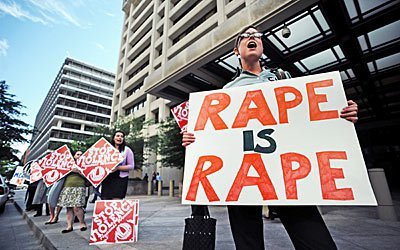
There’s A Lot More To Change Than Movement Organizations Doing A Bad Job

Activism and running a non-profit organization are often confused. What is sad is when the precious and rare gems who are activists get sucked into the drama of movement organizations doing a bad job, and it becomes an end in itself. Eyes on the prize, my dear doves: Change society. Let those multitudes who are not activists focus on changing the organizations that make a brand out of change that needs to occur.

Activism is a difficult, though often enjoyable, state of motion. It is fueled by a strategic demand and employs a variety tactics to change a broader culture. Activism takes time, determination, persistence. It includes a willingness to make frowned-upon personal disclosures, examine one’s own actions critically and stand up for principles, even at great personal cost or risk. In popular culture, the snapshot of activism we most see is a photograph or quote in the news, or getting to talk on television, but the cold truth is that most activist work is not that glamourous and many (by no means all) of the people getting photographed and talking on television are people who stand nearby or support the work of activists, rather than serve as activists themselves.

Women’s suffrage champion Susan B. Anthony captured the spirit of activism in the following:

“Cautious, careful people, always casting about to preserve their reputation and social standing, never can bring about a reform. Those who are really in earnest must be willing to be anything or nothing in the world’s estimation.”

Susan B. Anthony

Let’s be honest. This profile does not fit most people. It doesn’t mean that most people are bad. Nor does it mean that those people are bad who offer support to a cause once it has been made palatable or popular by activists (for goodness sakes, the point of activism is not to create a righteous little club in a world of awful, but to change society — which includes building support from those who weren’t allies before).

Further, people can be activists in some life phases and not in others. This is reality. There is often, but not always, privilege supporting the ability to push boundaries. Likewise, that doesn’t mean the people pushing boundaries are bad, but it does mean that when people need to be able to afford to eat, which is always, they might not always be able to speak out on an issue at the present time, which is often.

By its nature, running a non-profit organization affiliated with a cause or movement is a radically different state of affairs than activism itself. You have funders. You have boards. You have bureaucracy. It’s not uncommon for non-profit organizations that started out as activist collectives to, over time, become institutionalized and spend increasing time focused on the maintenance of themselves.  Sometimes, but not always, that includes developing a stake in the non-resolution of the issue that caused the non-profit to be founded in the first place. When times are bad, funders dump dollars. If the mission is accomplished, we have to go away. Type of thing. (Previous sentence is a verbal tic from a character in “The Pale King,” David Foster Wallace’s novel about employees in an IRS Regional Examination Center. Analogy purposeful and painfully apt.)

Which is not to say that you don’t have activists who work for non-profit organizations. But it is to say that it’s pretty hard to do both. There is a tension between maintaining institutions created because of the status quo, many of which will eventually outlive their relevance, and making change.

If you are an activist, recognize the non-profit industrial complex for what it is. You want a job in one? You want to volunteer for one? Go for it. Good for you. Service organizations do wonderful work to support individuals affected by an issue. Movement organizations often support activism and do wonderful work to help those making change on an issue, but no movement organization should be mistaken with the movement itself (while the media does this all the time, an activist should not bother). Political organizations help to change elections and the public policy making process, often leveraging activists, but no political organization should be mistaken with a social change movement.

Activists are rare indeed. If you are one, protect your activism fiercely to the extent you can. One of the best ways to do that is focus on changing the broader world, rather than changing a movement organization doing a bad job. It is sad to see how much time is wasted by those willing to be despised … trying to change a non-profit that is not advancing the issue they care about. If a movement organization is doing a bad job, acknowledge it and move on. Do not confuse changing it with changing society. Instead, be the change you wish to see. Think bigger, and create the conditions you believe are needed in the broader world from a space that is effective. Be awesome or don’t bother.

P.S. In a post like this, I would be remiss not to mention I’m giving an activism how-to workshop designed just for this year’s Visions in Feminism conference: Bringing Feminism to Un-Feminist Spaces. It takes place Saturday, April 6, in Washington, D.C. You’re invited!

Good Feminists, Let’s Not Try To “Speak For All Women” Anymore

No one can “speak for all women.” It’s time to let this verbal contortion go without blame, shame, recrimination — let’s us this feminist community take this rhetorical device and flush it sweetly and swiftly like a live spider, somehow misplaced indoors, that doesn’t need to be throttled to the death by our bare hands.

Not everyone does it, but many do. I have done it myself. See, there! Before you think I’m attacking you and ruffle up your collar, you can just smile and say I’m a hypocrite. Except I’m not attacking you, and I’m not a hypocrite. I’m evolving. If this topic affects you, you are capable of it, too.

Changes within feminism are cause for celebration, proof that the struggle for women’s human rights, is a living, breathing thing. It is honor, not rebuke, to our feminist foremothers and fathers to adapt our calls for justice to the times, to make them more inclusive for more people, to update our tactics, to think freely for ourselves and trust our ability and others’ ability to do so.

Indeed, speaking your own truth with confidence — embracing the confidence to know that you are the foremost authority on yourself — is a feminist act, a radical act in a society that continues to second-guess women and girls and tell them at every corner to jettison their judgement for what they should be doing better, which is usually BE MORE SEXY or BE MORE VIRGINAL or BE LESS BITCHY or FORGET ABOUT CHILDCARE AT WORK AND EQUITABLE PARTNERSHIPS AT HOME, YOU JUST NEED TO LEARN HOW TO MANAGE YOUR SCHEDULE AND BUY THESE NEAT CLOSET ORGANIZERS or STOP BEING SUCH A FUCKING SLUT (the magazine headlines put most of this a little more nicely, but the substance more or less holds).

To think freely, to take up space, to believe you have a right to your own truths in a world still so toxic toward women is a compliment to Alice Paul and every feminist who came before you.

Having spent a lot of time in feminist spaces and perusing feminist media dominated by the “speaking for all women” bug, I can attest to having seen first-hand how, as I said in another post reflecting on Betty Friedan and The Feminine Mystique, people can speak profoundly well for themselves, and do themselves and others a disservice when they try to speak for others at the same time. I have seen how, through probably no intent of the speakers, “speaking for all women” smashes what should be kaleidoscopic perspectives of women’s lives. Specifically, I’ve seen how the self-imposed and unproductive pressure to “speak for all women” tends to:

  • Discount or stand in opposition to the actual lived experiences of non-dominant groups within the in-group (if they’re even there), especially women of color, women of faith, women in other countries and cultures, younger women, younger parents — working within a religion means you are “oppressed,” teen motherhood is a “tragedy,” the classic lie that “young women take feminism for granted”
  • Redirect diversity efforts from expanding perspectives/strategies/work to focus only on representational diversity (important, but not sufficient in itself) — “we need a [black woman/young woman/immigrant woman] to sit on this panel or sign this letter we’ve already put together”
  • Trash women who do their part to move feminism forward within their realm of expertise — last night I went to a networking and mentoring event for undergraduate college women, many not so sure of themselves, and the first introduction to Sheryl Sandberg from the panel was an apology: “I know she gets criticism, but …”
  • Shift focus to “choices,” an insistence upon picking at and policing women’s personal lives rather than acknowledging we’re blamed for our second-class status no matter what we do, a dos and don’ts feminism if you will — suggestions that the fate of feminism (or at least your enlightenment) rests on whether you get married or change your name 
  • Lead some speakers to apologize for who they are and taking up space — “I’m not a younger woman, but I’m really supportive of younger feminists … am I still allowed to help?,” and other concerns that not being exactly like others around you means you “can’t be a feminist”
  • Shame feminists who are trying to get by as much as all the other women on the planet — whether that means wearing revealing clothing, not caring about your clothing, or enduring life events that are no fault of your own, including having low self-esteem, dealing with abusive relationships, being underpaid
  • Discourage the evolution of ideas and leadership within the women’s movement — if you can’t speak for everyone, well then you should just sit down and listen to someone who does it anyway (see concerns above, this is exactly why we need more voices, not fewer!)

So okay, what can we do next? Speak for ourselves. Speak for women. Acknowledge that speaking for women means also helping to lift up the voices of women with different races, sexualities, abilities, different perspectives, different views. It’s all feminist fair game if the discussion rests on revealing our own individual truths and moving forward societal actions that expand justice for other women — under this definition, we can quickly discard the few on the fray who suggest that taking away reproductive rights from women and awarding them to church and state is feminist, or that what we need isn’t the Violence Against Women Act, but more gun proliferation.

Change is good. Believing in yourself and your right to be present is awesome. So is listening to others without judgement or pressure to be more like you. Diversity is strength. Honesty is revolutionary. Good feminists, let’s not try to “speak for all women” anymore.

Podcast On Pregnancy, Eating Disorders, Body Image And Feminism

I did a new podcast with Fully Engaged Feminism on pregnancy, eating disorders, body image and feminism.

I first spoke out about my experience with Pregnancy After An Eating Disorder on this blog late last year, and in response the lovely feminist writer Amy Choi interviewed me for Feministing and added her insights.

I’m not done speaking out. I’m not going to shut up. When I first started researching resources for pregnant women who have struggled with eating disorders or body image issues, I found very little. There is a bit of medical management information for those who are pregnant or trying to get pregnant, and actively have an eating disorder today. But little about pregnancy after an eating disorder, or even negative self-image struggles.

I’m not shutting up because I know there are tons of women out there like me — women who are in recovery, who don’t need medical support to manage the pregnancy, who don’t see much out there on the Internets acknowledging our existence. Some of us want to know how to stop the old Body Image Beelzebubs from coming back. Some of us want to know how to tell them to be quiet. Some of us don’t need a “how-to,” necessarily, but simply want an acknowledgement that body shame is a) real and b) sure becomes a focal point during pregnancy.

Given the lack of information out there, I intend to keep speaking up and sharing my experiences, and encourage others who feel comfortable to do the same. Sometimes we need to create the thing we wish already existed.

Anyway, check out the new podcast. We had a terrific time and I’m so grateful to Laura for having me on. She also made a sick good pan of vegan brownies and taught me how to make a podcast. Gratitude.

A Preliminary Observation On Lean In

Encouraging women to believe in themselves and their own power? Yes. In what universe should we not?

From my own experiences as a manager and mentor, as well as employee, I can tell you some of the best returns on human capital investment I’ve seen come from encouraging younger women to believe in their worth. That they deserve to be in the room. That they should air differing perspectives. That they must be treated (and compensated) fairly.

Needless to say, I’m really looking forward to reading Sheryl Sandberg’s new book, Lean In. I want women to be openly ambitious. No, I don’t think ambition alone is going to end sexism, along with racism, homophobia, class privilege, ableism and other discriminations that interact with  sexism to hold women down. But it is a necessary ingredient.

In the short term I would like to make the preliminary observation over how perplexing it is to see that the feminist blogosphere and feminist publications have been lit up with a “controversy” over whether or not Sandberg’s book is “good for women.” Meanwhile, the cover of Time magazine asks if we shouldn’t hate Sandberg because she is successful. And a few nights ago Bill Maher had four men and one woman discussing the book. It was its own joke. No one said the punchline.

As someone who has held a variety of big feminist titles, something I started doing from a pretty young age, I’ve had a number of young women ask me how I did it, because they want to “lead feminism.”

My primary piece of advice for anyone who wants to “lead feminism” is to take your ambition and “lean in” to the real world. Generational shifts, owing to the work of older feminists, have made a strong feminist leader’s options much larger than running a women’s organization, which is always going to be more insular in reach.

Go lead a business. Go become a creative director. Go run for public office. Go become a school principal. Go follow whatever your heart tells you to do, but go out into the real world, and do it where women feminists are not the only leaders. I wish we saw more feminists on Bill Maher, discussing women in the workplace with a broader group, than we are seeing discussing, in many cases, themselves within a smaller group.

Getting To Sorry: Why Apologies Matter When Someone Says Something Bigoted

Last night, while you were either watching the Oscars or sleeping, The Onion tweeted the following about a nine year-old girl up for Best Actress:

“Everyone else seems afraid to say it, but that Quvenzhané Wallis is kind of a cunt, right? #Oscars2013”

Later that night, the tweet was deleted without comment. Today Steve Hannah, CEO of  The Onion, apologized.

I was one of many of using all the social media channels to tell The Onion that comment was unacceptable. Cunt is a hate speech word, and to use it against a child — it is too much. It is almost unimaginable to believe so many hours would have crawled by without an apology for a little white girl. The comment revealed as much about racism as it did sexism. What happened last night was public, technological sexual harassment: The message of calling Quvenzhané a cunt was that she should know her role, and not get too big for her britches after being the youngest-ever nominee for Best Actress. It was also a glaring example of promoting and condoning rape culture by forcibly and denigratingly sexualizing others and declaring them dirty — child rape culture, at that.

Outcry was the correct response. Why? Because apologies matter when someone says or does something bigoted. Apologies validate the humanity and human rights of the targeted individual(s), and those who by the same accident of birth belong to the same systematically under-privileged groups. Further, they set a standard for what will not happen again. Finally, they offer a chance for rupture – a change in how things are done by the offending individual or institution, and a change in how greater society approaches the problem.

So briefly, let’s cover how to get to an apology, what to ask for in return and how to move forward constructively.

First, if you see something that sucks, say something sucks. Right away. You don’t need to write a thesis paper about why a given practice is offensive. Simply acknowledge the offensiveness of the comment and immediately let the offender know. And don’t just do it in a vacuum – let others know you’re letting the offender know. Social media is genius for this. But if you take the time to, for example, write an email to an offending company or individual, be sure to then post it on your blog and/or Facebook, and encourage others to write their own comments. Or give everyone a synopsis of the voicemail you left, and encourage them to do the same. (Make it easy for others to take action by providing the contact information in your open letter or notes.)

While you’re going at this first step, don’t feed the trolls. You know who I’m talking about. The people who tell you you’re an overreacting whiner, etc. “Language police” or “political correctness” is a frequent charge leveled by a number of sloppy right-wingers who don’t want to do the work to grapple with a counter-argument of why a practice judged dehumanizing or offensive should be considered alright, or not such a big deal, or part of tradition. Don’t feed these intellectually lazy trolls. They aren’t your target anyway. Your target is the actual offender.

Second, be reasonable. Asking for an apology in response to bigotry is a good step and one you should be proud of. Do so with your shoulders held high.  But I also urge you to think one step ahead — ask for something that will guarantee this won’t happen again. For example, in the case of The Onion’s horrific slur about Quvenzhané, you’ll notice I asked for a two-part solution in an accessible way:

(Ultimately this is close to what The Onion did, although they not only apologized, they said they would implement new social media procedures and discipline the writer.) When I say be reasonable, however, what I mean is to be approachable. Don’t make it impossible for your target to agree with you by acting like a total jerk yourself. And also use your faculties of reason: Offer a step beyond sorry that could sidestep the problem in the future. Once you have made sure to cover this ground, you should feel free to explain all the ways a bigoted comment is offensive. Just remember that persuasion/education by itself does not spell out an action. Make it possible, practical and productive for your target to say “sorry, plus …” in such a way that you should feel confident they are taking steps to eliminate a bigoted practice from their future repertoire.

Don’t stop until you get your apology and a commitment to taking a productive step forward to help address whatever caused the problem. Persistence is your friend. For that matter, rope in your friends for additional backup.

But when you do get your apology and a commitment to taking a productive step forward to help address whatever caused the problem, be respectful. Don’t start hating on your target in a whole new way, saying they are “insincere” or “it doesn’t matter.” By honoring a meaningful apology you are sending a message as an activist to others that you are in this to win this for the cause — not to be a jerk and target an individual because you’re so needy/clingy/stuck on a being a pain. It makes it more likely you will help contribute to other successful reversals in the wake of bigoted comments and actions. And that’s what we want, right? A better world.

Feminism, as a practice, is not about gotcha and declaring some people good and other people bad. It is about eliminating bigotry from our lives — something all of us will have to work at — and moving forward in new ways that honor the full potential and human rights of everyone. So getting to sorry is a big deal, because it is that first step toward honoring people and making change.

How have you gotten to sorry after someone’s bigotry was showing? What changes were you able to bring about? Share your stories and tips in the comments below.

NRA President David Keene’s Rape Joke Isn’t Funny

“We [the NRA] could be serial rapists and have a higher favorable rating than Congress.”

David Keene, NRA President

When will the rape jokes stop?

Wednesday, National Rifle Association (NRA) President David Keene spoke at Harvard and popped a rape joke in defense of his increasingly indefensible organization.

Why doesn’t he compare their favorability rating to Congress anymore? Let’s not draw attention to the NRA’s slipping numbers. Let’s have a laugh about rape and “government” instead.

This comment has gone virtually unnoticed.

This is exactly what rape culture looks like.

Rape culture hides in plain sight.

Rape is not a punchline.

Rape is rape.

Rape happens every day. Someone, often a woman or a girl, is sexually assaulted in the United States every two minutes.

She may be screaming right now. She may be crying as quietly as she can. She may be closing her eyes and praying to live through this.

Can you hear her?

Rape is violence. Dismissing gun violence with rape violence is missing the entire point. All violence against women must end.

Rape culture feeds gun culture and gun culture feeds rape culture.

Rape culture and gun culture are part of the same culture of dominance and violence — and men exercising power without sharing it equally and equitably with women.

Strangers are not the danger, and let’s be real, the face of the stranger our culture says to be afraid of is an African American man who, like a woman of any ethnic background, rarely gets to contribute to public policy debates about guns, rape, violence and, for that matter, everything else under the law.

Racism has never lessened the epidemic of violence in this country.

Racism is a form of violence in itself.

Racism feeds more violence.

Racism is used to stoke fears by those who make piles and piles of money

from racism

and sexism

and violence.

The faces to be afraid of are the white men who lead our country almost totally by themselves while insisting there’s nothing wrong with that.

While not passing the Violence Against Women Act.

While not doing something about the fact that women are more likely to be shot by an intimate partner than a stranger.

While not doing something about the fact that women are more likely to be sexually assaulted by someone they know.

While parading out a woman who will say that guns are fashionable, which they are not.

While parading out a woman who will say that guns will protect a woman from rape, which they do not.

While parading out a woman who will say that they have a “second amendment right to choose” that means everyone — women, men, criminals — is eligible buy a gun without a background check, or military-style weapons, or military-style ammunition.

A rape joke is not going to make this go away.

A rape joke makes it worse.

Shame on the National Rifle Association.

Shame on gun culture.

Shame on rape culture.

rape-is-rape

Nobody Told Me L. Ron Hubbard Was Obsessed With Abortion!

I recently read L. Ron Hubbard’s Dianetics. Like so many of my dear readers, I follow the life progression of Tom Cruise with interest and enjoy, from time to time, reading a good piece on Scientology. So I thought it would be instructive to go to the source and see how this all got started.

Dianetics is the foundation of what became Scientology. The premise is fairly simple: The mind, according to L. Ron Hubbard, is an organ capable of working without error so long as we have “cleared” it of “engrams,” which are imprints from traumatic experiences in our past. Through a process called “auditing” it is possible to “clear” these “engrams” and rock on with a flawless life. Most of this I more or less knew before reading Dianetics.

What I didn’t know before reading is that L. Ron Hubbard was obsessed with abortion and had such strange attitudes about pregnant women. According to Dianetics everyone but “clears” are weighted down with “engrams” that cause them to act and think irrationally — and I estimate based on my reading that L. Ron Hubbard thinks fully a third or more of these damaging “engrams” we’re all carrying around come from the nefarious activities of pregnant women.

The way he tells it, pregnant women of his era sat around and “attempted abortion” by pounding their abdomens, begging to be beaten by their husbands and cursing the fetus throughout pregnancy. This is not a rarity, but positioned as something that pretty much all pregnant women do. Further a woman being miserable during, for example, morning sickness, will cause her child to be messed up throughout adult life unless those “engrams” are cleared. There are recurring pronouncements about sexual encounters during pregnancy, from masturbation to frustrating frigid games with a husband to illicit sex with a lover, messing up a person’s entire life. During childbirth, it is important not to speak so a baby is not further imprinted and damaged.

This is not one line in the book. It is all over the book. L. Ron Hubbard was obsessed with abortion and pregnant women. As a reproductive justice advocate, I’m shocked I didn’t know until now he thought pregnant women were to blame for so many of the problems in the universe. What is most disturbing is how many others — not just science fiction authors like L. Ron Hubbard — people like politicians, religious authorities and community leaders are respected when they say, repeatedly, equally bizarre things about pregnant women today.

Fate Of Feminism Doesn’t Depend On Whether You Get Married Or Change Your Name

Girl meets boy, girl falls in love, girl gets married, girl changes her name. This is a feminist perspective on why it’s okay to do the last two things and not be some kind of feminist failure.

Before we get started, let’s acknowledge the boundaries of this discussion: many people can’t get married because the state won’t let them. And research suggests marriage is increasingly becoming reserved for heterosexual couples with money. There’s a hefty dollop of heterosexual and class privilege lurking in this debate, begging a larger question of what the policing of heterosexual women with money is designed to achieve.

Still, if you’re a woman in love with a man and have crossed some class barriers, let’s be clear that the fate of feminism doesn’t depend on whether you get married or change your name.

The primary beef is here: Asking women what they are going to do with their names when they marry is an invasive and sexist double-standard that is not applied to men. Even asking the question of a woman, and not a man, strikes me as prurient and sexist. Applying value or judgement to what one woman does with her name after marriage — whether that’s retaining a current name, applying a hyphenated name, making up a new last name or taking the partner’s name — continues this invasive and sexist practice of assuming that a woman’s name is up for public comment. If you’re going to ask this question or make grand pronouncements about what a name choice means for society, or a family, or a commitment, or a child, or internalized sexism, then focus 100 percent on men and what they are doing in heterosexual marriages. Women have done our time and frankly could use a breather.

Marriage is an institution with historical roots in the property transfer of women (and often girls) from fathers to husbands. There is no denying this inherently sexist lineage. However, my feminist argument is that the institution of marriage has evolved from the property transfer of women to include same-sex marriage in some states (a feminist victory, albeit incomplete), many egalitarian marriages practiced by couples (a feminist victory, albeit incomplete and not entirely supported by jurisprudence) and more. To write off a woman marrying a man as capitulating to the patriarchy is hogwash. Might it be for some women? Maybe, for both the women and men involved, in some marriages. But an automatic assumption focused solely on her is ridiculous.

So too, as feminist thinking about marriage evolves should feminist thinking about last names evolve. A woman who changes her last name upon marriage is not stupid, or an automaton, or subservient to please him, or a symbol of the failure of feminism, or a threat to the future of feminism. Even suggesting that she is — rather than focusing on men or couples — continues to elevate an invasive and sexist double-standard. Women aren’t “too dumb” or “too weak” to be equal. Women are not the cause of our inequality. Women’s choices are not the cause of our inequality. Of course our choices are influenced by our inequality, and interplay with our inequality, but to focus on what women are doing or not doing instead of focusing on how our society systematically discriminates against women and privileges men (often, with the sheer absence of “choices” about names, work and life because they are assumed to be accommodated without comment) — this just doesn’t have the power to fix the problem. In fact it can serve as a distraction from calling for larger changes that do have the power to fix the problem.

So this is my feminist love letter on Valentine’s Day to YOU, women who married or are thinking about marrying men, and happen to have a last name that everyone loves to chat about (while leaving his untouched). Kindly smile and tell everyone to butt out. You are not public property and you don’t deserve this intrusion in your personal life.

P.S. — My husband decided to continue using his name when we married. I am so proud of him.

Quick Update On My Street Harassment Story

Friday, I was out for a walk when a man exposed himself to me. Immediately after that happened I had a disappointing interaction with the police who didn’t want to take a report when I tried to offer one. With the other options exhausted, I sent an email to their general query address and then immediately posted it on my blog to keep the pressure up. Here is an update:

Due to a great woman I didn’t even know (!) on Twitter reposting the story on a neighborhood police listserv, I was contacted Sunday by the police and was able to file a report. Huge success. I want to take this moment to thank the Twitter feminist community for prodding me into action almost right away. Without your encouragement, I’m not sure I would have moved forward so quickly (and felt the duty to keep going when the police started giving me bad answers).

I also want to acknowledge what posting this story did, because I’m more disturbed than when this whole disgusting subculture first flashed in my face. I heard over, and over, and over from people I know that don’t necessarily get into the feminist work I do. The number of women I know, many of them who were girls at the time, who have experienced a man exposing himself somewhere in a public space is overwhelming. It is far greater than I would have suspected. 

This leads me to put in a plug for a great local group, and a great national group, working to fight street harassment. At the local level here in Washington, D.C., Collective Action for Safe Spaces is just amazing. They have recently succeeded in working with Metro to put policies in place for harassment awareness and reporting on public transit. If you know how long it takes to get an escalator replaced around here, it’s nothing short of amazing they drove this culture change. At the national level, Hollaback! is a non-profit working to end street harassment. It has sprung up groups around the world, one of which is the local group just mentioned. Bonus: Both are largely led by younger feminists (love that stuff). If you are interested in engaging further with this issue I urge you check out these links.

So here are my top three takeaways from the incident:

  • Gratitude for the online feminist community, both as a support system as well as a means to making a needed action occur. Thank you.
  • A preach! If something happens to you that’s not right, speak up. It works.
  • Anger and awareness: The experience of street harassment and exposure is worse than I imagined. I’m ready to keep pushing.

Final Public Service Announcement: If persons expose themselves to you, make sure you’re safe and then call 911 right away.

Street Harassment Email Just Sent To DC Police: Feedback About Exposure Complaints

Dear Metro Police,

One hour ago, just after 5 p.m. while it was still daylight, a man exposed himself to me as I was crossing the P Street bridge on foot, heading east from Georgetown into Dupont Circle. He was wearing a blue jacket and masturbating and looking straight at me.
I tried to start crossing the bridge as quickly as I could, in hopes of seeing a police car, and about halfway down saw two women walking in the opposite direction. I stopped them and told them not to walk on that side of the bridge (north side) by the man at the end. I explained he had just exposed himself to me. At that point the man looked back and while I was talking to the women and a man who had been walking close behind them, hopped on a bicycle, and went in the direction of Rose Park. I tried not to look at him, but I do remember he was caucasian, likely in his 40s or early 50s and of medium height.
I did not see a police car, so went to your website to file an online complaint from a nearby coffee shop. The online complaint form does not accommodate situations like this, seeming to focus instead on property violations. Then, I followed the instruction to call the non-emergency line to file a report. When I did they told me I would have to call 911, even though I explained there was no emergency and I was alright. When I called 911 and explained the incident I was told the police couldn’t do anything about it and wouldn’t file a report, I had to call while I was still there (and so was he).
Based on what I have just experienced, I am requesting you consider the following and revisit your processes:
What woman walking alone would stay near a man who has exposed himself to her and is masturbating? Among other issues, it seems like common sense safety to immediately leave.
Why does an exposer need to be onsite for the police to do anything, include file a report? This sends a message that it’s an open season for street harassment. I’m truly surprised the person I spoke with on the phone didn’t want to take the information I listed above.
Why does your online complaint form not accomodate non-emergency harassment complaints? This is a barrier to reporting. Harassment is often shrouded in embarrassment, disgust, shame – I would think the Internet could help you fight this crime.
Why does your non-emergency line tell callers to dial 911 for non-emergency police reports? This is another barrier to reporting. While I’m angry this incident occurred at all, I’m okay and I felt uncertain whether to go through with dialing 911 for a non-emergency situation.
What are you going to do to better address street harassment in the District of Columbia? How are you going to revise your policies and then make sure word gets out so people know them? It is hard to see how the current policy could be considered intuitive to those of us who are just trying to walk from point A to point B.
I am several months pregnant and most upsetting to me is knowing that this same thing could happen to my future daughter while out for a walk or riding her bike, and the person on the other end of the line might tell her the same thing – the police won’t take a report and “we can’t do anything about it.”
If there is any way that I can be of assistance to you in making the streets safer for women in the District of Columbia, I will be happy to assist.
Sincerely,
Erin Matson