NARAL has a nifty new video out about why you should vote pro-choice, and I’m proud to be a part of it:
Be awesome or don’t bother, friends.

NARAL has a nifty new video out about why you should vote pro-choice, and I’m proud to be a part of it:
Be awesome or don’t bother, friends.
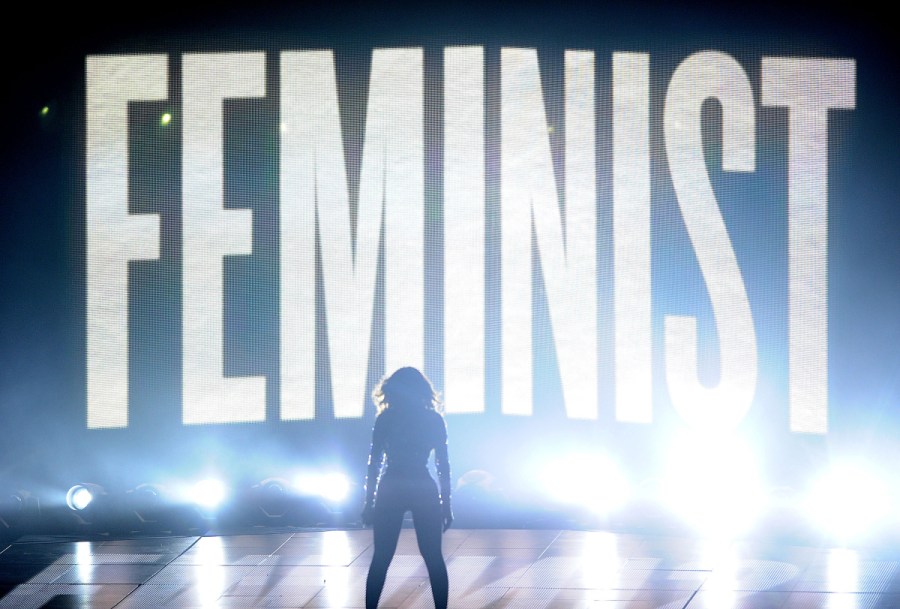
Celebrity feminism is a good thing.
Recently, actress Emma Watson gave one hell of a speech at the United Nations urging equality for women and girls:
Beyonce turned her performance at the MTV Video Music Awards into an opportunity to showcase her political beliefs:

And Taylor Swift’s latest hit, “Shake It Off,” urges women to ignore the sexist things that are said about them:
Let me be honest, I have gotten misty when that song comes on the radio and I realize my daughter, who is a toddler, is sitting in the backseat.
As a feminist activist, I have watched with some dismay how celebrity feminists are torn down on social media, seemingly as sport, within my community. The resentments seem to fall in these general categories:
All of these criticisms are a bit out there.
Another frequent criticism:
This is a fine criticism, but we should note applies to non-celebrity feminists at least as often. In any case, ultimately these gaps present opportunities for growth — as individuals and a movement — especially when folks are willing to work toward change in good faith.
We need as many women and men working for gender equality as possible, so if celebrities want to join the movement — great. We should also celebrate that feminism is making appearances in pop culture. The primary audience for these gestures is not those who care most about feminism but rather mass culture itself. When a popular actress or singer sticks her neck out there, some of the little girls and grown women watching and listening may get the idea to do so themselves.
I appeared as a panelist on this week’s episode of To The Contrary, and discussed the war on women, consent on campus, and fighting breast cancer. You can watch a video of the show here:
Recently, I organized a letter that 232 Georgetown alums signed after campus police removed a small group of students representing H*yas for Choice from a public sidewalk. You can read a copy of that letter here.
Today the administration sent me the following response:
Dear Erin:
Thank you for sharing your concerns regarding the recent incident with H*yas for Choice. We are responding on behalf of the University to the petition you presented on September 29, 2014.
As you know, on September 22, 2014, a Georgetown Department of Public Safety (DPS) officer asked a group of students representing H*yas for Choice to relocate from the public sidewalk at 37th and O Streets to a location on campus. The students relocated to a location on Copley lawn. The officer should not have asked the students to move, this was a mistake and should not have occurred. Upon realizing the mistake, the DPS officer informed the students that they were free to move back to the original location at 37th and O Streets if they so chose.
In response, Georgetown University Police Chief Jay Gruber, reached out to the students to offer an apology for the mistake the next day. He has also scheduled additional training for all DPS command staff and officers on the Georgetown University Speech and Expression policy in an effort to prevent this from happening again. In addition, students have raised this incident with our Speech and Expression Committee and the Committee is planning to respond appropriately.
Georgetown University is committed to our Speech and Expression policy, which guarantees the right to all members of our community to express themselves freely and to foster the free exchange of ideas and opinions. We share Chief Gruber’s regret in how our DPS officer responded in this case and please know that we will work to prevent it from happening in the future.
Sincerely,
The mythology of the strong woman is fairly epic, considering that women are supposed to be weak-willed ornaments or maids that make it through every indignity — depending on how those women score on other scales of the privilege lottery. A system of male domination is not supposed to allow for strong women, except that it really does and in a way that reinforces the ongoing subjugation of women as a gender, and as individuals. While of course it feels good to be identified as a ‘strong woman,’ the reality is that this myth is a mixed bag. Strangely enough it can be destructive.
It’s important to note that the moniker “strong woman” is a compliment. But its status as a compliment actually depends on drawing a contrast between you and other women, as if those other women are weak. As if being a woman makes you inherently weak. As if you are rising above the challenge of your gender. Am I arguing that folks who use the “strong woman” language are intending to slam other women? No. I am suggesting that we question why this particular distinction is drawn in comparison to other women, rather than just telling women (or men) they are strong without a gender value attached.
“Strong women” come from many walks of life, but oddly they are heavily represented in two polarized political communities: conservative women, and feminists. I want to examine how this plays out in each community, and how it can be destructive to women as a gender and as individuals.
Conservative political women leaders like Governor Sarah Palin (R-AK) and the late Prime Minister Margaret Thatcher (UK) both played into the strong woman archetype. By virtue of toting guns or being cruel, they were both thought too big to be mired in a second-class status.
What is, I think, most interesting about conservative strong women is that they are propped up early and often by the masses of men who hold most of the power in their movement (the denigratory term is window dressing, although that erases the contributions a slim minority actually does make). Those conservative strong women frequently define weakness as qualities associated with femininity, most notably all peoples’ innate need for interdependence (regardless of gender, however coded woman).
Strong women of the conservative model are supposed to be a reminder for everyone to pull themselves up by their bootstraps. Well, everyone with enough privilege to do that. It is in this way that the mythology of the conservative strong woman serves to reinforce a status quo where family-friendly policies are a pipe dream, salaries and leadership are blatantly unequal, and you don’t need reproductive rights because you could just not be a slut.
Feminists, too, are often referred to as strong women and it is not always helpful. Recently, I wrote a piece for RH Reality Check detailing Why I Stayed in an Abusive Marriage for Two Years. It is the first time I’ve spoken publicly about this issue. In response, I’ve received feedback from a number of people sharing that they, too, have experienced violence in the course of a relationship.
What has struck me is the number of feminists who have shared the experience, and also acknowledged to me that they also felt they couldn’t admit this had happened to them, because ironically enough being an advocate for women’s issues can appear to create a situation where you are not allowed to have those issues yourself (the strong woman mythology). In other words, being seen as a strong woman can be an impediment to accessing the services you need and the services you and your peers work so hard for.
There are overarching similarities between the feminist model of strong womanhood and the conservative one: When strong womanhood is seen as a personal quality, it reinforces the idea that avoiding the inferior status allotted to women is a matter of personal fortitude. That you are weak if you experience sexism.
The point of this piece is not to ridicule folks who consider themselves strong women, or to take away the fact that someone is complimenting you when they refer to you as such. Rather it is to acknowledge that building up too much of a myth about strong womanhood can be bad, especially when radical honesty — women telling the truth about their own lives — holds so much power toward the cause of justice. For tellers and listeners alike.
I appeared as a panelist on this week’s episode of To The Contrary and discussed ISIS brides, transgender students at women’s colleges, and comparing the progress of the LGBT and women’s movements. You can watch a video of the show here:
The truth is that older women are more beautiful than conventional wisdom would have you admit. Time makes the contours of a face more pronounced. For many, it becomes easier to grow the gorgeous lumps defining the marble statues of idealized women in museums. Veins on hands begin to tell stories with or without a pen.
Most of all it’s the sheer fucking luckiness of having made it, of being alive, that makes older people, and especially older women, more beautiful.
This is convenient for me to say at age 34, when I have become an unmistakable target of the drug store creams to fix the nature. It is growing increasingly clear on Facebook — where pictures replace shared experiences as the currency of relationships — that some of my age peers have begun to use plastic surgery. Seeing this is a struggle.
Like everyone else, I have grown up in a culture where we devalue women who don’t live up to impossible ideals, and then dismiss the women who take extraordinary measures to do so as shallow. Aging presents one of these most classic damned if you do, damned if you don’t scenarios, and from a modern feminist point of view that honors the individual lived experiences of women rather than attempting however earnestly to provide a blueprint that everyone must follow to sidestep oppression, I think I’m not supposed to care about another woman’s plastic surgery. And really, as it pertains to that other woman, I don’t. Making value judgements about someone else’s beauty regimen is one bad jam.
The struggle comes in elsewhere. Like everyone else, I have grown up in a culture where women are encouraged to compare themselves to one another in superficial ways. So seeing all this plastic surgery makes me wonder: Yes, I’m comfortable aging in place today, but will I be tomorrow? I would like to think that when gray hair comes I’ll embrace it. But I say that a time when my appearance gives me no real reason to fear being written off as yesterday’s news. So I am sitting with this ambivalence and uncertainty and honoring it.
The longer we live, the more we know people who have died. If you have made it to a point when aging is considered a concern for your age group, it means that you are supremely fortunate. I wonder why that keeps getting lost, especially for women, and what we can do about it.
Consent is this empowering, sexy, terrific thing. Your body is yours. It does not belong to your boyfriend, your girlfriend, your dad, your mom, your preacher, your religion, your government. Your permission must not be assumed, implied, or revoked. That body is yours, lady! And it is awesome.
Consent is the linchpin of the life I want for my daughter.
I have been particularly haunted lately with a handful of memories that make me want to go back and give myself a big hug (and spit in a few faces). I had comprehensive sexual education. I knew that no was supposed to mean no, and sadly, that no means yes is a punchline. What I didn’t learn was a good working definition of consent, and how to wield it: Not just how to say no, but how to say yes, and how to insist your own body is treated with the respect it deserves — by others, and also yourself.
There are many negative consequences stemming from the fear of youth sexuality, as well as the fear of female sexuality. One thing that happens is not teaching our girls about sexuality in a realistic way. Sexuality is more often taught to girls as something to be guarded against as sinful (it’s not) or a source of contagion (an unhelpful frame). As a culture we don’t even teach our girls to accept themselves, much less their bodies, and we certainly don’t teach our girls to accept how their bodies might care to be or not be sexual. Instead we need to give our girls a meaningful understanding of how sexuality is something to be accepted on your own terms.
These days my daughter is young, just over a year old. When I think about trying to do a better job teaching her consent than life taught me, I think about honoring her wishes not to be held or touched by other people when she makes it clear she doesn’t want that, and I think about responding to her nods “yes” and shakes “no” as much as practical.
What have you done to help teach the young girls you know the concept of consent? Respond in the comments.
I appeared as a panelist on this week’s episode of To The Contrary and discussed incarcerating poor mothers, diversity in the workplace, and the state of the women’s movement. You can watch a video of the show here:
I attended my first Netroots Nation this year. It was awesome, and I intend to attend future conferences when it makes sense for me. So it is with heightened interest that I consider the announcement by Markos Moulitsas that Daily Kos will boycott next year’s conference over the selection of Phoenix as a host city, given that the SB 1070 racial profiling law is still in effect.
I come to this debate from an interesting perspective; I think where I shake out now is supporting people and organizations deciding whether next year’s conference is right for them. I do have concerns about whether this conference will be safe for activists and bloggers who may be undocumented (or racially profiled regardless) and also about the effect their lack of participation may have on the conference as a whole. One of the most important moments of this year’s conference, in my opinion, was a delegation of Dreamers and other immigrant rights activists getting escorted out of the ballroom for shouting “Stop deporting our families” during Vice President Joe Biden’s address. Many sat silent, probably unsure how to react. Ultimately the vice president told the attendees they should applaud, so most did. That learning moment might not be possible in Arizona. I am actively seeking additional opinions and perspectives that might cause my thinking to shift.
But I also want to add a different concern to the list Moulitsas put together of the three basic arguments for supporting the decision to hold next year’s conference in Arizona, because a gaping one is missing. Who gets hurt the most by a boycott?
The low-wage service workers — housekeepers, janitors, dishwashers — who are largely immigrant and often dependent on tips from travelers to make ends meet. At least, that’s what my late mentor Olga Vives argued to me.
A few years ago, just months after the passage of SB 1070, Olga was living with Stage IV lung cancer in Scottsdale. A small group of friends including myself had planned a visit to see her. With regards to Arizona, our friendship circles tossed around the “boycott” word a real whole lot. Olga was upfront. She said, if you don’t want to come see me, I understand. (I would be remiss to not mention that Olga was undocumented for much of her life and was, among other things, a fierce activist for immigrant rights, helping to cofound the National Coalition for Immigrant Women’s Rights.)
And it was an interesting dilemma for me, because but for the situation of my mentor and dear friend dying of cancer I would not have gone to Arizona. But, I wanted to see her before she died. So I went.
I really wonder what she would have made of the Daily Kos/Netroots Nation situation. Chalk that up to one more conversation I wish we could have.
 Erin Matson