Some Friendships Just End

My mom’s first piece of marriage advice is to always have girlfriends. But that can be easier said than done. Among the baffling realizations that come with age is that some friendships end. Not just due to circumstance —  fights, breakups, new jobs, new lovers, changing personalities, moving away — some friendships just end.

I have grieved dying friendships and felt guilty about not caring at all. I have quietly wondered what I did wrong. I have hurt like hell at a snub, and purposefully snubbed because I was mad. I have sworn it was over, sometimes for years, and come back over tears (sometimes the best decision ever). I have welcomed some back in a tepid, networking-type way. I have realized that some friendships end permanently, others for a time, and still others might begin anew between two independently transformed people.

I wonder if my workplace friendships provide a better model forward. You really learn who your friends are when you leave a job, and it can be surprising to realize who remains one month, one year, and five years later. Perhaps this extends to friendships, too — you really learn which friendships were built to last when they can end respectfully, and come back anew on one random, delightful day. Further, most times when you leave a job it’s understood that change is ahead. It’s understood that career transitions make space for new things in your life. Perhaps we should celebrate our platonic relationship transitions because they create space for new friends, more family time, or please God more sleep.

But it would be most radical, and perhaps transformative, to accept an end as it is — neither a judgement on the past, nor a moment to make dramatic statements about oneself or another in the future. You can be friends forever, or not.


Rekindling The Flame: How Bernie Can Refuel And Help To Heal The Dudebro-Dominated Progressive Movement

Math is real. Bernie Sanders is going to lose the Democratic nomination for president. Yes, he is staying in the race and still collecting protest votes, and part of that process means pretending like he can win. But he can’t, and he knows it. We all do.

There have been aspects of his candidacy that are just on fire: The crowds, the youth, the focus on income inequality, the critique on conservative tilts within the Democratic Party, the visible changes in the campaign’s approach to racial justice in response to heckling from Black Lives Matter activists at Netroots Nation last summer. His vision is bold and that rocks. He has made more people believe government can be a force for good, and that’s an admirable and necessary lift after decades of right-wing demonization of public infrastructure and services.

But there are things about his candidacy that are crazy-making! The snide subset of online supporters who will try to gaslight you out of every possible critique one could have of his platform and campaign — like a nightmarish neighborhood White Castle that never closes, they are always there to make you feel sick by informing you the messiah already did that, and your concerns aren’t valid.

The relentless focus on Wall Street is ridonkulous. I have been joking for months that I need to print up some panties that say “THIS IS NOT WALL STREET,” because the very real assault on reproductive rights and the humanitarian crisis that has ensued is but one strong example of how not every urgent problem facing our society can be blamed on a banker. And these issues of inequality that can’t be blamed on Gordon Gekko are not a ‘distraction.’

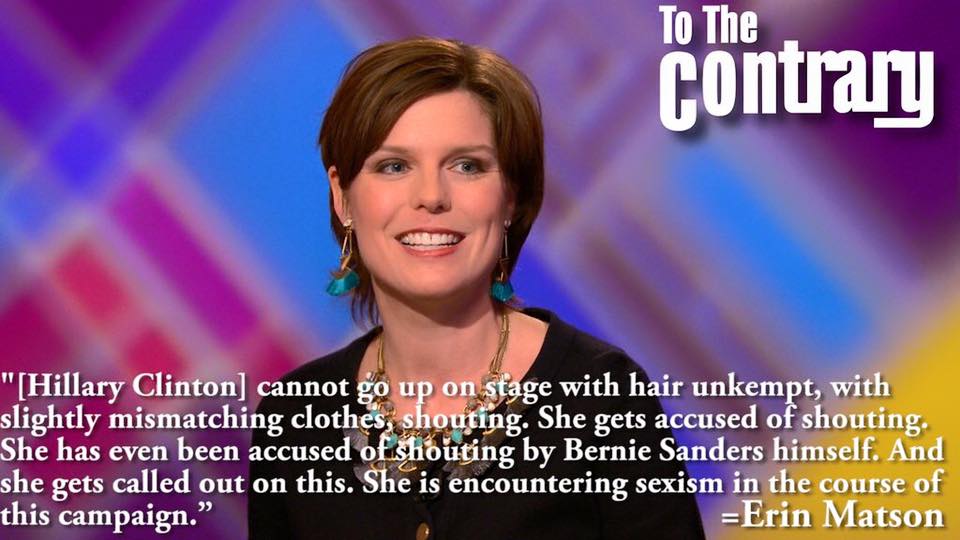
After admiring Bernie for some time, I transitioned to full-fledged #BernOut a few weeks ago. The wagging finger while Hillary speaks; the comments about her ‘ambition’ and ‘qualifications’ that working women know all too well; the lack of support and visibility for critical races down the ticket. He has not been visibly cultivating relationships with women’s organizations, more often picking fights with them. Bernie has a gender blindspot and it’s big enough that you can drive several semis full of pushy, underpaid, and undervalued women behind him.

It is for these reasons I vom in the back of my throat a little every time I hear the suggestion that Bernie is the figurehead for the future of the progressive movement. I am tired of having white people with dicks lead the thing that gets to be called progressive, while women and people of color who try to break into the top leadership roles are painted as ‘big money’ or ‘establishment’ or ‘under-qualified.’

I am tired of seeing so many supremely qualified women and people of color doing substantive work for the white people with dicks, but never getting promoted to the public seat when the boss retires. There is always another white man who steps in to the wild applause of the good old boys, and hardworking women waiting for the turn that will never come within the party infrastructure.

There is always a 100 percent pro-choice rating for the new guy to brag about and pivot (and by the way, when 100 percent pro-choice rating means someone who never apologies for abortion and refuses to vote for any bill or budget that bans abortion funding, you let me know, and I’ll decide those words mean something other than ‘garden-variety, weak-kneed Democrat.’). The newspapers will quote economic justice advocates, who are almost always white men, who suggest that EMILY’s List and other efforts to elect women into office aren’t really progressive and kind of a relic of the past.

It’s been a few years since I was invited to an event with “the candidates’ wives” but almost all the candidates who make it past my local primaries are still white men. I’m done.

Frankly I cared and still care more about the Democratic primary for the open Senate seat in Maryland than I do the presidential. Last night Rep. Donna Edwards (D-MD) lost to Rep. Chris Van Hollen (D-MD). In her concession speech she said that Maryland is about to have “an all-male delegation in a so-called progressive state.” This is a problem all over the country.

And now that Bernie Sanders is going to lose, it’s time for him to look around and consider his second act. Howard Dean took his loss and gave us a Democratic majority at the federal level — and while that group was far from perfect, it enabled huge legislative accomplishments.

Bernie is not that guy. He is the guy that is about building not a majority, but a movement. (Which is no knock, it takes all kinds.) Once the electoral pressures subside it’s time for him to expand that movement.

Just imagine if Bernie continued going around the country after he drops out of the presidential race, this time embarking on a listening tour. If Bernie would take the time to listen to the lived experiences of people who suffer from identity-based discrimination, and bake it into his wonderfully feisty approach to income inequality — just imagine how much better the progressive movement could be.

I don’t just want Bernie to fight for the soul of the Democratic Party; I want him to fight for the soul of a progressive movement that continues to second-tier the concerns of women and people of color. Rightly or wrongly, he is a white man and he will be more listened to when he raises these concerns. After Bernie Sanders drops out he should take on identity-based discrimination with humility, listening tours, and his trademark passion.

How To Be A Better Writer

I get away with things because I write. An ability to write well is power — to lead social change, to challenge assumptions and disrupt the status quo, and to validate your own feelings when other people won’t.

Writing is important to the feminist project for several additional reasons. Historically, writing has provided an outlet for women and marginalized people who had talent but were not eligible for other public roles because discrimination — and to an extent that continues today.

Writing is a way to share experience and theory, imagine alternate realities, and learn from one another. I’ve been saying for years that I believe it’s a radical act each time a woman tells the truth about her own life. Often those radical acts feel more comfortable in written form.

Recently I attended a networking event where a young woman shared that she wasn’t sure what she wanted to do after college. I asked about her interests and she said she liked to write. I encouraged her to keep pushing herself in her writing ability — it would serve her well no matter where life took her.

In that spirit, I’m offering my tips for how to be a better writer:

Read. Read books, newspapers, magazines, blogs, lyrics, Tweets, manuals. Read promiscuously. Read outside your ideology. Challenge yourself — I read Ulysses at the gym, sob — and enjoy your teen lit without shame. Buy women authors, because feminism. Just read.

Write. The way to be a writer is to write. If you say that you want to be a writer, you’re either procrastinating or speculating. Anybody who sits the fuck down and writes is a writer. The way to become a better writer is to keep writing.

Give yourself permission to be yourself. This is at least as much life hack as writing tip, but don’t try to be other people/writers! Do not worry that you do not have their perspective! You have your perspective. It matters and you deserve to share it.

Identify your narrative arc.  It can be helpful to crystallize in your mind what drives your writing. Over a decade ago I realized that one of my chief aims as a writer is to expose uncomfortable truth. I believe acknowledging things we’re not supposed to talk about takes power from oppressive systems and redistributes it to individuals. Plus honesty feels great and helps me sleep. Not all of my work fits in the uncomfortable truth category, but I do find it helpful to remind myself why I do this work. In a few words, why are you doing yours?

Do not try to sound smart. If you’re writing to be understood by smart people, you’re lost on the side of a bad road. Make it excruciatingly easy for people to understand what you’re writing. Save the fancy words for standardized tests. (You’re still taking those? I’m sorry.) Do not assume people know the basics of your topic. Organize. Clear, concise, thorough — you win.   

Most descriptive language should go away. Adjectives and adverbs mostly dilute meaning. For that matter, be ruthless in cutting words from your drafts. Say what you mean, and say it with fewer words.

Find your weaknesses. One year I resolved to stop using the word “just,” which was all over my speaking and writing. Are you awkward with commas? Identify your crutches and work on them. Which brings me to my next point:

Invent challenges for yourself. I’ve done so many fun things over the years to keep my writing fresh. Poem-A-Day competitions with friends, National Novel Writing Month. Trying to write a screenplay (holy fail). But the best challenges I invented to directly attacked my weaknesses. For instance, I recognized that in my fiction, my characters sucked. So I took a whole month where I forced myself to write a new character every day. Some days it took the form of a poem, an article, a press release, a speech, a flip book, or more often a short story.

Dabble in other kinds of writing. I’ve taken spoken word poetry classes, fiction writing classes, and workshops on placing columns. Getting out of your lane strengthens your voice in your primary writing arena. It shakes up your thinking and it’s fun. 

Find editors who hate you. Actually please don’t seek out anyone who hates you. But the good editors are the ones who will challenge you to make revisions that make you roll your eyes in irritation. I have learned the most about writing from people who redlined me to tears.

Laugh at your old writing, and celebrate your resilience. I have successfully completed one novel, and that’s the only successful thing about it. It’s so bad I want to present myself to the jail a few miles away to show I’m sorry. I read grandiose things I used to write and cringe. I’ll probably read this post next week and do the same. Life is growth. Keep moving. Thank goodness.

Keep at it, and encourage others to do the same. I was in love with someone who showed me his writing. It was so bad! (To be clear, I’ve loved folks who showed me writing that was intimidatingly good, so please give yourself the benefit of the doubt in the event you’re an ex-lover perusing the blogs I am now writing, at age 35, late on a Friday night.) Yet he was so vulnerable. I didn’t know what to do, so I encouraged him on the few good parts of what he was doing. He actually got a lot better.

We should be so gentle with ourselves. Treat yourself like someone you love — encourage the areas that really work, and turn off the critic that focuses on the shit surrounding it. Coax the good stuff out and rely on what you learn from people who edit you to prune the rest.

Keep writing and you will get better.

Getting Old And Loving It

I turn 36 in a few weeks, and I’m excited.

Aging is cool. It’s the ultimate affirmation of having “made it.”

I have written about loving my first gray hair as a political act, because the whole you’re-old-you’re-done message sucks. It is a privilege to age. I’ve long thought women get prettier as we age; there is something sculptural about the way lines cut a face.

36 feels significant to me because this is literally twice the age at which I thought I might never have another birthday. Today, half my life ago, would have been about the first morning I would ever wake up in the middle of the night to flashlights making sure I wasn’t killing myself, going to the bathroom in front of someone so I couldn’t vomit, and taking a shower observed after my razor was retrieved from the locked cabinet in the back.

You see, both my 18th and 19th birthdays were spent in the hospital because I had been starving myself to death. I think about all the destructive things I did, and all the ways I tormented myself with what I thought was my fatness and unacceptability.

I’m not ashamed that this happened. I’m appalled that society does this to people every day, that gender roles suck as much as they do, that it’s hip to brag about how “good” or “bad” you were with your food or your exercise, that size 00 is a now a thing — like literally, now the size for women to strive for is less than nothing.

I’m significantly larger now than I was before that eating disorder started. And you know what? I am fucking alive and fighting.

As I get ready to go into my later thirties, I’m proud to be alive. I think about loving all of my “imperfections” — including my wrinkles, crows feet, gray hair, C-section scar, cellulite, varicose veins, shoulder scars, and especially the laugh lines.

I remember what it felt like to laugh and cry this hard, to get these lines on my face. The condition of my forehead is intimately related to the number of occasions I’ve had to raise an eyebrow at total bullshit. My stomach and thighs! After so many battles, I am soft, triumphant, and strong enough to run a steep hill.

Loving yourself and your body as it is is truly revolutionary. I’ve spent half of my life on the other side of rock bottom; long enough to learn that the kind of lady I want to be SCREAMS HER AGE, has a belly roll and acknowledges it, and encourages others to do the same.

Donald Trump Voters And My Daughter

Tonight, as I pushed a jogging stroller and my daughter held her butterfly wings and stuffed giraffe with the bell, we came across the neighborhood nightmare I hadn’t known existed:

Five Donald Trump signs on one lawn.

“MAKE AMERICA GREAT AGAIN!” they screamed.

I can hold her and rock her and sing to her, but I can’t shield my daughter from Donald Trump supporters.

They exist. They’re everywhere. The polls and votes are not an aberration, and getting snooty about it or exercising our right to denial won’t do anything: Bald hatred is apparently sort-of in.

More distressing was the house itself. This was the house with the woman who had caught me pushing this stroller a year ago. She wanted to chat. She clearly wanted a friend. She has two twin sons about the same age as my daughter.

And now her house is supporting a man who has called for building a national registry of Muslims, posing religious tests for who can enter the country, and building a wall along our southern border at Mexico’s expense. He profoundly disrespects women. He encourages violence.

So what am I supposed to do if we see each other at the playground? Should my daughter be allowed to play with her sons? How do I talk to my child about racism and sexism and violence, and the awful views that express themselves in society all the time?

I will admit to feeling a level of discomfort with a trend among some in the left of shutting down all opposing speech. While I’m all about taking care of oneself and what one needs to feel safe, it seems like there’s a qualitative difference between a justified non-tolerance for racism, sexism, and calls to violence, and creating bubbles where the only people we speak to are people who love everyone perfectly. That world is very small, and as an activist my goal has always been to create a bigger world.

I think about that tension as I consider what to do with my daughter and this family. There is a good chance the issue will never come up — after all, it’s probably been a year since we last bumped into each other. But these are real questions. There are, no question, other Trump supporters in our midst.

My non-negotiable is definitely labeling the problem. If someone says something racist in front of my daughter, I have already pledged to my husband, no matter how socially awkward it is, to say loudly, immediately: “That’s wrong, [he or she] is wrong, and what they’re saying hurts people.” It may lose us friends, but it’s important to me that we confront it in the moment, and that we do not allow anyone who wants to diffuse the tension to redefine that moment as different people seeing things different ways. Some things are just wrong and they hurt people.

But beyond a direct explication of views I just don’t know. More than anything, I want to help and support people — including my daughter, if this is the life she chooses — to change minds and demand accountability so that we treat our fellow humans and ourselves better, with dignity, equality, and justice. Will closing off the neighbor who now gives me the shivers do that? And what would it mean to label some people off limits — does Trump win if his way of thinking (even for different outcomes) wins? Maybe the best thing we can do to defeat bigotry is to invest in our kids openly, in ways that make us feel uncomfortable.


Leggings Are Pants

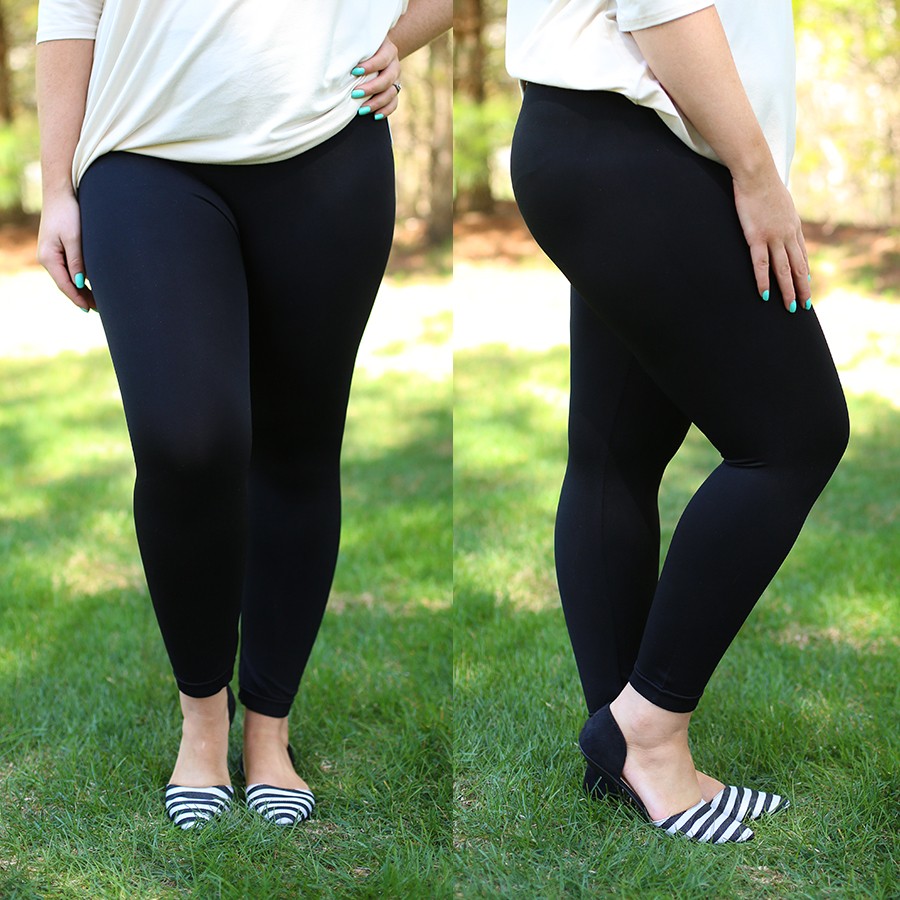
These are leggings.

Leggings

Leggings are pants.

Pants are made of fabric, and cover the lower abdominal area, crotch, and both legs.

Pants come in a variety of styles.

With pants, as with life, fit is everything.

Women, like men, are allowed to wear pants.

Some people say women’s bodies are “distracting.”

If only women and girls would hide their bodies, the thinking goes, men and boys could succeed.

That’s not right.

Women can have butts, and curves, and fat, and should be free to wear whatever is comfortable regardless of the shapes of our bodies.

Leggings are pants.

Praise be comfort, acceptance of women’s bodies, and women’s full and equal participation in society.


Are You Going To Have Another Kid?

So you found a girl with really deep thoughts

What’s so amazing about really deep thoughts

Boy you best pray that I bleed real soon

How’s that thought for you

– Tori Amos

My period began as annoyance, embarrassment, and pain. I was a late bloomer. After years of wondering what the hell was wrong with me, my period finally came at age 15, shortly after the last bell rang on the last day of middle school. Of course I was wearing white shorts. Of course there was a pool party the next day.

Over the years, my period has represented many things to me. Growing up. That thing I don’t want on Spring Break. Black underpants. A signal that I won and anorexia lost. A wedding day menace. Crying, ecstatic relief that I’m not pregnant. A discreet circle in a paper calendar.

A way out of the broken condom and the morning after pill I picked up from Planned Parenthood (forever devotion and thank you). An app on my phone. Erin, Unplugged: No birth control! Now with more cramps!

A week without it, a near-barf in bed, and a plus sign on a white stick. One daughter and several months of blood in maxi pads. 17 months of nursing and one delicious break.

People ask me if I’m going to have another kid.

This is the weirdest question. In my experience, people feel much more comfortable asking if you want to have a second kid versus asking if you want kids when you have none. Apparently we are open books once we have given birth (and remembering the undignified way I was splayed out in mortal pain, there’s something to that).

But the question is harder to answer now. I have seen the awe-inspiring, knock-you-on-your-knees love that comes with parenting. I am frankly addicted to babies. But I’ve also lived the endless exhaustion, the sleepless nights, the high-octane screams, and the daily responsibilities that fall on me with greater heft, even with an egalitarian husband who kicks ass.

I have a career I love, I have a daughter I love, and I have a husband I love. Our life is ridiculously fortunate. There are two dogs that can be more work than the kid, and a cat who has stuck with me through every phase of my adult life.

I love babies. I want more babies.

I love my life. I don’t want more babies.

I love my work. I don’t want anyone to know I have a conflict about babies and discriminate against me.

It is love that drives my conflict about my fertility, but more practically it is time. I am 35.

Every 28 days my period comes and I don’t know whether to be sad or throw a celebration. I go to the OB-GYN and ask her if her practice is willing to accommodate vaginal birth after caesarean and also how I can get an IUD inserted next week. I find myself angry that there is no forum to talk about these feelings, that there is so much silence about the ambivalence a woman can feel about her fertility.

Perhaps what I find most unsettling during the autumn of my childbearing years is the near-intolerance our culture exhibits toward a woman who isn’t 100 percent sure what she wants. After all, telling women what to do is practically the great American pastime, and watching our bodies and judging our sexuality is a sport with millions of male and female referees. If we’re not trying to tell women what to do, we hate-pity them instead. Oh it’s so sad she can’t figure it outHope she finds a way to deal with it.

It’s not just social bullshit; vocal ambivalence about fertility has economic consequences. It’s no accident that many driven young women (including me once) loudly declare that we are not going to have any children. No matter how earnestly this may be felt, and I do not discount someone who says it for a second, saying you don’t want kids comes with a significant professional bonus. Women who say they aren’t having any kids or any more kids are more attractive colleagues and potential hires no matter what those pesky laws on the books say.

Honesty about ambivalence is fraught with risk.

What if I were to start trying for more children, and tell people? Would others participate, and gossip, and evaluate my body and my sex life in telephone conversations with others? Would professional contacts write me off?

What if I were to close that door, or my body were to make that decision for me? Would you tell me I should have another, for the sake of my daughter? Would you celebrate my devotion to my work and my family, and those few shreds of time I have for myself?

Would you cry with me anyway when my period stops?

I don’t want to be judged. I don’t want advice, either. I will figure this out and continue living my best life, even in a world that can be hostile to women, hostile to mothers, and perhaps inclined to shit on me for being honest. I have a great family and a great life. I am trying to break stigma.

It is astonishing how much we talk to women about fertility, without giving us space to talk, and be messy and contradictory, just the way humans are.

You Are Eligible To Apply For An Internship

Less than two weeks ago, an organization I respect let me know I “matched new jobs.” The jobs included “summer internships.”

Screen Shot 2016-02-11 at 7.46.06 PM

Today I received another email. I “matched new jobs.” This time the jobs included “paid summer intern.”

Screen Shot 2016-02-11 at 7.45.08 PM

Let’s talk about this.

I’m quick to stick up for young feminists no matter who wants to give me shit for it and identify as the oldest possible millennial, but I’m 35. I’m a suburban mom. I have worked in a variety of professional positions, consulting roles, and management positions and have co-founded a new organization.

My quibble and reason for writing is not what anyone thinks of me. I’m in my work to make change, not to be loved. If you think I’m intern-level, okay. Susan B. Anthony nailed this:

“Cautious, careful people, always casting about to preserve their reputation and social standing, never can bring about a reform. Those who are really earnest must be willing to be anything and nothing in the world’s estimation, and publicly and privately, in season and out, avow their sympathy with the despised and persecuted ideas and their advocates, and bear the consequences.”

The problem is that automated recruiting software thinks that someone with my experience level — someone working in professional positions since 2002 — might be a good intern. Or maybe, after almost two weeks go by, a paid intern.

What is wrong with recruiting software? What is wrong with our economy? Where are the jobs?

I remember meeting up with a former unpaid intern I worked with who had subsequently graduated in the top third of her law school class and been offered a variety of additional unpaid internships in Washington women’s organizations. The unpaid internship is a despicable thing, but what bothered me at least as much was the sense that a smart, capable law school graduate is internship fodder.

None of this is to throw shade on older interns. It takes a great kind of chutzpah to embrace a fresh start and initiate a do-over as an adult, and looking back, I think the oldest people in my college classes must have been the coolest.

But something is dramatically wrong when our economy seeks to make interns of people qualified for jobs.

Let Snow Days Be Snow Days

Expecting workers to telecommute on snow days is discrimination against caregivers, pure and simple.

It’s not just offices that are closed on snow days. Schools are closed. Daycares are closed. Caregivers who come to the home either stay home themselves, or put themselves in danger. Parents and caregivers aren’t capable of pretending like it’s just another workday, but in our pajamas and from our kitchen tables. We have people depending on us.

From a sentimental/artistic/being a human standpoint, I believe everyone should get a snow day — caregiver or no. When nature dumps white to the point of municipal breakdown, we may as well look out the window and wonder, catch up on our reading or binge-watching, or have sex (just saying, the maternity wards are going to be crowded in D.C. in 9 months).

But those think pieces exist. What exists far less is an acknowledgement that when our basic institutions don’t open, parents and caregivers who work outside the home can’t just do our work inside the home like nothing ever happened. There are diapers to change, baths to give, meals to prepare, and they do and should take precedence. And yes, this primarily impacts women.

The same extends to students. My alma mater, Georgetown University, now has a concept called “instructional continuity” that means that when classes are cancelled, students are often on the hook for doing something for the class during the same time. What an assumption that professors and students don’t have people depending on them in their real lives!

I’ve always hated the “work/life” concept and thought it was a marketing gimmick to cover up for the fact that our society throws women and caregivers to the wolves, even makes us feel guilty for it and like we are somehow personally deficient. But that’s a book and not a blog post.

For now, for modernity’s sake, for humanity’s sake:

Let a snow day be a snow day.