Donald Trump is a monster.
He does not deserve a chance.
YOU deserve a chance.
YOU deserve to live without fear.
Love yourself, and stand up for others.
This is not a drill.

Donald Trump is a monster.
He does not deserve a chance.
YOU deserve a chance.
YOU deserve to live without fear.
Love yourself, and stand up for others.
This is not a drill.
For a week, I’ve been convinced my scale is broken. I think I weigh five to 10 pounds more than I do. I’ve weighed myself first thing in the morning maybe three times. Each time, I think the scale has stopped working. I have not lost weight; I’ve been consistent around my current weight, shape, and size for the past few years.
My brain has started telling me I’m 10 pounds heavier.
I’m wearing the newest undies I have. They are hot pink and and adorable, and yet they are too big. I bought the size I believed I was. When I put them on, I told myself they needed to shrink. The next time I wore them, I decided the manufacturer must be marketed to older people and practice vanity size inflation.
It turns out I am smaller than I earnestly believe I am.
This isn’t new. It just that I’ve learned to recognize it, interrogate it, and work around it. I remember the first time I was hospitalized for anorexia, literally half my life ago, and a nurse had me put a string in a circle on my hospital bed to represent how big I thought my waist was. She then used another string to measure my waist, cutting it, and placing it inside my circle, which was probably four times as big.
I have learned to identify and not align my behavior to my conquered loser of an eating disorder. It doesn’t mean the thoughts have gone away. Often, they are gone (and thank goodness, because the rest of the world is vastly more interesting than dieting). But even in the strangest of times, they get the best of me — like my latest reaction that the scale is broken, and these undies that are hot and a little bit floppy.
There appears to be a misconception, and in some cases a tremendous pressure on eating disorder survivors to foster the misconception, that folks who have recovered from anorexia, bulimia, and more simply love ourselves all the time and it’s fucking fabulous with a unicorn giving us a hug on our non-obsessive, all-foods-can-fit way to the cupcake boutique. I think it’s important to break through that misconception.
My brain is a weird place. Recovering from this eating disorder has made me one of the toughest people I know. And yet it — real recovery — also means acknowledging the shitty parts of yourself that exist to defeat you. My self-conception of my shape and size is unreliable. I know that.
I don’t think this means I am not fully past my eating disorder. I do believe I am. I am a survivor. Yet, I negotiate this thing sometimes. I’m doing it with this size nonsense right now, and I’m grateful for it. It’s making me think about other areas in my life where I am afraid I am taking up too much space. That fear is probably unreliable, too.

It’s time for an indefinite moratorium on Hillary’s supporters saying she is “not perfect.”
It’s quite obvious nobody is perfect. And yet there seems to be a bizarre — dare we say gendered — compulsion for many of her supporters to disavow her when they’re otherwise affirming her.
Why do we expect perfection of women? Why are we so insistent that women in the public eye do everything just so? When do we say that our political leaders who happen to be men are “not perfect”?
Don’t distort me here. I remain aggressively committed to doing whatever I need to do to ensure Hillary stands up for, prioritizes, and follows through on meaningful progressive policy change for women’s rights, reproductive justice, racial justice, economic justice, and LGBTQ equality.
I’m not afraid to call for changes in her platform. I have not been afraid to have public conversations about her commitment to reproductive rights, especially after Tim Kaine joined the ticket, even when fellow advocates I respect have winced and tried to shush me up (Note: Judging by her eventual swap of the stigmatizing “safe, legal, and rare” to becoming the first major candidate to call for repealing the Hyde Amendment, and Kaine’s improved performance at the vice presidential debate, pressure seems to work). If she becomes the first woman in the White House, I will be glad to criticize her when her actions call for criticism. But I’m also keenly aware that an orientation toward accountability has nothing to do with expecting perfection of a woman.
As this election cycle drags on in the worst ways, I am starting to believe that rejecting the calls for Hillary to be perfect is an act of self-love for women. None of us need be perfect. We need to do our best, and we need to understand that others may call on us to do our best. But expecting perfection of women is sexist, and toxic.
At the first presidential debate last night, Lester Holt couldn’t be bothered to ask Hillary Clinton and Donald Trump about abortion. This despite the fact that abortion is one of the most explosive political issues of our time, Hillary Clinton has staked out progressive positions on abortion never before embraced by a Democratic nominee for president, and Donald Trump has been all over the place on abortion, including some extreme places like calling for punishing women who have abortions and recently accepting the endorsement of pro-life terrorist poster boy Troy Newman.
The abortion question is a real one, and there’s every reason to expect it’s coming. But my money is on the abortion question at long last appearing in the vice presidential debate, since vice presidents are often tasked with leading the charge on social issues, for better (Vice President Biden pushing President Obama to evolve on marriage equality) or worse (Vice President Quayle picking a fight with Murphy Brown).
Theoretically, this should have been a slam dunk. As a member of Congress, Trump’s running mate Gov. Mike Pence (R-IN) invented the effort to defund Planned Parenthood. He is a vicious man whose willfully ignorant anti-abortion, anti-sexuality views have led him to claim condoms don’t work and driven thousands of protesters to the streets to protest his ‘religious freedom’ law designed to allow businesses to refuse service to same-sex couples. He’s into redefining rape so fewer people who want abortions can get them. It should be lost on no one that a woman in Indiana named Purvi Patel served over a year in prison for ending her own pregnancy before an appeals court set her free, and Gov. Pence presided over this blatant violation of her human rights and literal application of Donald Trump’s promise to punish women who have abortions.
Hillary Clinton would be a great person to answer these questions. But she hasn’t been asked. None of the Democratic primary debates asked about abortion. Which brings us to her running mate, Senator Tim Kaine (D-VA) who is … not a great person to ask about abortion.
Tim Kaine is, sigh, personally opposed to abortion, with all the irrelevant shaming and male privilege that brings to the discussion. As Governor of Virginia he signed a bill into law that created “Choose Life” license plates that divert state monies into unaccountable crisis pregnancy centers that exist to lie to women and make it harder for people who want abortions to get them. He supports the Hyde Amendment which bars federal funding for abortion. He supports it so much, he went around his boss who is a woman and coincidentally belongs to the gender most impacted by restrictions on abortion and clarified that, contrary to what her campaign said, he does not support her position of repealing the Hyde Amendment. (Please pause and think about the gender ramifications of that, because it sucks so much. Most powerful woman in the world gets to be second-guessed and disagreed with in public by her right-hand man on an issue that is deeply personal for women and indivisibly critical for their political, social, and legal equality?)
It’s clear Tim Kaine needs some help talking about abortion. Here is what he should say at the vice presidential debate:
I support the right to abortion, and I will follow the leadership of President Hillary Clinton to fight for the right to abortion.
But Senator Kaine, you’ve said you are personally opposed abortion and you do not support repealing the Hyde Amendment, contrary to Secretary Clinton’s platform and the Democratic Party platform. Will you do this work, or will you leave it to her?
As a man, I approach the possibility of serving under the first woman president with humility and awareness that I have a special role to play in teaching our country to respect a woman’s leadership. Hillary Clinton has clearly spoken about the need to repeal the discriminatory Hyde Amendment. I support her leadership. I understand that personal views about abortion should not drive a public policy discussion about a woman or pregnant person’s civil and human rights. We must end the Hyde Amendment.
But that’s not what you’ve said before.
I was wrong to disagree with Hillary publicly on an issue, particularly an issue as important to her as this one. It’s important and historically significant for men to support women’s leadership right now. Hillary has called upon me to serve her and our country, and I know the right way to serve our country is to follow her lead and ensure the right to abortion is accessible for everyone. That includes repealing the Hyde Amendment. It’s a shame you aren’t asking her about this.
Expecting any less of Tim Kaine is, frankly, sexism. Abortion stigma and restrictions on abortion are rooted in sexism. Allowing a man to end-run the woman boss on a “women’s issue” is sexist. He’s got to get better.
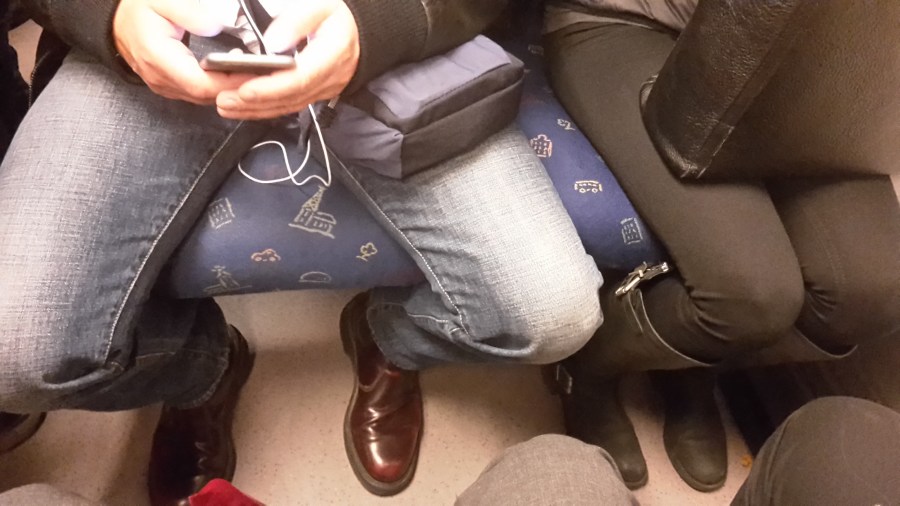
Manspreading is not just a physical thing.

It’s a conversational thing. Conversational manspreading is when men dominate a conversation or insert opinions into areas they just shouldn’t comment on.
It sounds like men using a question and answer period to insert an opinion. It sounds like stating opinion as fact. It sounds like men challenging women on their own lived experience. It sounds like former Governor Ed Rendell (D-PA) saying Hillary Clinton should smile more, even though he is ‘with her’ electorally speaking. It sounds like, well, conversations with men dominating that happen in classrooms and workplaces every damn day.
Conversational manspreading is not the same thing as mansplaining, or men explaining to women things they already know, although mansplaining can certainly be a tactic in the conversational manspreading toolbox.
So often we see self-help directed toward women as a way to rise above sexist inequality. Women are told we are underpaid because we choose the wrong careers, or we need to find the self-confidence to speak up, or we need to learn how to negotiate, even though new research shows that contrary to conventional wisdom, women ask for raises as much as men — we just don’t get them.
In this spirit, I’d like to offer some self-help tips for men so that they can find a way to rise above the insecurity and awry feelings that lead them to take up more conversational space than they need. Here goes:
Add in your tips for men to stop the conversational manspreading in the comments!
Phyllis Schlafly died yesterday. Many of the obituary headlines referred to her as the ‘first lady of the conservative movement.’ These headlines were ironically, or perhaps perfectly, totally sexist in themselves, since she and not her husband sowed the seeds of the hate cult the Republican Party depends on to elect many of its candidates to office.
It was Mrs. Schlafly, as I have long called her, who worked with Paul Weyrich and others to develop the divisive strategy of preying on “moral issues” — abortion, and antipathy toward women and LGBTQ people, among other things — to secure a permanent religious right voting bloc for conservative candidates who would vote against corporate regulation and racial equality. If you wanted to get your Jerry Falwell on, Mrs. Schlafly was your gal.
She is credited with killing the Equal Rights Amendment, a wildly popular measure to this day. Most people think women have constitutional equality and want women to have constitutional equality. Phyllis Schlafly killed that, in what amounts to one of the most dismal failures of the second wave women’s movement. She did this by organizing, and speaking, but also by enlisting the worst allies.
The auto insurance industry wanted to keep charging women more, because among other things, discrimination is a driver of the rich staying rich. She fomented unreasonable panic about the military and invented the hapless, sweet woman who would be attacked by the predator in the bathroom because of your equality law. Phyllis Schlafly invented gardens and cauldrons of evil that continue to toxify the environment in which we live — against women, and now transgender people, and probably at least one if not several of your neighbors.
She was an early supporter of Donald Trump this election cycle, at a time when many cultural conservatives couldn’t get behind the lying philanderer (Note: They seem to have no problem when it’s far-right Christians who go hiking away from their marriages on the Appalachian trail with their mistresses). It made a great deal of sense, as he was, in some ways, following the footsteps she laid.
Phyllis Schlafly knew instinctively that lying, that saying hateful, outrageous things not backed by data, was not the losing proposition self-smug, reasoned liberals make it out to be. She knew that attention is part of power. She bred people like Ann Coulter, and yes, Donald Trump.
Why am I writing this? On the occasion of her death, I began to receive a number of text messages, probably because I debated her when I was 24. Here is the story I posted to Facebook last night:
Phyllis Schlafly died today.
I debated her in 2004 at a Federalist Society event on feminist jurisprudence at the University of St. Thomas Law School. I had just left my first husband and was kind of a mess, at that time in my life.
And yet I studied for weeks amid the boxes and chaos of a temporary apartment. I bought her books and scribbled in the margins. I put on my only suit. I wore heels. I called her Mrs. Schlafly the whole time.
I stunned that lady speechless. (I agreed with her that Social Security discriminates against stay-at-home mothers and called on her to work together to fix it.)
After the debate was over, she turned to me and hissed. “I have debated hundreds of your NOW ladies over the years, and nobody has responded to me that way.” Her bouffant was so full of Aquanet that it did not move.
“Well, Mrs. Schlafly,” I said in an equally low voice. “I’m just one member of a young feminist task force and one of thousands of young women in this country who are not going to stop fighting until women are equal and it’s done.” She looked at me and turned her head back to the front.
We exchanged no more words.
I guess I have a little more to say. When I was preparing to debate her, one of my strategies was to paint her as a walking anachronism. I may have called her that, even. I was barely 24 and she was in her 80s, so it wasn’t hard.
It pains me to see so many people going the cheap, quick, and easy route in dismissing her death. Hateful quotes of hers are spotlighted, and we all reassure ourselves that outright sexism is in the past and bigoted leaders are gone. They couldn’t possibly win in the future. That is not true. In a practical, political sense, Phyllis Schlafly is as alive today as she was yesterday, and she will continue to live on.
People who hold the same contemptuous views about their fellow human beings that Phyllis Schlafly did hold the majority power in Congress.
Racist gerrymandering gave us the Republican supermajorities in the states who put guns on college campuses and probes up vaginas, and give private companies the power to literally poison the public water that runs through faucets in communities of color, but/and it was the voter outreach strategy that depends on decades of Mrs. Schlafly’s work that also helped to propel them there.
The Republican nominee for president is the most outright bigot you could put on the stage, and it’s the primary reason why he won the primary base of that party.
So to smirk to ourselves that Phyllis Schlafly is gone, when the enduring and hateful power that she built is not, is to embrace a lefty ignorance that will only lose us more elections.
Fundamentally, Phyllis Schlafly understood that to win, you need the votes. The game is about numbers. The game is not about being right. The game is about saying the things that will support the organizing that gives you the numbers you need.
Now, I am not advocating that progressives abdicate the moral high ground. Lying is not right. In fact it is despicable. Preying on the worst in people is not right. There is a way to love one another, to use facts, and to win. I believe this with all of my heart, or I wouldn’t be typing this in my free time when I have a kid and no time for hobbies. But we cannot lose sight of the fact that we need to do the work and get the votes to win.
It was pretty amazing that Phyllis Schlafly was willing to do the work and get the votes to win by crossing one of the most unthinkable barriers for women — by being willing to be disliked. I think modern feminists could learn a lot from that, actually. Whether heel or sneaker, power comes from putting your foot down, too — not just from making other people, including your political allies, smile.
The other thing we need to remember is that Phyllis Schlafly was the poster child for STOP ERA because she was a woman. We will never stop having conservative women lead the organizing charge for the reactionary movement. It is not an error — it is the strategy. Women are more effective at enforcing regressive social norms than men are, particularly now that Republican men are a bit sensitive about all the ‘war on women’ stuff they’ve earned nine times over.
We need to accept that women are spokespeople and strategists of the conservative movement. We need to accept that women do misogyny, and they do it very well. I predict the phenomenon of bigoted conservative women (mostly white women) will increase, not decrease, as the years go by. Phyllis Schlafly laid the framework. Now more conservative women are going to get it.
Finally, I am really over the second-wave women’s movement congratulating itself for being right. You probably were right with regards to Phyllis Schlafly’s unique blend of hatred and doe-eyed strategic idiocy, and you certainly were with regards to the Equal Rights Amendment, and it didn’t matter. She beat you because she out-organized you. The way to win for the future is not to dig into the trenches Betty Friedan built that didn’t work the first time.
Passion won’t solve this. ‘Awareness’ won’t solve this. Unhelpful pleas for doing right for ‘all women’ certainly won’t solve it. Conflating the Democratic Party’s electoral needs with the women’s movement won’t solve it, either.
Accept and spotlight the diversity of women’s experiences in all of their messiness. Do it because it’s beautiful, but also do it to get the goddamn leadership and votes to put an Equal Rights Amendment into the Constitution.

“I’m not really friends with girls.”
At a certain age, me and many of my girlfriends used to say this. Of course we were the biggest liars, since we were friends. Or at least I would have been crushed if they didn’t consider me their friend, too.
Woman-hating can be both reflexive and substantive for women. If you were the kind of girl I was, who wanted to leave home and read big books and achieve great things (in the embarrassing abstract, the way ambitious young people and sadly too many older people do) — well, it didn’t seem like conquering the mall and doing the feminine things would get me to greatness. Of course by 18 I had spent years working in malls for Limited Too, The Gap, and Abercrombie & Fitch. The main point is that in rejecting femininity and especially the camaraderie of other young women, I was a hypocrite, a self-loathing hypocrite.
Because I am feminine. I have always been feminine in my own way. I’ve just been taught to hate the feminine, to look at it condescendingly, and simultaneously use it as a yardstick for telling myself I’m not pretty enough or considerate enough or frankly, enough.
The way me and many of my more brainy girlfriends used to go to great lengths to declare we weren’t really friends with girls, because maybe it felt more substantive to be friends with the boys (which is bullshit, because masculinity can be just as shallow as femininity, and at times much more so) has parallels at different points in the lifecycle. We are taught to judge women who put effort into their appearance to halt the visible signs of aging just as we are taught to judge women who “let themselves go.” Plastic Surgery Gone Wrong is a thing, but so is Kirstie Alley in the tabloids. We are told to change the way we talk to be taken seriously. It goes on.
I am troubled by efforts to reject womanhood and in particular, women, as a way for women to set ourselves apart from the second-class expectations sexism drapes on our pretty little collarbones.
I don’t want to imagine how much my life would suck without the friendship of women. It is not the feminine that is flawed, but the rejection of it.
I appeared as a panelist on this week’s To The Contrary, and discussed police violence against Black people, discrimination against women with disabilities, and transgender athletes competing at the Olympics.
You can watch a video of the show here:
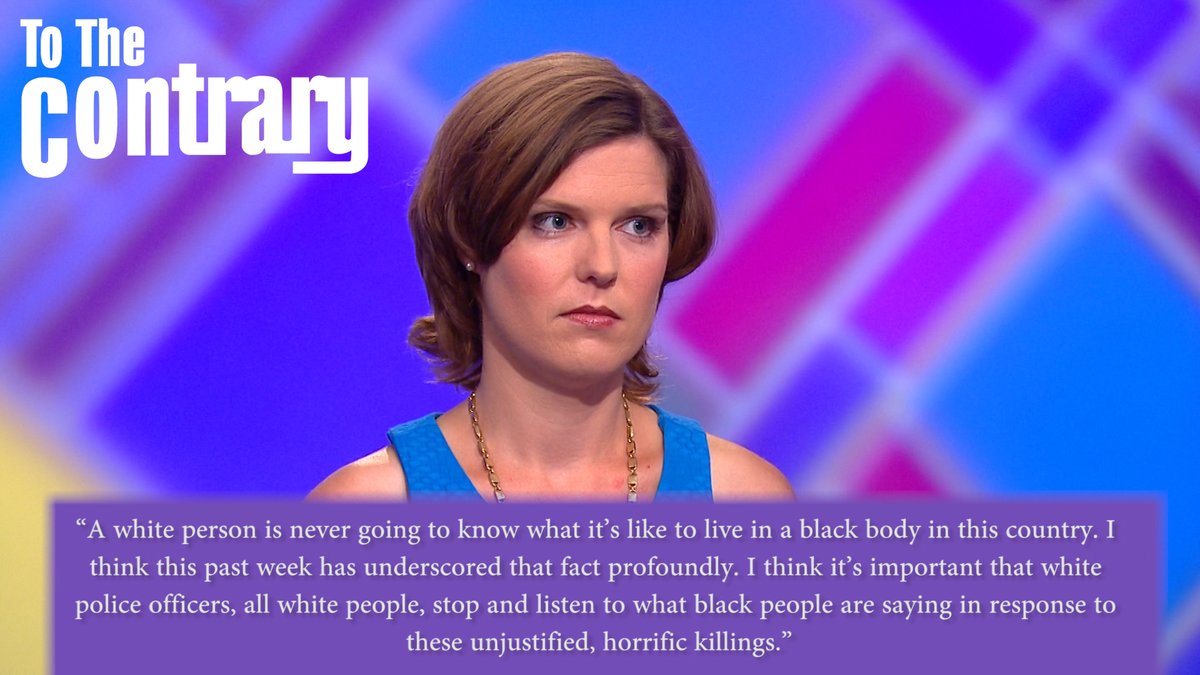
My public response to one viewer who challenged my statements on the show in favor of transgender equality can be found here.
Y’all, I am so inspired by Monday’s win for abortion rights at SCOTUS. While I welcome any opportunity to wake up, hop on the Metro, and dance party on the Supreme Court sidewalk with a few hundred of my feminist besties for hours, it is so much better when chased by Whole Woman’s Health v. Hellerstedt.
I’ve been reflecting on this decision and what it means to me, and it means many things. First, it feels great to win. Winning in a concrete, immediate, meaningful way happens rarely in the feminist space. Yes, we may be winning some long games, but those are gradual and not always perceptible at the moments they are being won. The concrete, immediate wins we are presented with are typically not substantive. The sad truth is these ‘wins’ are often losses disguised as compromises, engineered and subsequently celebrated by organizations with fundraising goals to meet this quarter.
A real win is the rare, best bird, and it feels good to feel good.
Also, in the decision itself: Lying is not a legal basis for restricting women’s rights and people’s rights. Facts matter, and people can’t just make shit up and expect to get away with it forever — even the pro-life movement, which has been doing it for decades.
But more than anything, my reflection comes in the bright light cast around this country by Whole Woman’s Health Founder and CEO Amy Hagstrom Miller, who decided to press her case against the Texas abortion clinic closure law even when conventional wisdom suggested that taking a big abortion case to the Supreme Court probably wasn’t a good idea for abortion rights advocates. She did so fearlessly and without shame, and while centering women and what it means to treat them well. She has taught me this:
If we want to win, we have to try to win. Even when trying to win means risking a loss. If we want to win, we must hold our heads up, and fight, and believe.
For decades many leaders in the abortion rights movement and the feminist movement have hunkered between our shoulders, trying to hide in plain sight, hoping it would all get better if we just tried to say the right, inoffensive, message-tested thing at the super-strategic time that, coincidentally, almost never comes (because too many of our political allies are using our issues for votes and campaign commercials, and can’t be bothered to stand up for us at inconvenient times after election day!).
This matters for activists and organizers inside the women’s movement, but it matters to activists and organizers in every sector. And also at the individual level for people in general and women specifically, who are too often taught to put ourselves last.
We must dare to try, to try to win, and to try to win big. We must become comfortable with the prospect of loss. We must not be cowed by opponents who fight dirty, or people on our side who feel the need to speak in whispers. We must speak clearly, convincingly, and with love in our hearts. We must try to win. Otherwise we are hoping on games of chance.
P.S. It comes as no surprise this lesson comes from an independent abortion care provider. People who provide care and listen without judgment or unsolicited solutions tend to know most of all.
Each Wednesday, my daughter and I put on our swimsuits and walk into the community pool until the water gets so deep I bend down and carry her. It is a long ramp into the deep end. Packed benches and risers span the perimeter and they are crowded with parents and siblings. It is quite a catwalk for those initiated into the lethal art of body comparison and body hatred.
My history with an eating disorder is one of the coolest and shittiest things about me. Cool because you recover from anorexia like I did, and no one can fuck with you. Overcoming my demons has given me a fearlessness and strength that stuns even me. Shitty because there is no intrinsic value in a bullying voice that tells you to stop eating and lose all the weight.
As it pertains to parenting a girl, it’s terrifying to know personally the reality of eating disorder culture taken to its logical extent — the acts of fainting, obsessing, and starving turning into a body that elicits jealousy, praise, and near-death experiences that blur into a loop of hospitals, treatment, and crying your damn eyes out because it hurts so much. It starts with pink onesies that ask if this diaper makes you look fat, and turns into magazine covers asking for twenty fucking years if Jennifer Aniston is pregnant because she is a woman and has a stomach. It is friends and family saying they are good or bad depending on what they ate or how they exercised. Eating disorder culture is everywhere, and it is unavoidable.
So as this swim class taught my daughter to swim, it taught me to wear a swimsuit in public without holding in my gut. It taught me to throw my towel over my shoulders instead of wrapping it cautiously around my waist or under my arms. It taught me to sit on the floor because the benches are too packed and let the rolls bunch over my bikini bottom. I want her to breathe, and walk, and sit like this. Being her role model helps keep me clean. The best way to teach her to love herself is to show her that I love her, and myself.
I consider myself fully recovered from my eating disorder. But the reality is, my actions don’t always match my thoughts. I eat regular meals, don’t restrict my food, and exercise only when I have time, which for someone who fits my work/life profile means not so much. I have a gut, two thighs, and a body that reflects this. My actions are good. My thoughts can be brutal.
Recently I have had a series of conversations with someone who is struggling with an eating disorder. She will often ask me how I moved past nasty eating disorder thoughts. This would be a different answer for anyone, since everyone’s thoughts and motivations are different, but I do think the one commonality is that we all need professional treatment to break free (this is my regularly scheduled reminder that I do not believe it’s possible to self-help your way out of an eating disorder, and if you are struggling I urge you to seek professional treatment).
But more important, it has helped me to realize that these thoughts may diminish in frequency and severity, but they actually do not go away. I’m not going to tell you what I think because I am not here to provide instructions for how to be an anorexic (you should live because it’s cool!), but let me tell you that I’ve been recovered like solid for close to 15 years and still have ridiculous thoughts every day about a new diet plan I should follow. What has changed is that they float in and out in seconds. I don’t listen to them. I don’t follow their instructions. Most of the time, I don’t even register what’s happening.
Until I did a few weeks ago. There I was in Pilates class, being physically strong when I started beating up on myself for the bulge above my elastic waist. It was in this moment of strength and sweat when it all registered. “Oh my gosh,” I thought in a high, indignant voice rising to my own defense. “That’s so mean. Why would you say that to yourself?” I did this the way a friend would chase away the worst bully. The release nearly made me cry, realizing that I had been holding this self-hatred in my muscles and I could be a good steward to myself and sweep the toxicity out with a non-self-blaming admonishment and a huge exhale.
Having been to hell and back, I can verify the basic building blocks of self-hatred have never gone away. The best I can do is acknowledge them, ignore them, and rise above them. It feels good when I demonstrate loving my body for my daughter, and it feels good when I insist upon it for myself. I’ll see you at the pool and I’ll be walking in real slow.
 Erin Matson